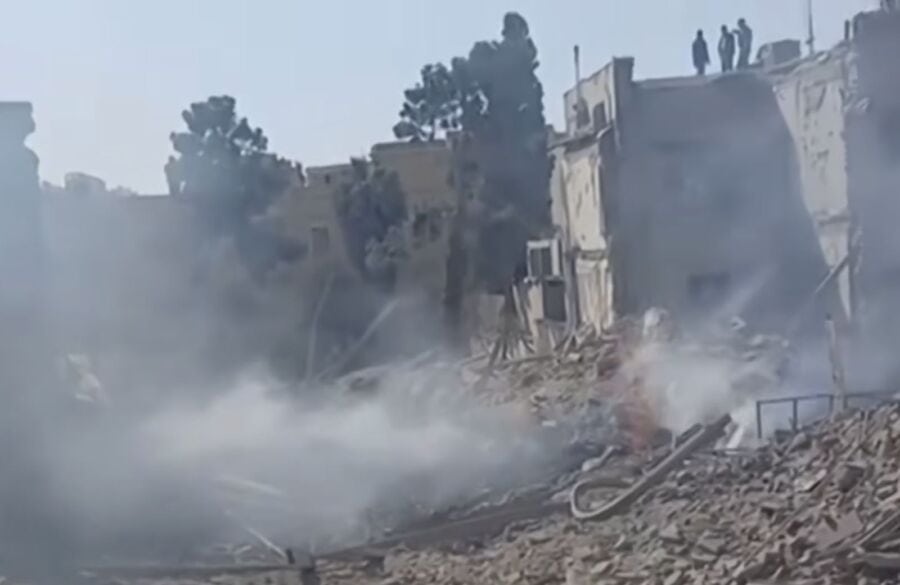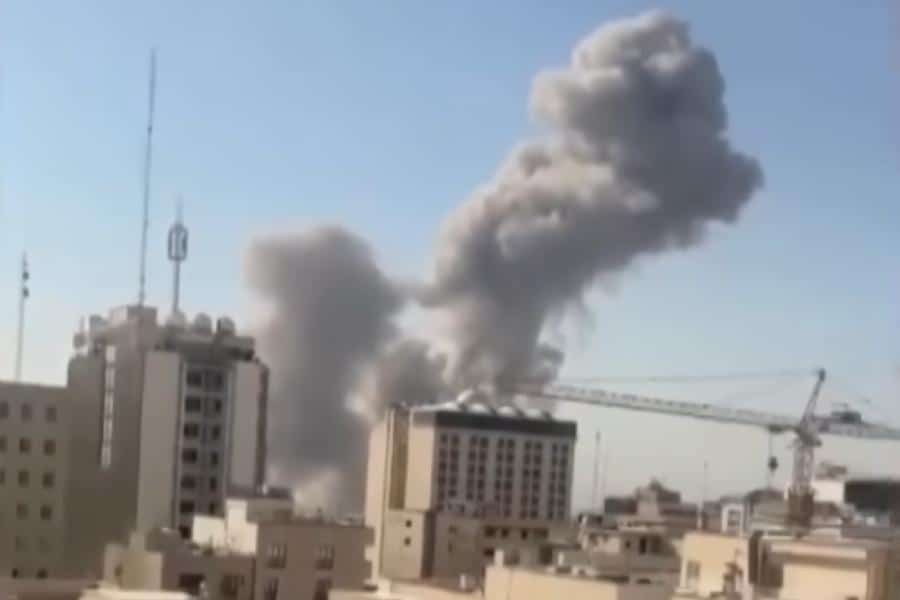

Joint US-Israel strikes on Iran killed Supreme Leader Ali Khamenei on February 28 and opened the most serious direct conflict between the two countries in decades. Iran answered with missile fire at Israel and other regional states, including Gulf countries that host U.S. forces.
US-Israel Strikes on Iran
Washington says the campaign, called Operation Epic Fury, aims to crush Iran’s offensive missile force, missile production, navy and related security infrastructure, while preventing Tehran from getting nuclear weapons. The Pentagon says the U.S. phase began at 1:15 a.m. EST, after President Donald Trump gave the final order on February 27. More than 100 aircraft took part in the opening wave, which U.S. officials say hit more than 1,000 targets in the first 24 hours.
Trump says he ordered the strikes to stop Iran’s nuclear and ballistic missile programs. He says the operation could run for four to five weeks, and longer if needed.
Decades of Shifting Policy
For context, U.S. policy toward Iran shifted repeatedly over four decades. After the 1979 hostage crisis and the failed 1980 rescue mission, Washington alternated between sanctions, covert pressure, limited military action and diplomacy.
That pattern continued after the 1983 Beirut barracks bombing and the 1996 Khobar Towers bombing, both later cited in U.S. cases involving Iran-linked actors.
The United States then joined the 2015 nuclear deal under President Barack Obama before President Donald Trump withdrew in 2018 and restored sanctions, underscoring a long record of changing tactics rather than one consistent approach.
Why Some Backers Say Deterrence Eroded
-
1979: Iranian militants seize the U.S. Embassy in Tehran.
-
1980: U.S. rescue mission fails.
-
1983: Beirut barracks bombing kills 241 U.S. service members.
-
1996: Khobar Towers bombing kills 19 U.S. airmen.
-
2015: Washington enters the nuclear deal.
-
2018: Washington exits the deal and restores sanctions.
The broader pattern: U.S. policy moved between force, sanctions and diplomacy, rather than one sustained line.
Pressure On Trump Administration
But the administration’s public case is already under pressure. Reuters reported that Pentagon officials told congressional staff there was no intelligence showing Iran planned to attack U.S. forces first. That undercuts one of the White House’s main public arguments for launching the war.
The legal fight is moving almost as fast as the military one. Associated Press reported that legal scholars say the strikes raise serious questions under the U.N. Charter, which generally permits force only with Security Council approval or in self-defense against an armed attack or an imminent threat.
A Break From History
For supporters of the operation, the bigger argument is not legal theory but history. They say the strike marks a sharp break from decades of uneven U.S. responses to Iran, from the 1979 hostage crisis to later proxy attacks, nuclear diplomacy, and limited retaliation against Iran-backed forces, all of which they believe taught Tehran that Washington would pressure, sanction, or negotiate, but usually stop short of hitting the regime’s core leadership.
Long Pattern of Inaction
Carter: Iran seized U.S. hostages in 1979. Washington sanctioned Tehran and launched a failed rescue mission, but did not escalate into broader war.
Clinton: After the 1996 Khobar Towers bombing, the U.S. pursued indictments and pressure, but did not strike Iran directly.
George W. Bush: U.S. forces fought Iran-backed networks in Iraq, but Washington still stopped short of a direct war with Iran.
Obama: The administration pursued the 2015 nuclear deal and later transferred cash tied to a pre-1979 settlement, a move critics used as proof of accommodation.
Biden: The administration struck Iran-backed proxies after repeated regional attacks, but avoided direct strikes on Iran itself.
For now, the clearest fact is this: US-Israel strikes on Iran have already reshaped the region. The next battle will play out on two fronts — the battlefield itself, and the argument over whether this war was justified.