
Why Is Europe on Fire? Read Here.
Europe is witnessing something that should concern the entire Western world.
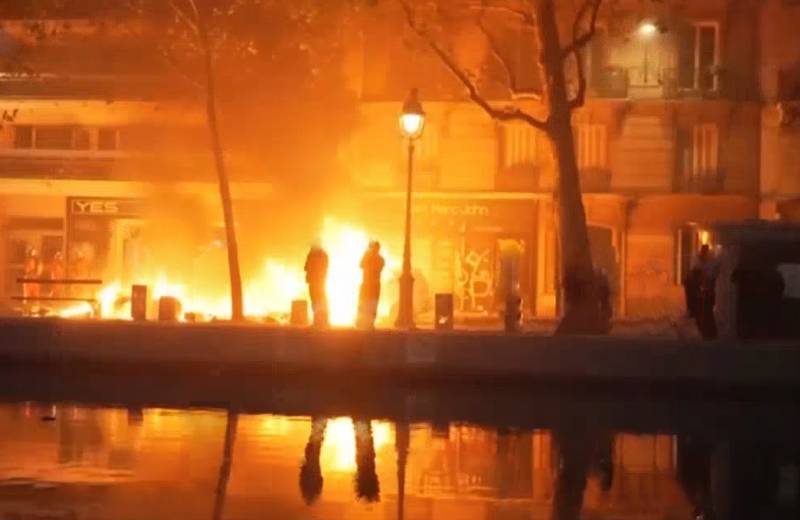
France experienced some of its worst civil unrest in years. Rioters looted businesses, torched vehicles and attacked public buildings. Hundreds of thousands of people joined demonstrations over living costs, deteriorating public services and other grievances. French officials blamed ultra-left extremists for much of the violence that accompanied the wider protests.
France is not alone.
Across Europe, people are protesting over different immediate issues: housing, migration, education, farming, government spending, corruption and declining living standards.
The causes are not identical. They do not have to be.
What they increasingly share is anger with governments and institutions that large numbers of people no longer believe are working for them.
Radical political movements also see opportunity in that anger.
The Red-green Alliance
The term “Red-Green Alliance” describes cooperation between elements of the radical left – “red” – and political Islam – “green.”
It does not describe one organization with a headquarters, membership list and central command.
It describes a political convergence.
The two sides have profound ideological differences. Yet they can find common ground in opposition to capitalism, globalization, the United States, Israel and Western institutions.
This is not merely a political slogan.
In 2013, researchers Emmanuel Karagiannis and Clark McCauley published The Emerging Red-Green Alliance: Where Political Islam Meets the Radical Left in the journal Terrorism and Political Violence.
They documented convergence between radical-left and Islamist movements around anti-capitalist, anti-globalization, anti-colonialist and anti-imperialist causes.
The West is facing something similar today: far-left progressive movements increasingly finding common political causes with revolutionary Islamism, despite the enormous differences between their ultimate goals.
They do not need to agree about everything.
They need only agree about what they oppose.
Neville Roy Singham and The International Network
One figure attracting increasing attention is Neville Roy Singham.
Singham, born in the United States in 1954, founded the IT consulting company ThoughtWorks. He sold the company for $785 million in 2017 and later based himself in Shanghai.
He has funded a network of left-wing organizations, media operations and political projects internationally.
That does not mean Singham is financing the people currently smashing windows or setting fires in French streets.
There is no demonstrated funding chain showing that.
The connection is more subtle.
Organizations associated with Singham’s funding network, including BreakThrough News and the Tricontinental: Institute for Social Research, have amplified the French unrest internationally and presented it as part of a wider struggle against capitalism and existing Western political structures.
An October 2026 Fox News Digital investigation described a transnational network of communist and socialist organizations using the French student demonstrations to promote a much broader ideological message.
That distinction matters.
Domestic anger can arise naturally.
International ideological movements can then amplify it, attach themselves to it and use it for purposes far beyond the grievance that brought ordinary people into the street.
The Shah of Iran Warned About This
History has seen strange political alliances before.
Mohammad Reza Pahlavi, the last Shah of Iran, repeatedly warned of what he called an “unholy alliance” between the “Red” and the “Black” – Marxist revolutionary forces and radical religious movements.
Their beliefs were incompatible.
Their immediate objective was not.
Both wanted the Shah gone.
In a November 3, 1977 Newsweek interview, the Shah discussed cooperation between religious extremists and communist revolutionaries and referred to the phenomenon as “Islamic Marxism,” according to later accounts of the interview.
In April 1978, he again warned of an alliance between what he called the Black Reaction and the Red Revolution.
The Shah warned that the consequences would not stop at Iran’s borders.
His government fell in 1979.
The alliance that helped bring it down did not last.
After Ayatollah Ruhollah Khomeini’s Islamist movement consolidated power, many of its former leftist revolutionary allies were themselves suppressed, imprisoned or eliminated.
The lesson was simple.
Groups with radically different visions for society can cooperate long enough to destroy the system they mutually oppose.
They can fight over what replaces it afterward.
Iran’s Crown Prince Speaks
The Shah’s son, Crown Prince Reza Pahlavi, continues to warn Europe that what happens in Iran does not remain in Iran.
Addressing the Dutch House of Representatives Foreign Affairs Committee in July 2026, Pahlavi said Iran was not merely a Middle Eastern issue.
“What happens in Iran will shape the security of this continent for years to come,” he told lawmakers.
He argued that the Islamic Republic had already become a European and global security challenge.
His warning is worth considering as Europe experiences growing political and social instability of its own.
France on Fire
France is on fire.
That is not merely a figure of speech when government buildings, vehicles and businesses are actually burning.
The October unrest escalated into some of France’s worst riots in years.
Between 550,000 and 800,000 people joined demonstrations across the country, according to estimates reported by Reuters. Most protested peacefully.
But violent groups looted stores, attacked police and set fire to buildings and vehicles.
More than 1,200 people were arrested and more than 150 police officers were injured during the first major eruption of violence.
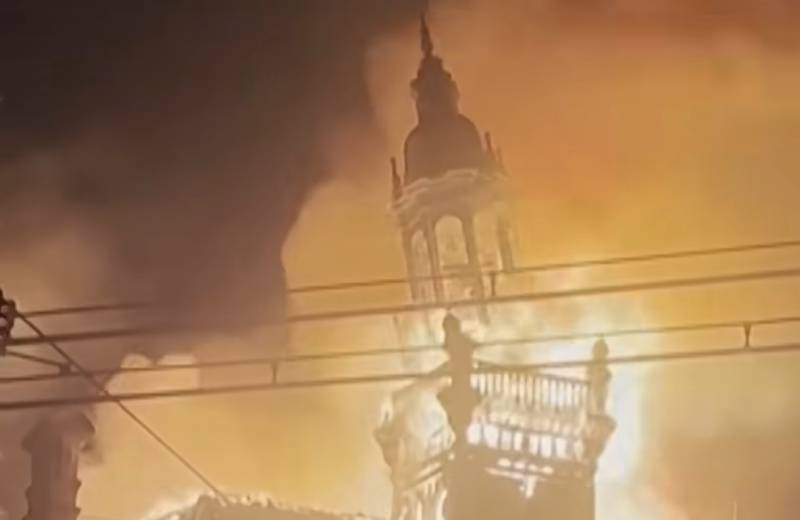
Limoges suffered one of the most symbolic attacks when a masked group set fire to its historic town hall, destroying its roof and clock tower.
The unrest continued beyond one weekend.
By October 21, French authorities were preparing additional police and military support ahead of further demonstrations.
The grievances are real.
So is the political battle over who will harness them.
Europe Is Not One Protest
France is only the most visible example.
Italy, Albania, Belgium, Portugal and other European countries have also experienced demonstrations or unrest.
Greece saw thousands of students and teachers protesting over school conditions, wages and public investment on October 21.
Spain has faced continuing protests over housing, migration and political tensions.
Earlier this year, Northern Ireland experienced serious disorder, while demonstrations elsewhere in the United Kingdom raised similar questions about migration, public safety and national identity.
These movements are not identical.
Some are peaceful. Some turn violent.
Some are led from the left. Others come from the right. Some involve workers, farmers or students who may have little interest in ideological movements at all.
That does not mean there is no pattern.
Western governments are facing growing populations that believe political leaders no longer listen to them.
Housing has become unaffordable for many young people.
Farmers say regulations threaten their livelihoods.
Citizens question immigration policies.
Public services deteriorate while taxes and government debt rise.
Political movements – radical and otherwise – move into that space.
Foreign states and international ideological networks also have opportunities to amplify division when Western societies are already angry with themselves.
Different Grievances, Similar Anger
The mistake is to assume that a common pattern requires every protester in every country to carry the same banner.
It does not.
A French student angry about a deteriorating school does not have to share the ideology of a communist organization promoting his protest internationally.
A farmer protesting regulation does not have to know anything about political Islam.
A family angry about housing does not have to belong to a revolutionary movement.
The important question is what happens to legitimate anger after it appears.
Who organizes it?
Who funds the organizations around it?
Who amplifies it?
Who tells the rest of the world what the protest supposedly means?
And who benefits if confidence in Western governments and institutions collapses?
Those questions deserve answers.
Is America Following Europe?
Warnings are increasingly heard that the United States is following Europe down the same road.
Whether America is ten years behind Europe, five years behind or already experiencing the same pressures cannot be calculated with a stopwatch.
But many of the ingredients are already visible.
Americans argue over uncontrolled migration, political extremism, crime, government spending, education, religion, identity and confidence in their institutions.
Movements once regarded as marginal have gained political influence.
The country is increasingly divided over what America itself represents.
The United States is still enormously wealthy and powerful. That makes it valuable not only to its citizens and allies, but also to countries and movements that would benefit from Western weakness.
A divided America is easier to influence than a confident one.
A Europe fighting internally is less capable of confronting threats externally.
Potential adversaries do not have to create every weakness themselves.
They merely need to recognize and exploit weaknesses that already exist.
The Warning From Iran
That brings us back to Iran.
The Shah’s warning was not that Marxists and Islamist revolutionaries had secretly become ideological brothers.
They had not.
His warning was that movements with fundamentally incompatible beliefs could temporarily unite against the political order they both wanted removed.
Iran discovered what happened next.
One side eventually destroyed the other.
Today, the terminology has changed.
The countries are different.
The grievances are different.
But the political lesson remains relevant.
People watching France burn should look beyond the fires themselves.
They should ask what caused the anger, who is exploiting it, who is amplifying it and what political movements hope to build from the ruins.
Europe’s current fury will not be the last.
And the rest of the Western world should be paying attention.
Related Stories:
European Leaders Condemn Marine Le Pen Conviction as Political Suppression
Europe’s Islamism Is Its Downfall