
Disposable Human Beings and the Modern Table
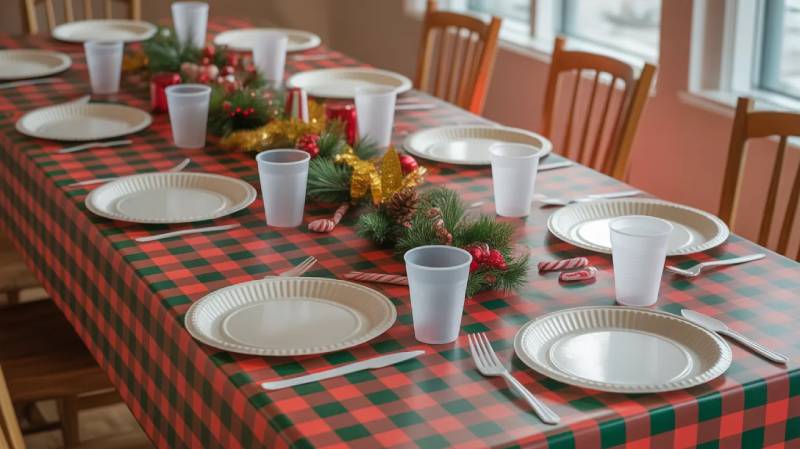
In the last two days I attended two Passover seders at the homes of two friends very close to my heart. I noticed what was obvious: neither used ceramic or glass plates and metal cutlery. Instead, both used single-use disposable plates, plastic cutlery, and cups.
The days when a host proudly sets a table with ceramic plates and fancy silverware seem like a custom of the past.
At the synagogue where I often attend Saturday morning service, a blessed lunch is served following the service. The scene is much the same. Single-use disposable plates, plastic cutlery, and cups are used at the table.
At the supermarket, it is very noticeable that disposable items take up a large amount of shelf space.
A Rather Scary Thought
A rather scary thought often crosses my mind, which is how disposable human beings are. A person lives on earth and, at one time or another, he or she passes away. They depart to another world and on earth they are quickly forgotten, as if they never existed. Disposable human beings.
My Dad’s Short-Lived Remembrance
I remember when my dear father passed away at a very early age. He was a popular man and many attended his funeral. I clearly remember my mother saying that the following year, when she would commemorate his death date at his gravesite, what we Jews call in Yiddish Yahrtzeit,* the attendees would be few, and in later years only close family would visit his grave, and not routinely.
My mother was right. One year after his passing, the attendees at his gravesite could have been counted on two hands. However, I believe my father, like any other person who passes away, was elevated to a better world, and there he will reside for eternity. On earth, it is as if he never existed.
When I visit his grave, on earth he is only an inscription on a cold stone.
- Yiddish for the anniversary of a death in Judaism, commemorated annually.
Life Style
We work, we chase money to make life as good as possible, we take a vacation at times, and we go through the turbulence of life that is dished out to us. In the end, rich or poor, all humans end up in the same world, up there in the heavens.
I believe the human beings who passed away and were elevated to the heavens above form an eternal camaraderie. They watch over us from above.
The Disposable Products
Though they offer convenience, disposable products are known to affect the environment. As prevalent as they are in all spheres of our daily life, they pollute and cause depletion of resources.
The rise of the one-time-use item is driven by consumer conduct. A preference for quick solutions drives consumers. However, because of the human activity involved in producing waste materials, and because of natural resource consumption, these one-time-use items pose sustainability challenges.
Disposable Human Beings’ Angle
In our socially and economically modern society, sadly, more often than not human beings are treated as disposable. This may be related to the social structure of our way of life, whether cultural or technological.
In relationships and workplaces, people can be treated as disposable. Divorce can become a quick solution to the commitment of marriage. Losing one’s job, and being replaced by another person, at times for no very good reason, is common.
Human Beings’ Value
As a compassionate society, we must recognize the intrinsic value of each and every person on earth. Furthermore, we must challenge any marginalization and dehumanizing behavior wherever it appears.
Relationships must be sacred, and wherever they seem to be falling apart, repairing them should be a priority. Empathy must be part of each person’s nature. Cultivating empathy where it is absent, and promoting social inclusion, are also imperative and practical steps toward a society where humans are valued rather than treated as dispensable.
Human Beings Are Not One-Time Usable Material
In general, systemic societal pressures contribute to the perception that humans are disposable. Therefore, it is the duty of individuals and communities to counteract this social attribute by nurturing meaningful relationships. Fostering meaningful relationships and challenging structures that marginalize or dehumanize helps recognize the inherent value of each person.
Strong relationships, cultivated empathy, and social inclusion are the basic and practical steps toward a society where human beings are valued rather than treated as expendable, like a one-time-use item.
And so we conclude with the mindset that human beings are not intrinsically disposable. They are not the plastic plates, cups, forks, and knives so often found on the dining table. Nonetheless, our modern social, economic, and technological structures create conditions in which people may be treated as disposable.
The societal cure is awareness, moral reflection, and intentional action to address and reverse such tendencies.