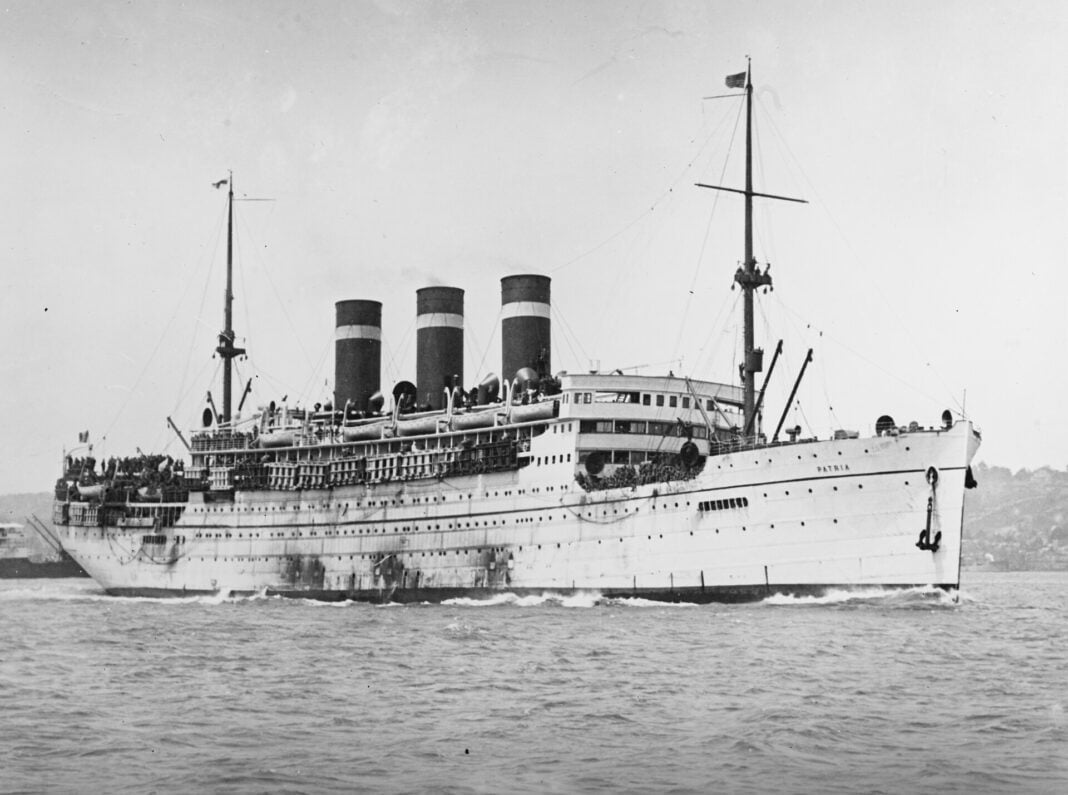

Recently, at the Holocaust Museum in Los Angeles, I heard someone mention the name Patria and the SS Patria disaster.
So what does the name Patria stand for?
Built in France in 1913, the SS Patria first served as a French transatlantic liner. Later, it became an emigrant ship.
The Story Unfolded
Prior to the Holocaust, the Nazi-Hitlerist government first tried to get rid of European Jews by forced emigration.
Jewish organizations took upon themselves the task of bringing Jews from Europe to British Mandatory Palestine — the Land of Israel, what is today known as the State of Israel.
These rescue operations went against the British government’s 1939 White Paper immigration decree, which limited Jewish immigration to Mandatory Palestine to 75,000 over five years.
Cooperating With Nazis, Challenging the British
Jewish organizations understood well that shipping Jews out of Europe required dealing with Nazi authorities. The Nazis wanted to get rid of Jews. The British, however, imposed the White Paper decree in Mandatory Palestine.
The result was a historical conundrum.
To save Jews from Europe, Jewish organizers had to work through Nazi-controlled emigration channels while challenging British restrictions that blocked Jews from entering their ancestral homeland.
The Shipping Operation
Europe’s Central Office for Jewish Emigration, the Zentralstelle für jüdische Auswanderung, operated under the supervision of Adolf Eichmann.
Years later, Israel captured Eichmann in Argentina, where he hid after the war under a false identity. Israel brought him to trial in Jerusalem. The trial ended with his execution.
In 1940, Berthold Storfer, working under Nazi supervision, helped arrange ships to carry Jewish refugees toward British Mandatory Palestine.
In September 1940, the Jewish refugees reached the Romanian port of Tulcea. From there, they boarded three ships — SS Pacific, SS Milos and SS Atlantic — for the journey to the Land of Israel.
On these ships were about 3,500 Jewish refugees from the Jewish communities of Vienna, Prague, Brno, Berlin, Munich and Danzig, today known as Gdańsk.
Arriving at the Port of Haifa
In early November 1940, SS Pacific and SS Milos reached British Mandatory Palestine waters. SS Atlantic arrived later, on November 24, 1940.
The British authorities knew the ships were coming. Under the White Paper policy, the British Colonial Office decided to refuse entry to the Jews whom it called “illegal” immigrants.
The British Royal Navy intercepted the ships and escorted them to the port of Haifa.
The British Dilemma
The British authorities faced a choice.
They could allow desperate Jews, fleeing Nazi-controlled Europe, to enter the Land of Israel. Or they could enforce the White Paper decree and prevent further Jewish immigration, even as Europe was closing in on the Jews.
The British chose enforcement.
They wanted to make an example of the ships and discourage other Jewish refugee vessels from attempting the same journey.
Deportation Order
On November 20, 1940, Sir Harold MacMichael, the British High Commissioner for Palestine, issued a deportation order.
The Jewish refugees were to be taken to the British colony of Mauritius in the Indian Ocean.
The SS Patria
The British transferred refugees from SS Pacific and SS Milos to the SS Patria, which stood in Haifa port.
The Patria was an 11,885-ton ocean liner built in France. From 1932, it operated between southern France and eastern Mediterranean ports.
Shortly before June 10, 1940, when Italy under Benito Mussolini declared war on France and Britain and entered World War II on Germany’s side, SS Patria reached Haifa.
The ship remained there for safety reasons.
After France surrendered to Nazi Germany, the British authorities in Haifa first detained the Patria and then seized it for use as a troop ship.
As a civilian liner, Patria was permitted to carry 805 people, including crew. After being requisitioned for the war effort, it was authorized to carry 1,800 troops, plus crew.
However, the ship still had lifeboats only for the original passenger and crew capacity. Liferafts were added.
Jewish Refugees Ended Up on Patria
The refugees from SS Pacific and SS Milos were soon transferred to Patria.
When SS Atlantic arrived on November 24, 1940, the British began transferring some of its passengers to Patria as well.
The deportation to Mauritius appeared imminent.
Rejecting Deportation
The local Jewish organizations, including Haganah and Irgun, opposed the deportation.
Haganah agents planned to stop the ship from sailing. Their plan was to damage the Patria, not sink it.
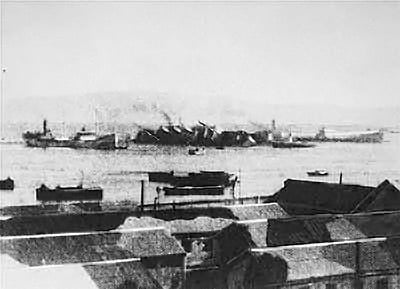
On November 25, 1940, Haganah operatives smuggled explosives aboard the ship. The explosion tore through Patria. The ship sank in Haifa harbor within about 15 minutes.
The operation, meant to disable the ship, became a catastrophe.
Most of the refugees were rescued by British and Arab boats that rushed to the scene.
But about 260 people died. Some accounts place the number at 267. Eventually, 209 bodies were recovered and buried in Haifa.
Local Detention Instead of Deportation
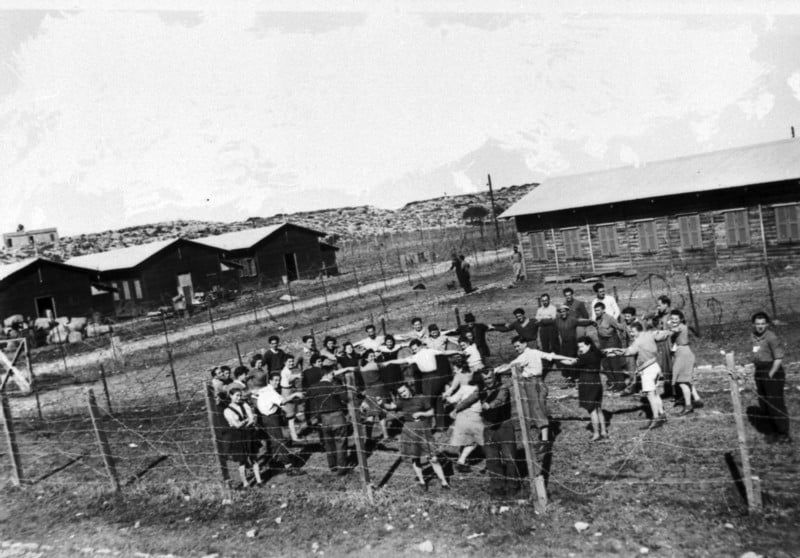
The surviving Jewish refugees from Patria were taken to Atlit Detention Camp, south of Haifa.
An international campaign pressed the British authorities to allow Patria’s survivors to remain in British Mandatory Palestine.
The British permitted the survivors to stay.
However, the remaining passengers of SS Atlantic were deported to Mauritius. They were held there until 1945.
After the war, the British finally allowed the Mauritius detainees to enter British Mandatory Palestine.
The Book Haganah
Controversy surrounded the question of responsibility for the Patria disaster and the true reason the ship sank.
In his book Haganah, Munya Mardor gave a firsthand account of his experience in the Jewish underground army that operated in British Mandatory Palestine.
Mardor was the Haganah operative who planted the explosive device aboard Patria.
The tragedy of Patria remains one of the hardest moral chapters of the Jewish struggle to rescue Jews from Europe and bring them home to the Land of Israel.
The Patria conundrum is this: Jewish fighters tried to stop a British deportation of Jewish refugees fleeing the Nazis. In trying to save them from exile, they caused a disaster that took hundreds of Jewish lives.
History does not always offer clean lines.
Sometimes it presents impossible choices. The SS Patria story is one of them.