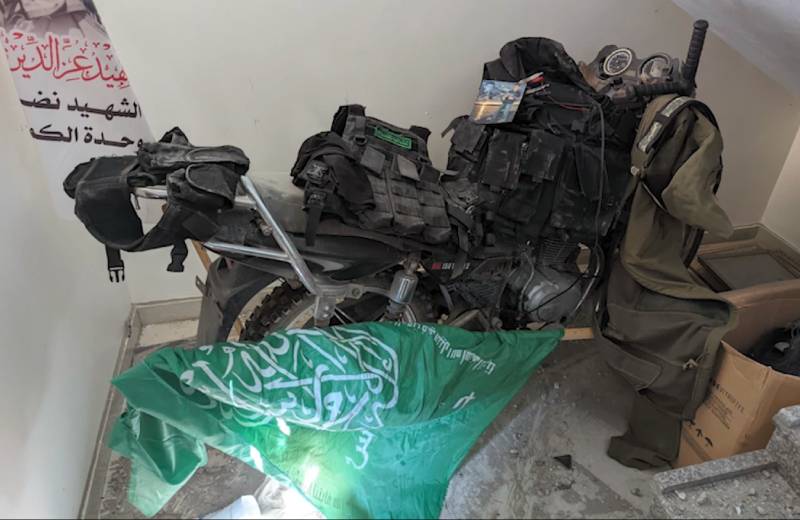

A new Israeli documentary challenges the picture of the Gaza war presented in NAZA, using testimony from officers and soldiers who fought inside the Gaza Strip.
Naza: The Real Story has now recorded more than 43 million views, according to the counter on the documentary’s website.
The film features Israeli soldiers and senior officers describing what they say they encountered during the war that followed the October 7, 2023 Hamas attack on Israel.
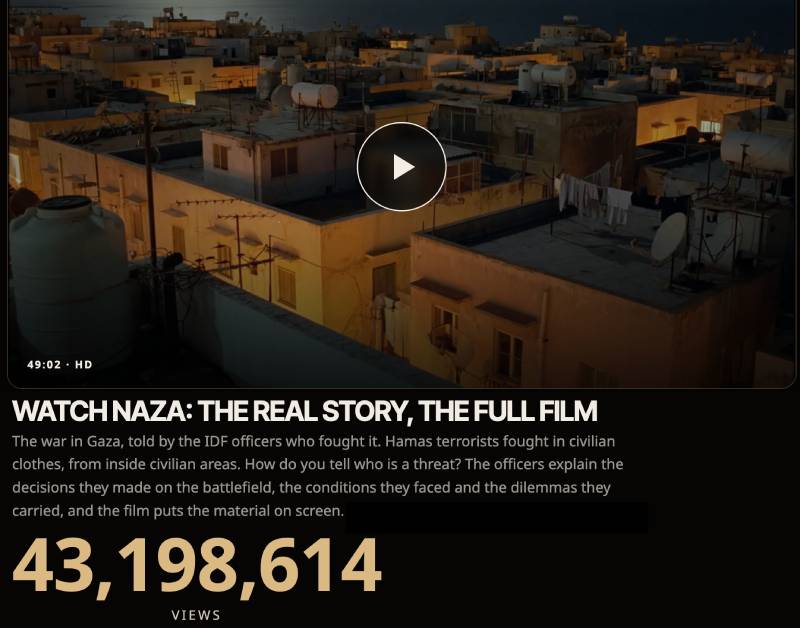
Filmed largely through nighttime rooftop interviews in Tel Aviv, the documentary combines firsthand testimony with photographs and video footage from Gaza.
The officers describe weapons hidden in homes, tunnel shafts beneath children’s beds, Hamas fighters operating in civilian clothing and military infrastructure inside places normally protected from attack.
Their accounts present a very different picture from NAZA.
The Painful Reality Inside Gaza
One soldier in the documentary describes entering a house for which his unit had no concerning intelligence.
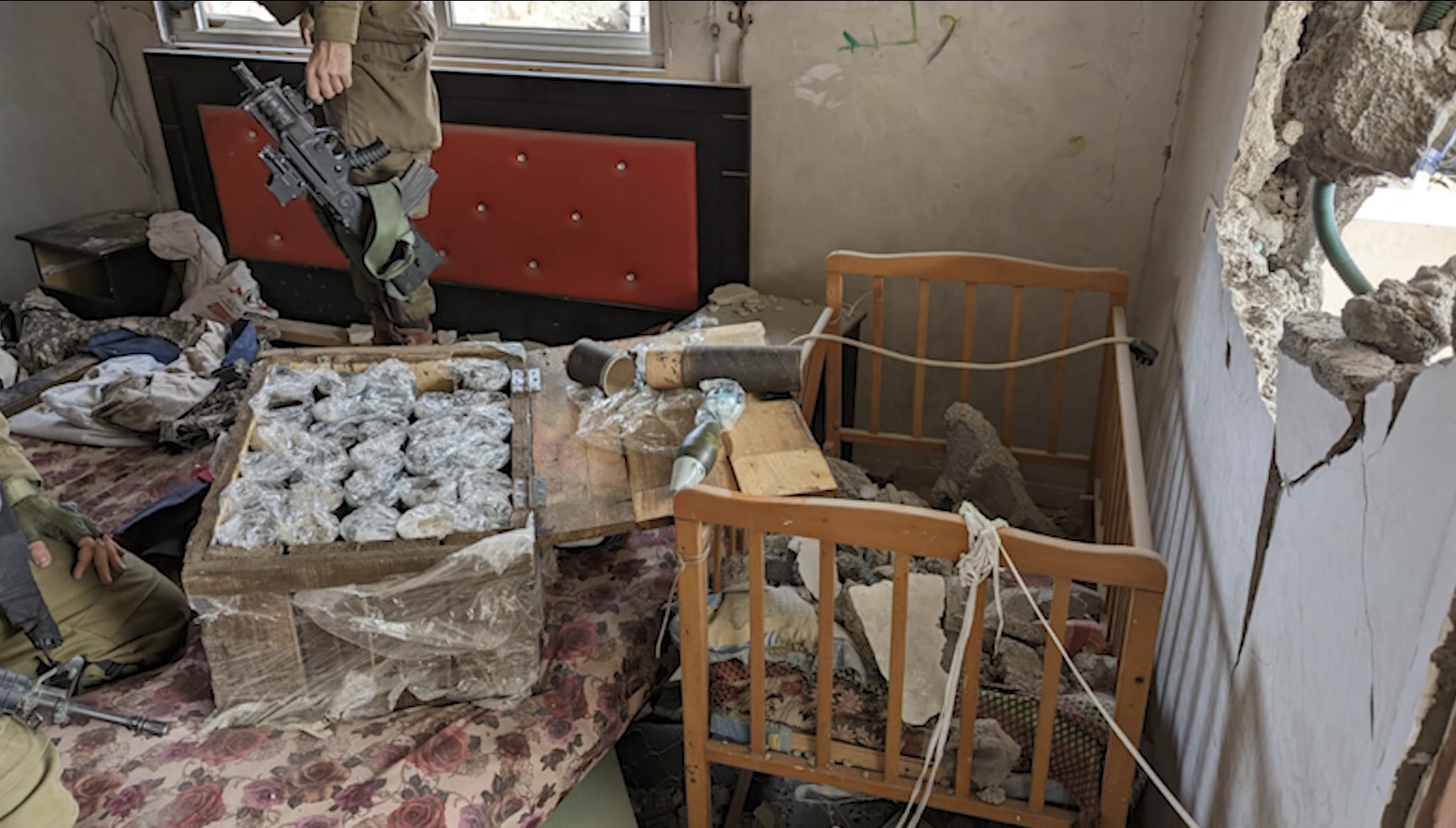
Inside a children’s bedroom, soldiers lifted a bed and found an anti-tank charge underneath it.
In the parents’ bedroom, beside a baby’s crib, they found a crate containing about 30 mortar shells.
The officer said soldiers repeatedly encountered weapons and military equipment inside homes they entered.
“Did we come across a house with weapons in the children’s room? You have to ask it the other way around. Was there a house where we didn’t come across weapons and combat equipment?” he asked.
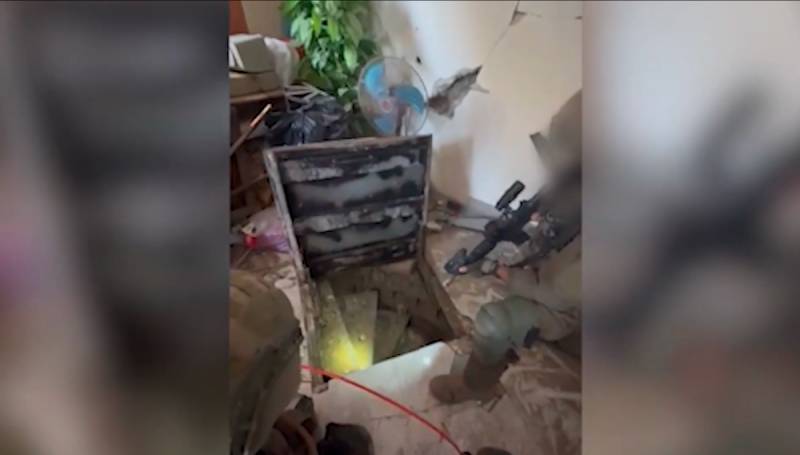
The documentary also shows tunnel shafts beneath beds and inside children’s rooms.
The soldiers say those discoveries made it difficult to distinguish between homes being used solely by civilians and homes incorporated into Hamas military operations.
Hamas Fighters Dressed as Civilians
Several officers say Hamas fighters rarely wore uniforms during combat.
One soldier said his unit “did not encounter a single terrorist wearing a uniform.”
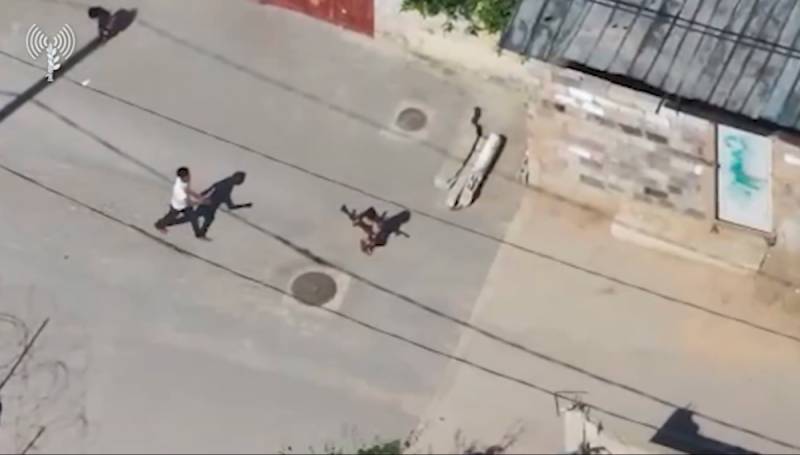
Instead, he said fighters moved between buildings dressed as civilians and often carried no weapons while outside.
Weapons waited for them inside houses.
Another officer described fighters wearing jeans, T-shirts and caps while moving among civilians.
The soldiers said this presented one of their greatest operational problems.
A person who appeared unarmed could be a civilian, a Hamas operative, a messenger gathering intelligence, or a fighter moving toward weapons stored inside a nearby building.
The film includes an incident in which an aircraft tracked people leaving a building from which Israeli troops had just come under fire.
Because the people leaving the building appeared unarmed, the aircraft crew said it could not fire.
Hamas Used Children and Civilians
The officers also describe Hamas using civilian movement to gather intelligence.
During one ceasefire, children approached Israeli positions while operatives followed behind and photographed the troops, according to testimony in the documentary.
The soldiers believed the photographs would be used to prepare attacks once the ceasefire ended.
But the presence of children and other civilians prevented the Israeli soldiers from taking action.
Another officer described civilians being sent toward Israeli positions to determine the location of soldiers, outposts and defensive positions.
He said captured civilians sometimes admitted during questioning that Hamas had sent them.
Kindergarten Concealed Hamas Infrastructure
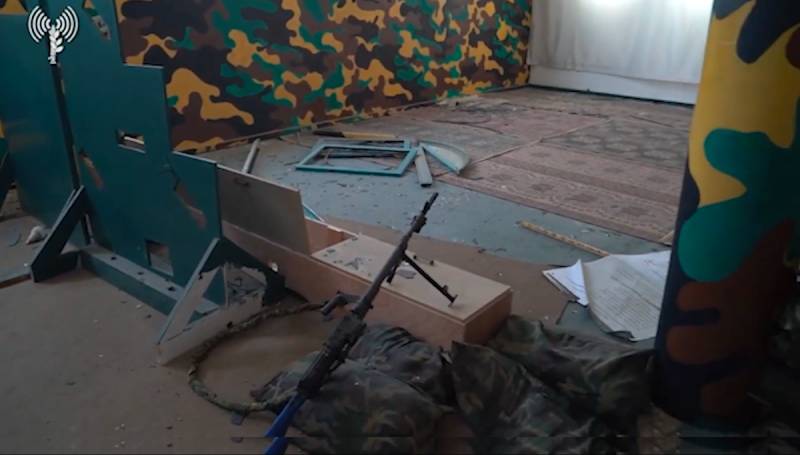
One unit entered an area containing what soldiers described as a Hamas training compound beside a municipal building and kindergarten.
The kindergarten contained weapons and images of children dressed in Hamas uniforms holding rifles, according to the officer.
As troops reached the kindergarten, two fighters emerged from a tunnel shaft in the yard and fired an RPG.
Five Israeli soldiers were wounded.
Video shown in the documentary depicts the tunnel opening in the kindergarten yard.
The officer questioned whether the location functioned as a kindergarten, military training area or offensive position.
Hamas, Unrwa and Civilian Sites
The documentary also raises troubling questions about Hamas operations near UNRWA facilities.
One officer describes Hamas and UNRWA flags flying near the same area.
He said soldiers encountered a UNRWA-funded playground alongside a Hamas training facility, an underground system and a kindergarten.
Soldiers also reported finding UN-supplied rice and flour sacks being used as protective barriers at fighting positions.
Other officers describe ammunition stockpiles and Hamas command facilities inside or around UNRWA schools.
Those accounts do not by themselves establish institutional cooperation between UNRWA and Hamas.
They do, however, add to longstanding evidence that Hamas used civilian and humanitarian areas for military purposes.
Mosques, Schools, Clinics and Hospitals
Officers interviewed in the documentary repeatedly describe Hamas operating from locations that Israeli forces regarded as sensitive sites.
These included mosques, schools, clinics and hospitals.
One officer described the pattern in the areas he encountered as “100% bingo,” saying military infrastructure repeatedly appeared at or near such locations.
He described tunnel junctions, command centers, ammunition storage and hiding places.
Another soldier said weapons were found in almost every building his unit entered.
He listed AK-pattern rifles, roadside charges, grenades and RPG launchers.
One unit entered a mosque and reported finding a training area, weapons, computers and a complete explosives laboratory on the upper floors.
The testimony does not establish that every mosque, school or hospital in Gaza contained military infrastructure.
It does establish that the officers interviewed say the pattern was widespread in the areas where they fought.
IDF Restrictions Around Civilian Sites
The film also explains the procedures Israeli forces said they followed before attacking sensitive sites.
One officer said strikes near hospitals, clinics, schools and mosques required additional approvals and evidence that military activity was taking place there.
He said lawyers and senior commanders reviewed proposed attacks.
Sensitive sites were marked on military systems with safety zones around them.
The officer said those restrictions sometimes prevented soldiers from striking Hamas fighters before they moved away.
Another commander said Israeli forces frequently withheld fire even when they believed armed Hamas operatives were present because civilians were nearby.
The documentary presents those restrictions as a vulnerability Hamas deliberately exploited.
Humanitarian Aid and Hamas
One of the film’s most serious allegations concerns humanitarian aid.
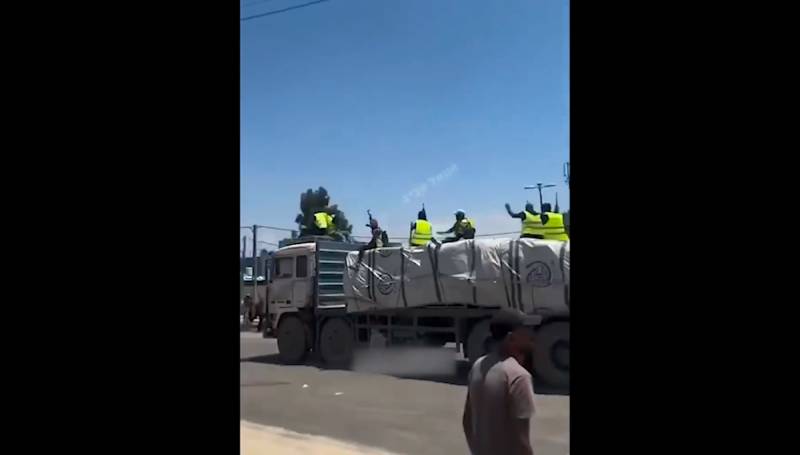
An officer said Israeli forces repeatedly saw Hamas operatives approach aid convoys in vehicles and motorcycles.
According to his testimony, armed men climbed onto trucks, drove civilians away and sometimes fired into the air or at Gazans attempting to approach the aid.
He said Hamas fighters escorted convoys because they knew Israeli forces would not fire near humanitarian trucks.
The documentary also describes large food stockpiles found at Hamas locations.
One officer said soldiers encountered houses used for military purposes containing substantial quantities of food.
He also described Hamas-controlled warehouses, many of which carried UN markings.
These claims are particularly significant because large quantities of humanitarian aid were documented at different stages of the war waiting inside Gaza for collection and distribution.
Officer Says He Saw No Hunger
Observations on hunger comes directly from one of the officers interviewed.
“I didn’t come across hunger in Gaza,” he said.
The officer said that everywhere his unit operated, soldiers saw large amounts of food.
He attributed shortages reaching civilians to Hamas taking control of humanitarian aid convoys.
He said Hamas fighters seized trucks, sometimes removed drivers and prevented civilians from approaching supplies.
The officer repeated that he personally did not encounter areas without food.
That testimony describes what he says he observed in the areas where he served. It should not be treated as proof that no Gazans experienced hunger elsewhere.
But it raises an important question about the difference between food entering Gaza and that food actually reaching civilians.
Medical Aid and Hostages
Israeli officers in the documentary also describe medical equipment entering Gaza.
One said the IDF facilitated large quantities of supplies ranging from dressings and disinfectants to infant care products and medicines for chronic conditions.
He also described attempts to deliver medication intended specifically for Israeli hostages.
According to the officer, he later found no hostage who said the medicine had reached them.
Hamas and The Civilian Population
Several officers describe Hamas deliberately remaining close to civilians because Israeli forces operated under tighter restrictions around populated areas.
They said Hamas fighters sometimes prevented civilians from leaving areas where Israeli troops were expected to operate.
One IDF commander described civilians reaching a square only to be turned back.
Israeli forces also conducted raids on schools and shelters where officers said Hamas fighters had blended into displaced civilian populations.
During screening operations, troops said they identified Hamas operatives, including some accused of taking part in the October 7 attack.
Military Infrastructure Inside Homes
The documentary repeatedly returns to one theme: Hamas built its battlefield inside Gaza’s civilian environment.
Soldiers describe tunnel entrances beneath beds, weapons inside cupboards, explosive devices in bedrooms and ammunition stored in schools.
One officer described finding a tunnel shaft underneath a baby’s crib.
Another said fighters moved through neighborhoods as civilians, entered designated houses when they wanted to fight, collected weapons and then returned to civilian appearance when moving again.
The soldiers argue that this method made distinguishing combatants from civilians extraordinarily difficult.
Hamas After October 7
The documentary ends by considering what happens if Hamas survives the war.
One officer describes Hamas not simply as an armed organisation, but as an ideology that will rebuild if allowed to do so.
He said soldiers encountered anti-Jewish propaganda in homes, schools and mosques.
He also claimed that copies of Adolf Hitler’s Mein Kampf in Arabic appeared in many homes his forces entered.
Children’s books and educational material, he said, portrayed Jews and Israeli soldiers as enemies from an early age.
The officer said that this indoctrination begins in childhood and continues through schools, mosques and public propaganda.
A Different Account of The Gaza War
Naza: The Real Story does not ask viewers to accept an abstract military argument.
It asks them to listen to Israeli soldiers and commanders describing what they say they saw themselves.
Their testimony includes weapons beneath children’s beds, tunnel shafts in homes and kindergartens, fighters dressed as civilians, Hamas operations near sensitive sites and armed control of humanitarian aid.
Some of those claims remain contested, and eyewitness testimony alone cannot establish what happened throughout the entire Gaza Strip.
But those accounts cannot simply be ignored because they complicate the familiar narrative surrounding the Gaza war.
With more than 43 million views, Naza: The Real Story is bringing that evidence and testimony to an enormous audience.
The Gaza story is more complicated than slogans.
And understanding it requires hearing from the people who were actually there.