

Restoring lands and saving people’s lives – demining minefield after minefield.
The greatest challenge Azerbaijan has been facing in order to restore normal life in the Nagorno-Karabakh liberated area is demining.*
* Demining, the process of landmine clearance, the process of removing or neutralizing landmines and other explosive remnants of war from a specific area. It is a crucial component of humanitarian aid and mine action, aiming to make land safe for civilians to return to their homes and daily activities.
Heidi Kühn, CEO and Founder of Roots of Peace, is The World Food Foundation’s 2023 World Food Prize Laureate.
Kühn dedicated more than 25 years to ongoing efforts to revive land and restore agriculture in former conflict zones where landmines were installed and need removal in order to revive the lands trapped by landmines.
Who Is Heidi Kühn
Her jingle is “turning mines to vines,” “cultivating peace through agriculture.”

Heidi Kuhn, a Marin County, northern California American, a Nobel Peace Prize Nominee, who in 1998 created the nonprofit organization Roots of Peace, a pioneer in supporting the world’s most vulnerable battlefields of war into thriving agricultural farmlands; advocates to remove landmines around the world and turn the land into productive agricultural areas.
“Clearing mines, save lives” – Heidi Kühn, a Demining* Activist
Landmine Fields Around the Globe
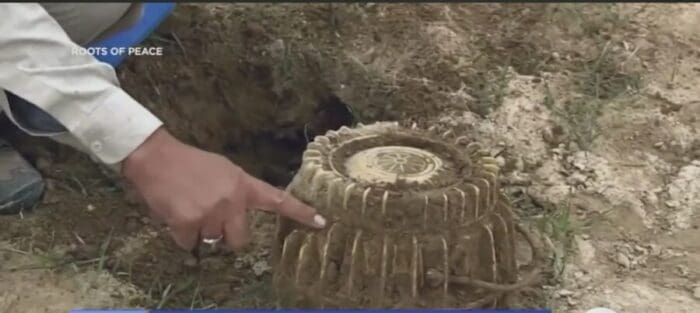
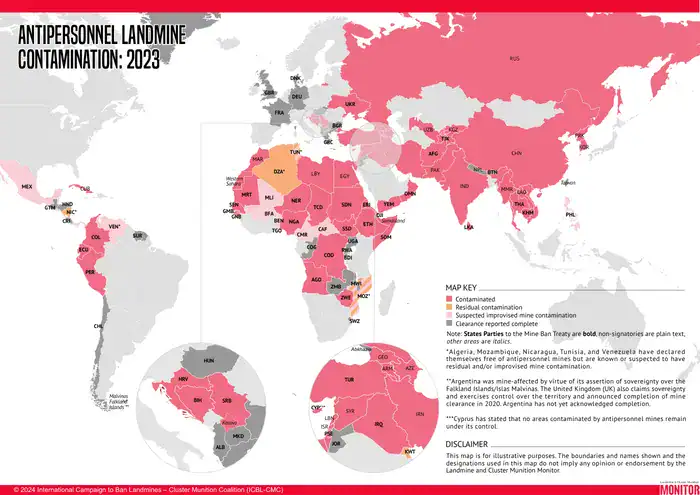
There are many countries across the globe that are contaminated with landmines, remnants from the past and the result of ongoing conflicts, all need clearance.
It is estimated that currently there are 60 million landmines fouling the soil of sixty countries.
For one, Israel’s Golan Heights territory, where Israel has been clearing Syrian minefields since the 1973 Yom Kippur War.


Other Countries That Need Demining
Afghanistan, remains one of the most heavily mined countries in the world; Iraq has a severe landmine problem due to multiple conflicts; Angola suffers from extensive contamination due to its civil war; Bosnia and Herzegovina have severe landmine problems from the war in the region; Cambodia has millions of landmines with a notable mine clearance program in place; Democratic Republic of Congo (DRC) along with Angola, Cambodia, Laos* (*faces a serious problem with unexploded ordnance [UXO] and landmines remaining from the Vietnam War), and Vietnam, continue to suffer from decades of landmine contamination; Myanmar (Burma) where government forces have been using landmines on a greatly expanded scale; the city of Raqqa, northern Syria, formerly the capital of the Islamic State of Iraq and al-Sham (ISIS), faces challenges in clearing explosive remnants of war; following the 2022 Russia’s invasion has led to extensive landmine contamination in Ukraine’s territories; and Yemen even though the violence decreased, people continue to be victims of landmines and other explosive devices.
It is estimated that 5,000 people are killed each year from landmine explosions in contaminated areas.
Azerbaijan’s Landmine Task
During the 1992-1994 First Nagorno-Karabakh War between Armenia and Azerbaijan and after it ended with a ceasefire, both Armenian and Azerbaijani forces laid landmines in the region, primarily placed along the former line of contact between the two opposing forces. The areas most affected by widespread landmine contamination include the districts of Aghdam, Fuzuli and Jabrayil.
The landmines not only pose a serious threat to civilians, many contaminated areas are residential and agricultural zone designated, now run-down.
The widespread use of landmines, coupled with the lack of accurate mapping and records of the landmine locations created a significant challenge for demining efforts in the region.
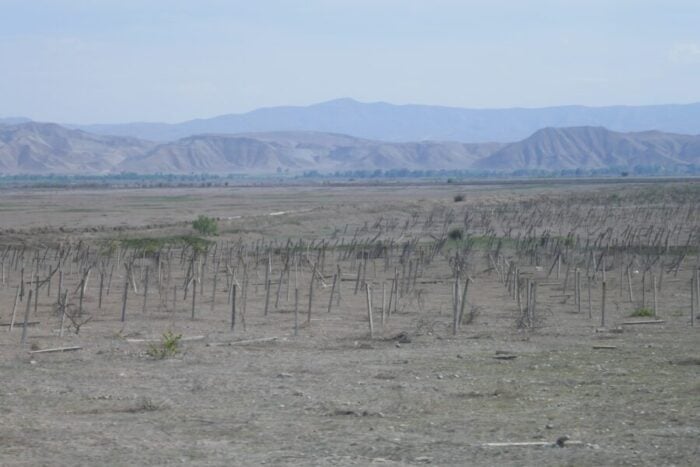
Nagorno-Karabakh One Million Mines Contamination
For years, Azerbaijan appears to have underestimated the challenge it would face upon liberating its territories that were illegally occupied by Armenia.
In 2019 the head of the Azerbaijan National Agency for Mine Action (ANAMA) said: “All the Armenian-occupied areas contain around 100,000 mines.” This assessment’s assertion turned out to be wildly optimistic and far from reality.
After studies by Azerbaijan’s government officials as well as outside experts it has been affirmed that over a million landmines, laid over decades by both sides – Azerbaijan and Armenia – may remain emplaced.
Nearly a fifth of Azerbaijan’s liberated territory is highly contaminated with landmines. Around two thirds of the territory hold humanitarian demining priority. Mine explosions are already killing and injuring people who venture into areas before they are cleared and ready for a human footstep.
Hiedi Kühn Embarks on Helping Azerbaijan Demining
Hiedi Kühn, Roots of Peace founder was awarded for her leading war-torn farmland restoration efforts.
Kühn focuses on developing a model that revitalizes farmland after a devastating conflict which left land uninhabitable.
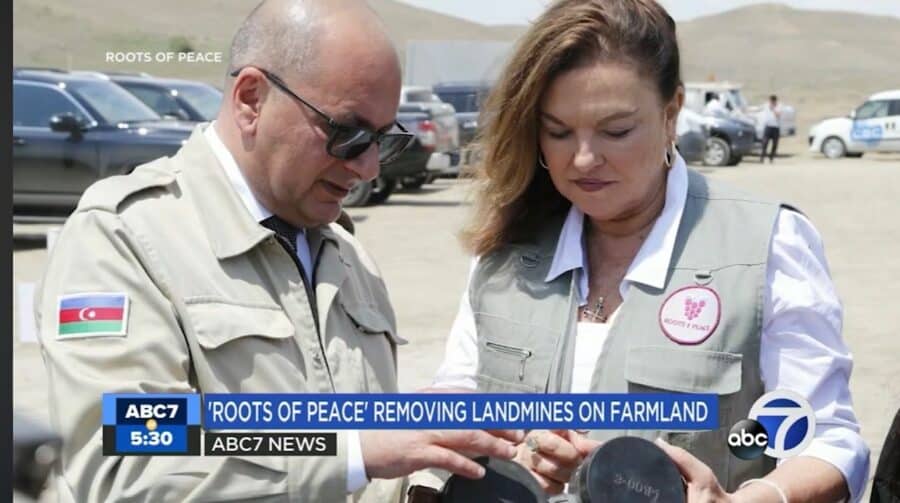
During March 1-5, 2025, at the invitation of the International Eurasia Press Fund (IEPF) and with the support of Azerbaijan National Agency for Mine Action (ANAMA) Kühn paid an official visit to the Republic of Azerbaijan where they are working to remove landmines in the Karabakh area.
She spent a week walking through Karabakh’s minefields, a devastated area that just within the last several decades has turned from a vineyard growing region to fields of death.
Invited by Umud Mirzayev, the President of International Eurasia Press Fund (IEPF), they walk the minefields of his childhood in Karabakh, previously a lush vineyard, now, a “Black Garden” filled with landmines/UXO, where no farmers cultivate the land and no vegetables or fruit grow.
As a gesture to her work, Kühn detonated eight anti-tank mines and then the team planted seeds in their place, turning “seeds of destruction” into “seeds of hope.”
The perils of war mean devastation. Roots of Peace “dig deeper” on these former war torn lands, for peace in Azerbaijan and worldwide.
Proclamation Plaque
Roots of Peace placed a proclamation plaque, a tribute to the removal of landmines and UXOs still deeply planted in the region’s lands, on the edge of Shirvan Wines vineyard, known to be the first organic wine producer in Azerbaijan, located at the Mountainous Shivran Economic Region, eastern Azerbaijan.
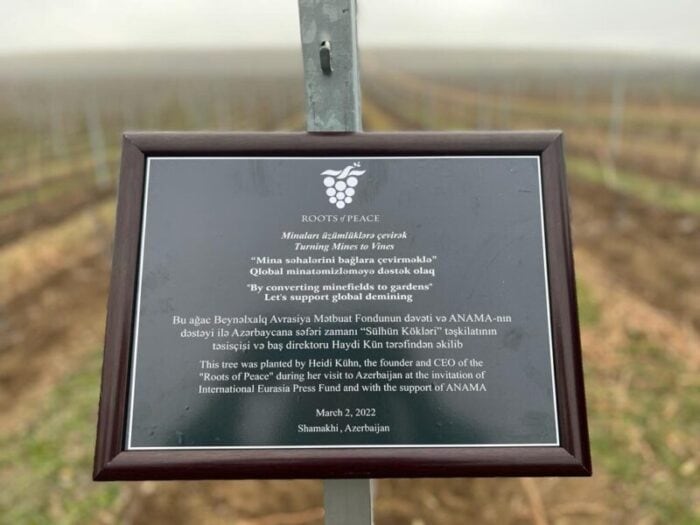
Healing the Lands
The grapevine is a peace symbol. Lands contaminated with landmines require healing. Sowing “economics of peace” on former war-torn lands is a good healing starting point.
Alfred Nobel invented dynamite. This invention, patented in 1867, was a significant advancement over previous explosives like gunpowder.
Though Kühn did not receive the Nobel Prize, she intends to use the dynamite that detonates landmines to demine the face of the earth and to truly turn minds and divines to replace the landmine menace with vineyards and orchards.
Hiedi Kühn earned the title “a lady of valor and peace.”


