
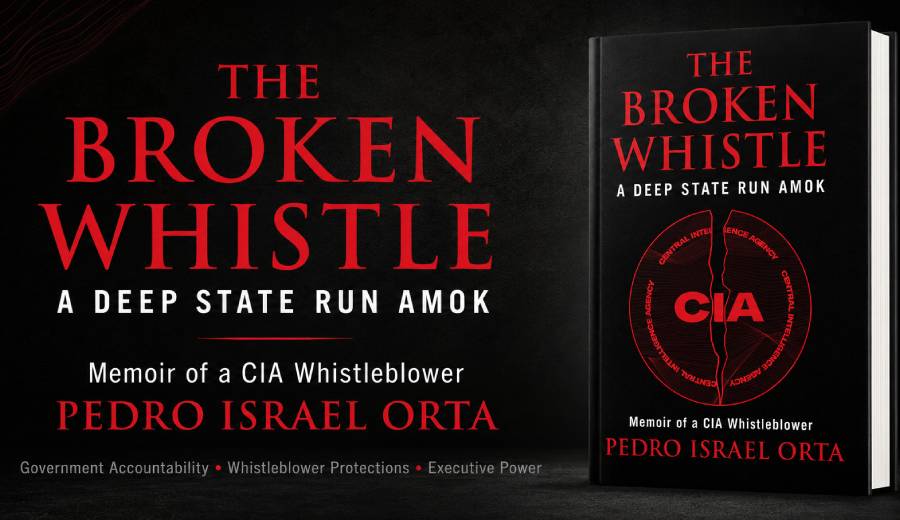

In “The Broken Whistle,” former intelligence officer Pedro Israel Orta recounts a career spent serving his country, an alleged campaign of retaliation and a troubling question: What happens when the institutions charged with protecting the truth become the institutions accused of suppressing it?
There is a particular kind of betrayal that can occur only when a person discovers that the institution he has devoted his life to serving may be incapable of honoring its own principles. For Pedro Israel Orta, that discovery did not come from an enemy intelligence service, a battlefield ambush or an overseas adversary. According to his account, it came from within the American intelligence establishment itself.
Mr. Orta spent more than 18 years in the United States intelligence community, serving with the Central Intelligence Agency and the Office of the Director of National Intelligence. His assignments took him into conflict zones in Iraq and Afghanistan. His career included eight Exceptional Performance Awards and, eventually, work as an inspector handling whistleblower matters. After years of helping safeguard the integrity of the intelligence system, he found himself confronting that very system as a whistleblower.
What happened next, Mr. Orta contends, exposed a disturbing contradiction at the center of American intelligence oversight: The government has elaborate procedures for protecting people who report misconduct, yet those protections may offer little meaningful recourse when powerful institutions resist accountability.
His experience became the foundation of “The Broken Whistle: A Deep State Run Amok,” a 448-page memoir that combines personal testimony with correspondence, official procedures, documentary records and allegations of institutional retaliation. Published in 2024, the book has attracted renewed critical attention in 2026, including reviews examining the credibility, complexity and implications of Mr. Orta’s account.
Behind the book’s provocative title lies a story less easily reduced to partisan politics: that of a decorated career intelligence officer who came to believe that loyalty to the Constitution required challenging the organization he had faithfully served. His account raises questions not only about the treatment of whistleblowers but also about whether the institutions entrusted with national security are sufficiently accountable to the principles they exist to defend.
A Confrontation Over Conscience
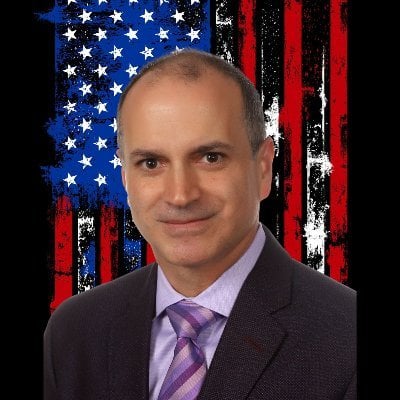
One of the memoir’s most revealing episodes concerns a confrontation in which Mr. Orta says a superior pressured him to support disciplinary action against another officer. The encounter illustrates how disagreements over professional judgment can become tests of personal integrity when institutional authority is brought to bear.
In one passage, Mr. Orta describes a telephone conversation lasting more than 45 minutes. A man identified as Leroy repeatedly urged him to take punitive action against a colleague called Justin. Mr. Orta believed the proposed punishment was unjustified, maintaining that management failures, rather than Justin’s conduct, were responsible for the underlying conflict.
The conversation grew confrontational as Leroy invoked the standing of another manager among senior officials, a statement Mr. Orta interpreted as an implied threat of retaliation. Rather than yield to the pressure, Mr. Orta describes rejecting the proposed action in unequivocal terms:
“I cannot agree with your plans to take punitive actions against Justin,” I told Leroy firmly. “I will not.”
The passage is striking because the dispute, as Mr. Orta presents it, was not about an officer refusing an ordinary assignment. It concerned whether institutional loyalty required endorsing a judgment he believed to be false. The identities in the memoir are sometimes disguised, and its dialogue includes reconstructed conversations. The scene is therefore best understood as Mr. Orta’s account rather than an independently verified transcript.
Nevertheless, the encounter crystallizes the book’s central moral conflict: What should a public servant do when obedience to authority appears to conflict with an obligation to tell the truth? For Mr. Orta, a Christian minister as well as a former intelligence officer, the question also has a biblical dimension.
Exodus 23:1–2 offers an unusually direct admonition against false accusations and the corruption of justice:
“You shall not circulate a false report. Do not put your hand with the wicked to be an unrighteous witness. You shall not follow a crowd to do evil; nor shall you testify in a dispute so as to turn aside after many to pervert justice.” —Exodus 23:1–2, New King James Version
The passage frames the ethical dilemma at the center of Mr. Orta’s account. It demands an allegiance to truth that does not change simply because influential people prefer a different outcome. His refusal, as he describes it, was not an abandonment of professional duty but an attempt to uphold the principles that duty was supposed to represent.
From Baghdad to the Bureaucracy
Mr. Orta’s disillusionment becomes more consequential when viewed against the leadership he says he experienced earlier in his career. During his assignment at Baghdad Station from July 2004 through August 2006, he worked amid the extraordinary pressures of wartime intelligence operations. The dangers were tangible: insurgent violence, rocket and mortar attacks, punishing schedules and decisions carrying potentially fatal consequences.
Despite those formidable conditions, Mr. Orta remembers the leadership of that period with considerable respect. In an October 2026 interview with BookView Review, he described senior officers who were demanding but fair, who tolerated professional disagreement and understood the importance of putting people before bureaucracy. That experience established a standard of leadership against which he would later measure the conduct of other officials.
In subsequent assignments, according to his memoir, he encountered a markedly different environment characterized by disputed performance assessments, alleged harassment, contentious management decisions and escalating conflict with superiors. He eventually concluded that the mechanisms intended to address misconduct were themselves contributing to the problem.
Mr. Orta says he documented his allegations, followed established reporting procedures and sought institutional review. Rather than obtaining meaningful relief, he describes years of delays, referrals, obstruction and, ultimately, the termination of his employment. His account presents a troubling portrait of an experienced intelligence professional who believed that adhering to established procedures would ensure fair treatment, only to discover what he considered profound weaknesses in those safeguards.
The difficulty of evaluating such allegations publicly raises a question intrinsic to intelligence oversight: How can citizens assess accountability within institutions whose internal workings are necessarily concealed? National security requires confidentiality, but the legitimacy of public institutions also depends upon meaningful mechanisms for investigating misconduct and protecting those who report it.
When the Watchdog Needs Protection
Perhaps the most unsettling dimension of Mr. Orta’s experience is his familiarity with the whistleblower protection system itself. He was not an outsider unfamiliar with government procedures. He had worked on whistleblower matters within the intelligence community’s inspector general structure and understood how complaints were supposed to be handled.
What surprised him after becoming a complainant was the enormous difference he perceived between institutional promises and institutional conduct. His experience, as documented in his memoir, suggests that even officials knowledgeable about reporting procedures may encounter formidable obstacles when seeking redress against the organizations they serve.
In his essay, “I Worked on Whistleblower Matters. Then I Became One,” Mr. Orta argues that a whistleblower protection system cannot be judged merely by whether an employee is permitted to file a complaint. The more meaningful test is whether credible allegations receive independent examination, retaliation produces consequences and injured employees can obtain effective remedies.
He proposes reforms that would address past cases of proven retaliation, remove certain investigations from agencies implicated in the allegations and expand access to judicial review. These proposals extend beyond the fate of one intelligence officer, raising fundamental questions about conflicts of interest, governmental transparency and the ability of public institutions to investigate themselves.
Mr. Orta also argues that whistleblower protection must remain politically neutral. Individuals reporting suspected wrongdoing should not receive different treatment simply because their allegations threaten a favored administration, political figure or institution. In his view, genuine accountability requires consistent standards, independent scrutiny and remedies capable of deterring future retaliation.
The principle is straightforward, although its implementation can be considerably more complicated. Mr. Orta’s narrative illustrates the potential human and professional costs when safeguards designed to protect public servants fail to function as those employees reasonably expect.
A Memoir Under Critical Examination
Recent reviewers have approached “The Broken Whistle” as both a personal narrative and an unusually extensive documentary case history. BookView Review emphasizes its supporting correspondence, records and chronology. IndieReader awarded the book four stars, while The Book Revue gave it five, reflecting favorable critical recognition of Mr. Orta’s work.
Erin Britton, writing for Independent Book Review in October 2026, offered a more qualified assessment. She recognized the memoir’s force and documentary ambition while observing that its interpretation of events remains overwhelmingly Mr. Orta’s own. That distinction is important in evaluating a personal account involving allegations against institutions whose complete internal records may not be publicly accessible.
Mr. Orta told BookView Review that he reconstructed his experiences by comparing personal recollections with journals, logs, emails and archival material. The resulting book places readers inside an unusually detailed struggle over professional reputation, institutional power and the uncertain boundaries of whistleblower protection.
The book’s documentary approach distinguishes it from a conventional personal grievance narrative. Rather than relying exclusively on broad accusations, Mr. Orta seeks to establish a chronology of events and demonstrate how individual decisions, administrative procedures and institutional responses shaped the outcome of his complaints.
Mr. Orta has also carried these concerns beyond the printed page. He served as executive producer of the documentary “Deep State Gangsters,” which presents the experiences of additional whistleblowers. His expanding body of work suggests an objective no longer limited to documenting his own professional ordeal. He seeks to encourage a broader public examination of whether existing protections are adequate and what changes may be necessary to ensure that those who report suspected misconduct receive fair treatment.
The Question That Remains
America’s intelligence agencies operate under extraordinary obligations. They must protect sensitive information, defend national security and maintain disciplined chains of command. These responsibilities are essential to their missions and to the security of the nation they serve.
Yet those responsibilities coexist with another obligation: ensuring that officials can report suspected wrongdoing without fear that the machinery of government will be turned against them. Effective intelligence operations and meaningful accountability are not inherently opposing objectives. Both are indispensable to institutions that depend upon public trust.
Mr. Orta’s book challenges readers to consider what happens when those duties collide. It also presents a more personal question: If someone with extensive intelligence experience, familiarity with oversight procedures and years of distinguished service could not secure the remedy he sought, what prospects exist for a less experienced employee confronting similar circumstances?
The full circumstances of Mr. Orta’s allegations cannot be established by one memoir alone. Nevertheless, he has assembled an extensive account that warrants careful examination rather than indifference. His experience raises legitimate questions about whether existing procedures provide sufficient independence, transparency and protection when allegations concern powerful government institutions.
Near the conclusion of his October 2, 2026, interview with BookView Review, Mr. Orta challenged readers to recognize the difference between discussing injustice and taking meaningful action to confront it. He left them with a question that captures the central concern of his work: “Who will speak for you when you are the one standing alone?”
It is a question that extends well beyond the intelligence community, reaching into offices, boardrooms and government institutions where personal integrity is tested against institutional power. For Mr. Orta, the whistle remains broken, but his willingness to document his experience and seek reform demonstrates a conviction that the principles of truth and accountability remain worth defending.
Whether that whistle can be repaired is the unresolved question at the center of his book. It is also why his story deserves serious consideration by readers concerned with justice, constitutional principles and the responsibilities of those entrusted with public power.
“The Broken Whistle: A Deep State Run Amok,” by Pedro Israel Orta, is available in hardcover, paperback, e-book and audiobook editions. Additional information: www.BrokenWhistleBook.com
Works Cited
1. Orta, Pedro Israel. The Broken Whistle: A Deep State Run Amok. Pedro Israel Orta Productions, LLC, 2024. Quoted passage reproduced in an author-supplied Kindle quotation graphic.
2. Orta, Pedro Israel. “I Worked on Whistleblower Matters. Then I Became One.” Author-supplied essay, provided for editorial review.
3. BookView Review. “Interview with Author Pedro Israel Orta.” October 2, 2026. https://bookviewreview.com/2026/10/02/interview-with-author-pedro-israel-orta/.
4. Britton, Erin. “The Broken Whistle by Pedro Israel Orta.” Independent Book Review, October 14, 2026. https://independentbookreview.com/2026/10/14/the-broken-whistle-by-pedro-israel-orta/.
5. BookView Review. “BookView Review: The Broken Whistle: A Deep State Run Amok — Memoir of a CIA Whistleblower by Pedro Israel Orta.” September 25, 2026. https://bookviewreview.com/2026/09/25/bookview-review-the-broken-whistle-a-deep-state-run-amok-memoir-of-a-cia-whistleblower-by-pedro-israel-orta/.
6. Attfield, Nicci. Review of The Broken Whistle: A Deep State Run Amok, by Pedro Israel Orta. IndieReader. https://indiereader.com/book_review/the-broken-whistle-a-deep-state-run-amok/.
7. Sebastian C. “The Broken Whistle: A Deep State Run Amok.” The Book Revue, August 17, 2026. https://www.thebookrevue.com/post/the-broken-whistle-a-deep-state-run-amok.
8. The Holy Bible, New King James Version. Exodus 23:1–2. Thomas Nelson, 1982. https://www.biblegateway.com/passage/?search=Exodus+23%3A1-2&version=NKJV.
Related NewsBlaze coverage: National Guard Whistleblower Allegations Raise Questions About Government Accountability
