Fear City: New York vs. The Mafia is a gripping Netflix TV series that dives deep into the notorious world of the Five Mafia Families in New York City. This three-part series pulls back layer after layer on one of the most fascinating and feared organized crime groups: the Italian-American mafia. It reveals not only the violent history of these clans but also how law enforcement, particularly the FBI and DEA, the government’s crack federal agencies, worked relentlessly to dismantle the mob’s operation.
The series mostly tells the stories from the FBI’s point of view, which gives the show a grand entree into the mob’s world, particularly for those who may not know mob history but are fascinated by hustlers and the tough guy persona. Fear City opens with the musical 1970s’ song “Hard Times” by Baby Huey & the Babysitters.
“We wanted to tell our stories from the perspective of law enforcement with an emphasis on the tricky, unglamorous work of handling early-stage digital surveillance technology to make the show ‘a spy thriller as much as it is a mob series,'” Director Sam Hobkinson told the Guardian News during an interview when the documentary started buzzing.
Although released in April 2020, Fear City still remains a popular Netflix series that goes further than the regular norm of mob stories; it goes nonstop into the belly of the beast, peeling back the bloody scab of the Five Mafia families in the Big Apple. Mobsters were dangerous and heartless killers yet their down-low reputations were the symbol of power and wealth.
Many of the mafioso often shared valuable wisdom: “Keep your friends close and your enemies closer”; “It’s business”; and the mind-blowing phrase, “Fuhgeddaboudit.” Fear City also stands out by focusing on the FBI use of the Federal RICO Law to overthrow the mob’s empire.
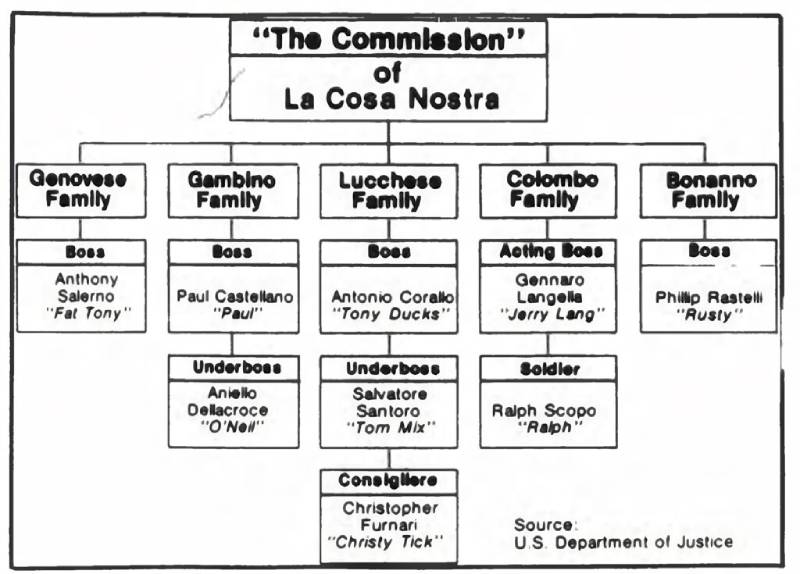
The Five Italian Mafia families who ruled New York with bloody hands were the Gambino, Colombo, Lucchese, Bonanno, and Genovese crime families. Rotten Tomatoes gave Fear City a 67-71 percent approval( A 4-star rating out of 5 based on 17 critical reviews).
Notwithstanding favorable approval ratings, Fear City received its share of criticism.
Vox writer Allison Wilkinson wrote a negative review about Fear City. Wilkinson argued the documentary series focused too heavily through the lens of FBI agents, which made for a one-sided story. Wilkinson further stated: “There’s plenty of talk of the mafia’s control over unions, but no former union workers appear to talk about it.”

Another critic said the film doesn’t provide enough background details about the New York Mafia. Screenrant writer Q.V. Hough explains, “Fear City ignores 100 years of Mafia history.” Recalling 100 years of the La Cosa Nostra mob wasn’t the goal of film makers Alexandra Reid and Sam Hobkinson. Their story line focused only on the background of the FBI investigations into the higher-up Commission bosses from the Five mob families of the 1980s’ in New York – which represented a particular timeframe and location.
Despite criticism, Fear City boils down to the nitty-gritty: It offers a rare, factual account inside the fight to topple the biggest criminal organizations.
“It took decades for the federal government to take down the Mafia. Nobody thought it could happen. “But it did,” said Lewis Rice, a retired Special Agent in Charge of the New York-based DEA (Drug Enforcement Administration). “These days nobody knows if they’re dealing with people cooperating with the FBI or DEA – or if they’re dealing with a straight-up solid guy.”
A cop who worked Mafia cases told the New York Post about today’s so-called organize crime Mafia families, “If you did a job with them; if they didn’t screw it up, they’d rat you out if they got caught.”
Ex-DEA Special Agent Rice made it clear that the RICO Law served as a potent weapon that blew the lid off the Mafia’s secretive omerta vows.
“When you’re talking about the RICO statute that carries life in prison without parole, people start talking, and the omerta vow the Mafia was once sworn to – to not give up anyone, RICO changed that.” Rice further said in a typical New Yorker accent.
Hollywood Drug Dealers: Behind Silver Screens Featuring Coke & Heroin Kingpins
Harlem drug dealer Frank Lucas wasn’t Italian. He wasn’t in the mob. He was Black. It didn’t matter because Hollywood loved him; they swallowed every word he spoke—hook, line, and sinker.
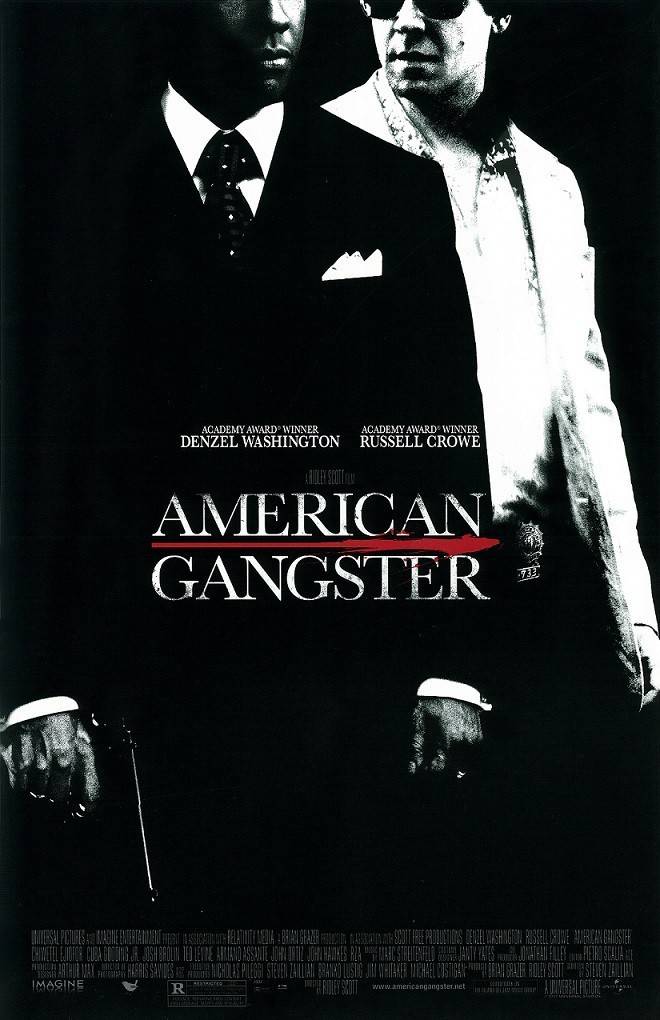
DEA agent Lewis Rice played a key role in preparing Frank Lucas, a convicted Harlem heroin dealer, to testify against major drug traffickers in New York. Lucas, who was serving a 70-year prison sentence, agreed to cooperate in exchange for a reduced sentence. In the 2007 hit movie American Gangster, Denzel Washington portrayed Lucas, bringing his life story to a worldwide audience, raking in over $300 million.
For several years, Rice has tried to convince people who watched American Gangster that the message at the end of the movie indicating Lucas’s cooperation led to the conviction of three-quarters of the New York DEA agents that, in fact, it wasn’t true. It was a big lie cooked up by either Lucas or the filmmakers and producers of American Gangster. Yet Lucas continued to tell anyone listening that he only gave up cops because they stole his money, around nine to ten million dollars.
“Lucas never identified any DEA agents as corrupt. There was no reason to do so. The DEA and New York police arrested Lucas on January 28, 1975, in Teaneck, New Jersey. He only gave up other drug dealers,” Rice recalls. “I know because I handled Frank Lucas for a whole year, preparing him to testify against drug dealers in New York court —and having agents to corroborate evidence that he told us about specific heroin dealers.” “That’s how Lucas got his time reduced and got out of prison by telling on people who sold dope,” Rice insisted.
(Watch Video: Lew Rice – Former DEA SAC on His Time in NYC, Miami, Jamaica and with Kingpin Frank Lucas – Inside the Life)
Former New Jersey narcotic detective and prosecutor Richie Roberts, played by actor Russell Crowe in American Gangster, has previously said the real-life Frank Lucas often got angry at him for disputing Lucas story about the actual amount of money recovered from his home when he was arrested, and the fact was whenever Roberts contradicted the American Gangster story, Lucas only told on DEA agents and New York cops for stealing his money.
Roberts corroborates DEA Rice story that Frank Lucas cooperated with federal agents and had his prison sentence reduced from 70 years to just 5 years of prison time.
“American Gangster movie was riddled with false information,” Roberts’ attorney told The Hollywood Reporter.
Many insiders familiar with the 1970s’ heroin smuggling business proclaimed the reputation of American Gangster should be awarded to Sgt. Ike Atkinson, better known by DEA agents as Sgt Smack.
“When Frank Lucas snitched on other dealers he was out the game,” said former cocaine kingpin Johnny Binder. “How can a low-down snitch become the American Gangster?” Binder asked rhetorically.
Binder knows about the ‘snitchers’ in the drug world because several turned on him and took the witness stand in his three-month trial.
DEA agents in Houston, Texas, called Binder–a big catch during the late 1980s. Miraculously, Binder beat the RICO charge which carried life in prison without parole. Subsequently, a federal judge sentenced Binder to 40 years in prison in September 1988 for two counts of drug sales. Now living as a man of redemption, an activist working for God since his release, Binder is an associate pastor, an entrepreneur, a real estate developer, and he works with young men in the streets of Houston encouraging them to “stop the violence, stop the killings.”
DEA Mob Busts
The DEA played a significant role in busting the Mafia’s involvement in massive dope trafficking, notably The Pizza Connection, a landmark DEA/FBI operation that dismantled a $1.65 billion Sicilian Mafia heroin smuggling ring, a sophisticated scheme that utilized pizza parlors in the U.S. to front drug sales. Incredibly, French Connection drug ring smuggled heroin from overseas into the U.S. beginning in the 1930s.’
Much of the heroin was sold wholesale to the New York mob and other players in the dope trade. French Connection reached its peak during the 1960s; DEA helped local dope agents take down the operation in the 1970s. DEA agents participated in several major heroin cases where the Gambino and the Bonanno crime family members were charged and arrested.
Following a bust involving Bonanno crime family which led to over 100 arrests, exposed the deep inner workings of the heroin trade with ties to the French Connection and other vital sources. Organized crime figures involved in the New York heroin game inspired the famous French Connection movie starring actors Gene Hackman and Roy Scheider.
Writing About The Mob
Writing about the real-life Italian mafia is reminiscent of writing about one of the toughest, if not the toughest, organized crime groups to exist. When I began my online writing career in 2000 – I snagged a freelance gig writing long-form stories about the mob for AmericanMafia.com.
During my foray into the mob’s world, I wrote about the big-time gangsters like Gambino crime boss John Gotti, Al Capone, Lucky Luciano, Carlos Marcellas, Sammy “Bull” Gravano, Tony Accardo, and many others. I confess. The historical genre of these mob players hooked me into the underworld. My most adventurous experience was when I wrote about the Gotti family, and John Gotti’s wife, Victoria Gotti, sent an email to my dearest attention. I couldn’t believe my brown eyes. We became pen pals online. The mob attracts people’s fascination and curiosity beyond the stretch of one’s imagination.
Countless movies, TV shows, books, and documentaries have been made about the mob genre. Even podcasters are in on the action. Michael Frantzese is a former member of the Colombo crime family. Franzese has contributed to the popularity of the mob’s history by writing a book and appearing on several mainstream TV shows and podcasts, including his appearance on numerous online internet shows.
Don’t forget the Sopranos. The Sopranos represented some of the highest lore of mob culture, sparking a massive, enduring legacy.
Has Law Enforcement Broke the Shell of Old-School Mafia Gangsters?
Many Americans, fascinated with the mob, don’t respect the importance of hard-fought battles that federal and state law enforcement agencies were forced to engage in dangerous situations to reel in the worst of organized crime over a period of decades. For over 70 years, FBI and DEA took relentless aim at these criminal empires, chipping away at their power bit by bit. Their initial strategy was to make arrests, yet still it became critical to break the mob beginning from the inside. A Buddhism proverb says; Great things always begin from the inside. So, that’s where FBI started.
Federal agents targeted the mob’s infrastructure, turning ruthless killers and loyal members into informants. These “rats,” as they were called, provided invaluable information that drove nails into the crime family’s coffins. Through persistence, undercover operations, and strategic indictments, gradually weakened these organizations until they crumbled.
Organized crime experts explained down through the years the Mafia became a shell of themselves when compared to its mid-20th century peak following the frequent use of the RICO law. New York Post pinpointed the weakening of the mob this way; “the New York City mob is a pathetic shell of what it once was – full of small-time crooks, rats and dimwits.
John Gotti would roll in his grave over how weak and brainless the Big Apple’s Five Families have become since the glory days of the old-school mob.” A retired law enforcement source weighed in on the matter. “Don’t make me laugh. “If these guys were around in the old days, I wouldn’t even ask them to get me a cup of coffee because they would f–k up the order.”
John Gotti Vilified Today’s So-called Gangsters
During a prison visit between John Gotti and his daughter Victoria on January 30, 1998, Gotti berated his son John Jr, in regards to the federal rackeetering charges the fed charged Jr with, Gotti Sr called his son an imbecile, an asshole. He questioned how stupid could someone like (his son) to leave behind evidence for police to connect him to criminal activity including a list of names for introduction into the mob, a list stashed behind a wall in Jr’s home. Referring to the list of names selected to join the mob, Gotti Sr snapped, “Where do these creatures come from?”
Wagging his finger at Victoria, Gotti said her wealthy husband Carmine Agnello who’d been hit with criminal indictments for mob related incidents “should’ve been charged with possession of a brain intending to use it!”
New York Organized Crime Families Join Forces to Cheat Poker Games. As Customary; They Were Cold Busted
Despite decades of aggressive crackdowns that undercut the New York Mafia, recent events show the mob remain far from extinct. An indictment handed down last year involving an NBA coach, a player, and nearly three dozen others exposed a sophisticated poker-rigging scandal, highlighting the Mafia’s ongoing presence and the ability to adapt with the millennium era.
Four of New York’s five organized crime families were involved in manipulating high-stakes poker games across high-rolling locations like Las Vegas, Miami, Manhattan, and Long Island. The operation reportedly cheated victims out of approximately $7 million, in a plot, one investigator described as “reminiscent of a Hollywood movie.”
“Using the allure of high-stakes winnings and the promise to play alongside well-known professional athletes, these defendants allegedly defrauded unwitting victims out of tens of millions of dollars and established a financial pipeline to La Cosa Nostra,” said Christopher Raia, assistant director in charge with the FBI.
Former federal prosecutor Mitchell Epner emphasized that these indictments serve as a stark reminder: La Cosa Nostra is “still very real.” – albeit weaker – yet continues to operate, often in more low-key ways. When the almighty feds got a tip about the poker scheme the Texas ‘hold em’ games unraveled faster than a spool of thread. Now the poker players and the mob figures are indicted on multiple federal criminal offenses.
Fear City Film Review
Fear City executes an outstanding job retelling the story of the long-term investigation and prosecution of what became the Commission case, a unique but unorthodox plan by the U.S. Justice Department and the FBI to take down the five organized crime bosses in New York during the epic 1980s. The plan, riddled with risks at every turn because the five bosses representing New York’s “Five Families” – each had a seat on the commission that represented the Mafia’s board of directors that oversaw organized crime activities both in New York and around the country.
In Fear City documentary, attorney Sam Goldaper discusses the 1985 commission case. Goldaper is a former mafioso. Rather than face the rest of his life behind bars, Goldaper chose to change from his old dirty life and become an upstanding citizen.
Charles “Lucky” Luciano founded the Commission in 1931. After launching a brutal coup to remove “Mustache Petes”—old-school Mafia bosses with narrow vision—and replace them with younger men capable of managing their criminal organizations in novel and sophisticated ways, Luciano established the first commission. Although the Commission’s membership and power fluctuated significantly over time, overlapping into the 1980s.
The U.S. Attorney’s Office prosecutors and FBI agents who assisted in gathering evidence and developing the case are the main subjects of the documentary. Sixteen agents, investigators, and prosecutors were interviewed on camera.
Fear City is an excellent show to watch. Filmmakers Sam Hobkinson and Alexandra Reid deserve much praise. Both exhibited sharp investigative skills at locating and persuading many of the important figures from the Commission case to participate in interviews. U.S. Attorney’s Office prosecutors and FBI agents who assisted in gathering evidence and developing the RICO criminal cases are the main subjects of the documentary. Sixteen agents, investigators, and prosecutors were interviewed on camera.
Former mafia gangsters Michael Franzese and John Alite, a former Gambino crime family associate and hitman who testified in court against John “Junior” Gotti, did a great job of demonstrating that, while law enforcement made significant progress in bringing down the mob during the Commission cases, the mafia prospered and made tons of millions in the 1970s.“We were untouchable. Who was going to stop us? You felt like you had the power to do anything you wanted,” Alite recalls. Alite is a reformed author, podcaster, and councilman in Englishtown, New Jersey, according to Wikipedia.
Despite the lack of direct evidence linking the Mafia bosses to the countless murders, racketeering, robberies, extortions, and other crimes perpetrated by their henchmen, prosecutors built a case against them through a little-known statute known as the Racketeer Influenced and Corrupt Organizations Act, a law commonly known as (RICO). RICO had been available for a while even though the statute wasn’t utilized until former U.S. Southern District of New York federal prosecutor Rudy Giuliani and his team targeted the Crime Bosses of each of the New, York, based Five families.
Retired FBI agent Jim Kossler puts it bluntly, RICO “would change everything.”
Who Created RICO Law? What’s The Backstory?
Critics of Fear City Netflix series argued the documentary failed miserably to expand the full meanings of the RICO law; how it works, and fully describe how the feds used it against the Five Mafia Families.
Therefore, I feel obligated to explain the full scope of the RICO Act against the mob and organized crime altogether.
The grand idea for the name RICO started with a gangster movie. Caesar Enrico Bandello, often called Rico or Little Caesar, was around many years before the larger-than-life Don Corleone, Scarface, American Gangster, The Untouchables, or Tony Soprano. Here’s why. Remember the well-known 1931 movie Little Caesar? Rico was depicted in the movie as a seductive, notorious mafia figure. Nonetheless, Rico Bandello was based on the real-life Chicago mobster Al Capone. Rico embodied all the traits of a post-Prohibition mobster; he was ruthless, violent, and ambitious.
Little Caesar not only created a new type of mob movie, but the story motivated teenager G. Robert Blakey to commit his life to battling the mafia that operated practically untouched, committing ‘bloodthirsty’ mayhem throughout the U.S. Later in life, Blakey would say Rico, played by actor Edward G. Robinson in the Little Caesar movie, captivated him. He wanted to be a part of that world, but on the good guys’ side, fighting organized crime.
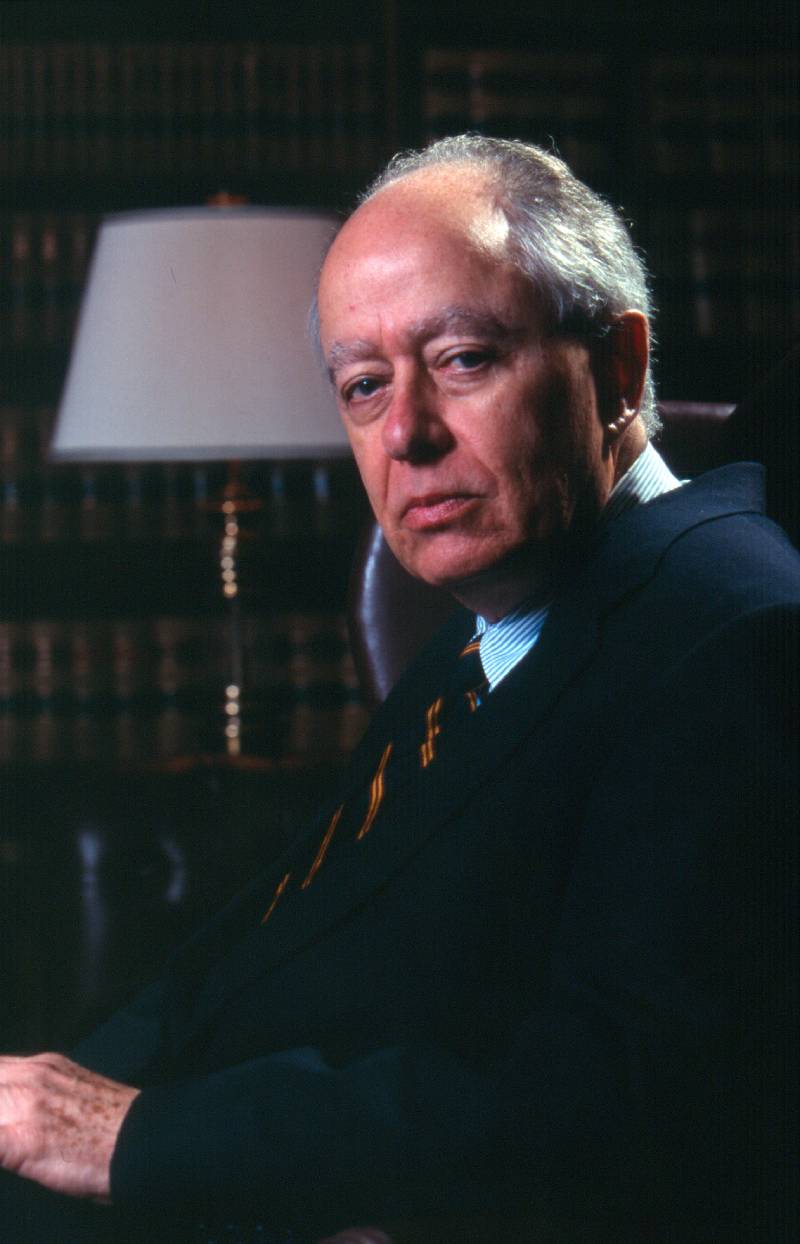
Blakey later became a prominent attorney and an emeritus Notre Dame law professor. To carry out his desire of making a difference and to stand firm with the federal government to target the mob and tear down their playhouse of organized crimes, Blakey, under the close supervision of former Senator John Little McClellan and the Chairman of the Committee, drafted the RICO Act, Title IX of the Omnibus Organized Crime Control Act of 1970.
Among the first indictments handed down under RICO, ‘Lefty Guns’ Ruggiero and his organized crime group became the recipients of the prize. Blakey also wrote Title III of the 1968 Omnibus Crime Control and Safe Streets Act, a law that authorized court-ordered electronic surveillance at the federal and state levels.
Realizing the power behind RICO, subsequently, several states passed their own version of the racketeering legislation with Blakey’s assistance modeled on the federal statute.
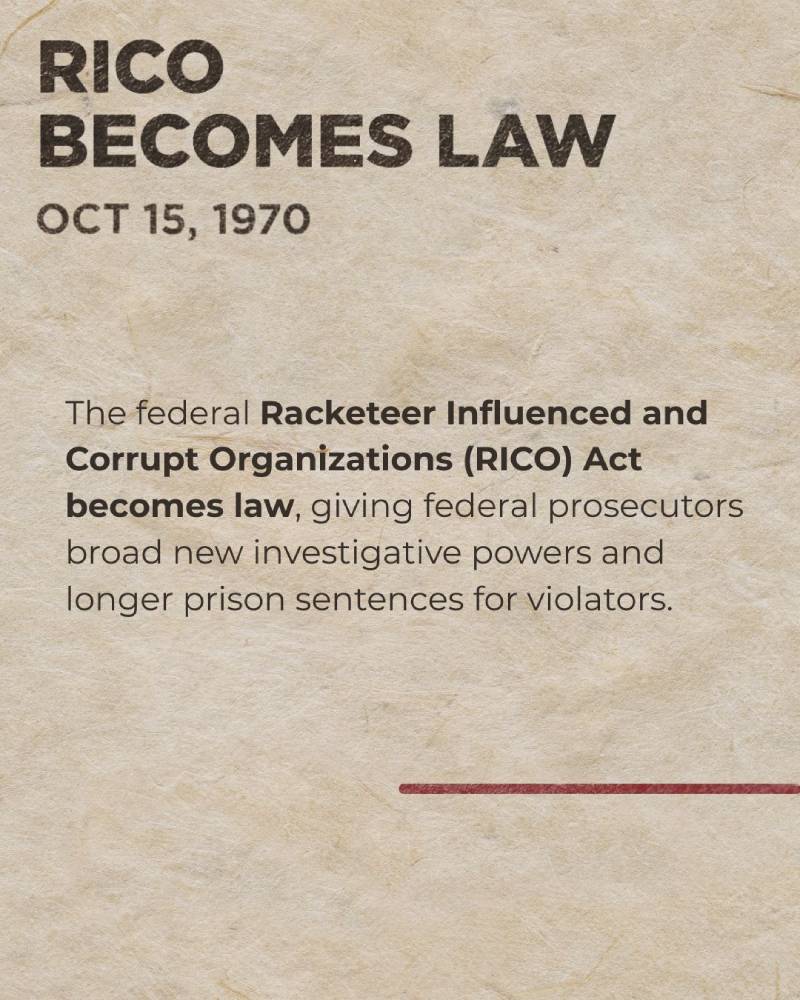
“We had RICO for almost 10 years before we knew what to do with it,” then-FBI Director William Webster said in February 1985. Thanks to G. Robert Blakey. His love for the RICO character in LittleCaesar sparked his creative legal techniques to later write the RICO law, Congress overwhelmingly passed it; President Nixon signed RICO into law on October 15, 1970.
Understanding Racketeering and RICO Act
Racketeering is not a single crime; instead, it represent legal concepts used to describe involvement in illegal schemes. It covers a broad range of offenses—35 in total—including serious crimes like kidnapping, murder, bribery, arson, and extortion. These offenses are often connected as part of an ongoing criminal enterprise.
The Racketeer Influenced and Corrupt Organizations Act allows prosecutors to target individuals or groups engaged in repeated illegal activities. Professor and attorney G. Robert Blakey of Notre Dame University explained at the time that racketeering is “a way of thinking about and prosecuting a variety of crimes” rather than one specific act.”
To convict someone under RICO, the law requires proof of a pattern: at least two separate instances of racketeering activity. This focus on patterns helps law enforcement break down complex criminal networks rather than just isolated incidents. The RICO Act has survived numerous constitutional challenges.
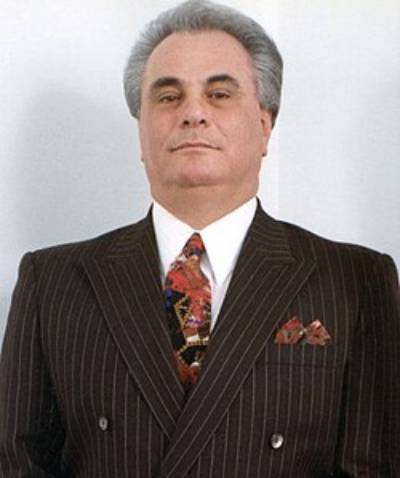
Infamous Gambino Crime boss John Gotti rightfully earned the ‘Teflon Don’ label due to his uncanny ability to escape three government attempts to put him in federal prison and throw away the key. But the feds never gave up. The RICO ACT used against Gotti in 1992 finally convicted him on all charges; the same RICO conviction against Gotti and his crew set off an atomic bomb in the mob circles.
RICO Crimes Must Affect Interstate Commerce
According to the US Justice Department, to convict someone of racketeering, prosecutors must prove at least five different criteria:
- A criminal enterprise existed
- The enterprise affected interstate commerce
- Defendant or Defendants were associated with or employed by the enterprise
- Defendant or Defendants engaged in a pattern of racketeering activity
- The defendant(s) participated in at least two acts of racketeering activity
- A criminal enterprise can also involve the use of landline telephones, cell phones, electronic devices, crossing jurisdictional lines to carry out criminal activities in another state.
Whenever “RICO Law” is mentioned, remember it took the ingenuity of G. Robert Blakey to make it happen.
The Fear City series does an outstanding job of explaining how FBI investigators and agents collected evidence. The star of the documentary series is Joe Cantamessa, a special operations FBI agent. Cantamessa tells a few amazing tales about planting listening devices in mobsters’ houses. For the sake of my review about the film-I prefer not to give away too much about the documentary. Preferably to say is that Cantamessa and others used inventive methods to carry out their undercover schemes and they didn’t hesitate to take chances while doing so.
Cantamessa remarks, “I’m making this up as I’m going along,” when describing one of his bug-planting experiences, prior media reviews reported. Many agents listen to endless tapes from wiretaps and bugs. Snippets of information were utilized to indict dozens of mobsters throughout New York. During the 1980s, the FBI had 25 active bugs and wiretaps, which translated into an astounding volume of audio transcription. The extent to which the Mafia controlled the commercial construction industry in New York was one of the commission’s largest discoveries. In Episode 3, a prosecutor remarks, “The Concrete Club has to be one of the most audacious schemes that the Mob has ever pulled off.”
New York City Police detectives, in partnership with the feds, were also successful at spying on a commission meeting. At one company, you can literally witness the Mafia bosses coming and going from a conference. An FBI agent remarks, “A commission meeting is taking place right in front of our eyes.” What may become another great project for the artistic duo Hobkinson and Reid would be to write and film a Part 4, bringing forth the existence of former agents to illustrate how the Mafia morphed over the past 3 or 4 decades.
The 1985 Mafia Leaders’ Arrests and Trial: Crime, Courtroom, and Theatre
Federal government took down the “Big Bosses” in 1985. When the trials began in November, 1986, the U.S. government staged a dramatic showdown against New York’s most powerful Mafia bosses in what became known as the Commission trial. Prosecutor John Savarese interrogated mobster Angelo Ruggiero, who openly admitted his ties to the Genovese crime family with wry honesty: “Why would I want to deny that I’m part of the Genovese crime family?”
The highly-anticipated trial was orchestrated by U.S. Attorney Rudy Giuliani. Giuliani enthusiastically led the prosecution team, including future Homeland Security Secretary Michael Chertoff. Over a tense 10-week period, they unraveled the operations of the Mafia’s leadership.
Then-Assistant U.S. Attorney Michael Chertoff described the Commission: “It’s kind of like a board of directors of a big criminal company.” “It’s not romantic, not like TV, the movies, or books,” Chertoff told the jury. “You’ll see them fighting, back-stabbing each other. The Commission was dominated by a single principle—greed.”
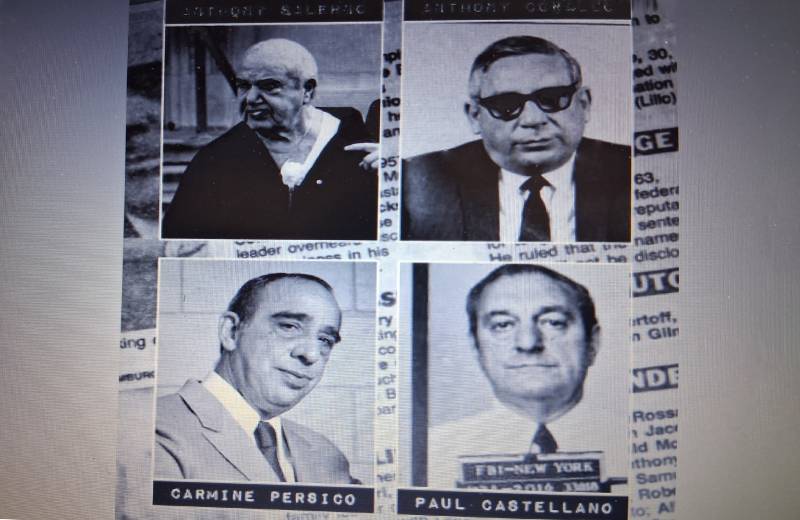
All eight defendants, including notorious figures like Anthony “Fat Tony” Salerno, Antonio “Tony Ducks” Corallo, and Carmine “Junior” Persico, were convicted. Most were sentenced up to 100 years behind bars, while one, Anthony “Bruno” Indelicato, received 40 years.
Here Is an Additional Breakdown of Prison Terms:
- Anthony “Fat Tony” Salerno. The judge stated how Salerno “essentially spent a lifetime terrorizing the community for your financial advantage.” Sentence: 100 years.
- Carmine “Junior” Persico. For his role as an “upper member” of the Mafia echelon, Judge Owen pronounced “that lives, succeeds on murder and violence.” Persico was sentenced him to 100 years.
- Anthony “Tony Ducks” Corallo: sentenced to 100 years.
- Gennaro “Jerry Lang” Langella: sentenced to 100 years.
- Salvatore Santoro was next for sentencing. Facing the judge, Santoro said, “You’re in the driver’s seat, your honor.” Judge Owen stated he was just doing his job. Santoro responded sarcastically, “And you’re doing a good job” before adding, “Give me my 100 years and we’ll get it over with.” That’s exactly what he got – 100 years.
- Christopher “Christie Tick” Furnari Sr: sentenced to 100 years.
- Ralph “Little Ralphie” Scopo: sentenced to 100 years.
- Anthony “Bruno” Indelicato: sentenced to 40 years for the murders of Carmine Galante and his two bodyguards.
Source: Mob Museum
A Mob Boss Talking to Himself?
Carmen “the Snake” Persico added a unique flavor to the trial by representing himself, using streetwise humor and speaking in the third person. His sardonic remarks, such as “Maybe Columbo crime family boss Carmine “The Snake” Persico was tired of going back and forth to jail,” provided some of the trial’s most memorable moments, blending grim reality with the prosecution’s attempt to put him away for good.
Behind every headline about a mob bust usually lies years of careful work by the federal government. Informants were always needed to help the feds turn loyalty into betrayal and fear into justice.
Fear City is one documentary that shows in a compelling way of how the FBI took down the hierarchy of the mob, some of the world’s biggest organized crime groups.
NewsBlaze Senior Reporter C. Walker and editor of HoustonNewsToday.com – is a veteran reporter, film and book reviewer. He often writes about crime and Mafia/organized crime stories. He is a former newspaper and magazine writer. He wrote several mob-related stories for AmericanMafia.com and Gangsterinc.org. He can be reached at HoustonNewsToday@yahoo.com