
Key Takeaways
- Prioritize a Hoonah eagle tour built around land-based wildlife viewing, where smaller groups and quiet roadside stops give birders more time with active eagle habitat.
- Watch salmon creek, river mouth, and lower valley corridors on a Hoonah eagle tour, since those food-rich edges often draw perched adults, hunting birds, and noisy juveniles.
- Scan high before walking farther—nest trees, cliff ledges, rock outcrops, and giant spruce canopy lines often reveal eagles faster than rushing to the next trail or pullout.
- Pack for a flexible Hoonah eagle tour with binoculars, a medium telephoto lens, and layers that handle short hikes, muddy trailhead stops, and sudden weather shifts.
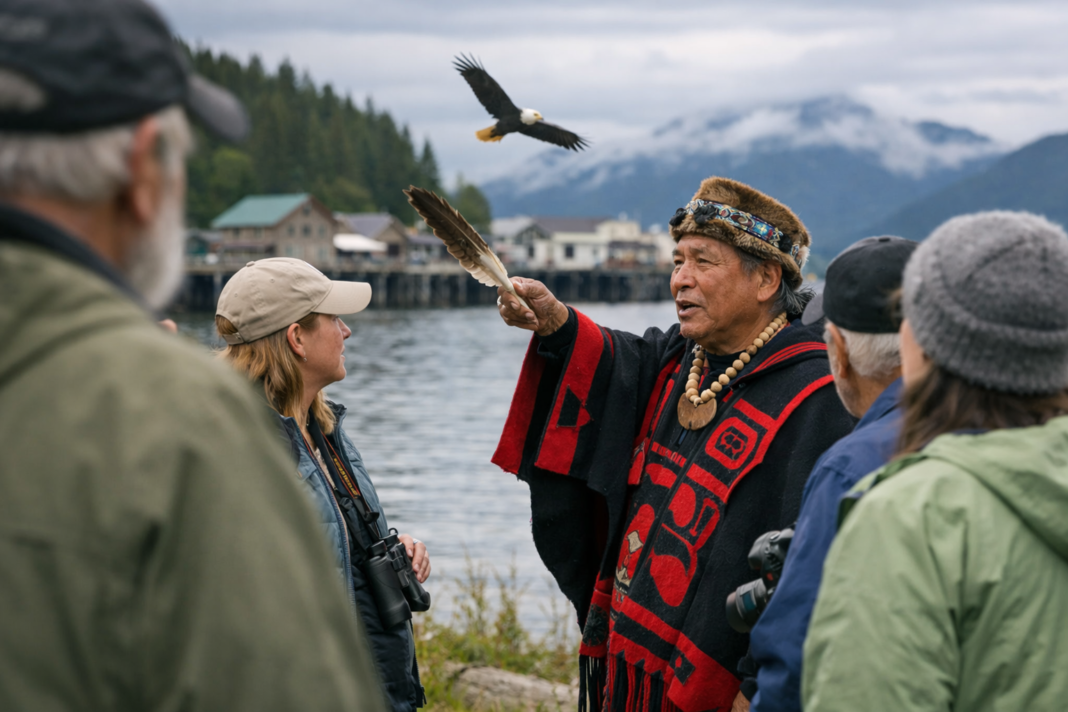
- Choose a Hoonah eagle tour that adds local history and Tlingit-guided storytelling, because the strongest wildlife outings explain behavior, habitat, and the wider salmon-to-forest food web.
- Slow down during any Hoonah eagle tour; patient scanning, quieter movement, and better field behavior usually lead to stronger sightings and better photos than constant road hopping.
More travelers are walking away from noisy, oversized wildlife outings and looking for something calmer, sharper, and far more rewarding. That shift is exactly why the phrase Hoonah Eagle Tour matters in 2026: it signals interest in bald eagle viewing that pairs patient birding with cultural context, not just a fast photo stop from a window seat. Realistically, that’s a smarter way to watch raptors. Eagles don’t perform on cue, and the best sightings usually happen when a guide knows how to read salmon corridors, roadside perch zones, and the dark forest canopy where a white head suddenly flashes into view.
For cultural travelers, the appeal runs deeper than a checklist sighting. A strong eagle outing can turn a simple roadside pause into a lesson in nest etiquette, seasonal behavior, and the wider food web—while local storytelling adds the kind of meaning mass-market excursions rarely deliver. And for photographers, there’s the practical payoff: smaller groups, quieter stops, easier scanning, better odds of catching a hunting pass or a juvenile perched low near a creek edge (those moments vanish fast). That’s where land-based wildlife viewing is pulling ahead.
What travelers want to know before they book
They’re not really searching for birds alone.
The query points to a bigger shift: travelers want a Hoonah Eagle Tour that pairs bald eagle sightings with local story, quiet road access, and time to watch a nest line or river edge without the churn of a packed bus.
Why the query signals interest in birds, culture, and low-impact wildlife viewing
A strong match often looks less like a checklist and more like field observation. Someone comparing a Hoonah Bald eagle Tour is usually looking for canopy-level scanning, cliff and creek habitat, and guide narration that explains why eagles gather near falls, lower river channels, or a salmon run.
That’s also why searches for an icy strait hoonah Eagle Tour, an icy strait hoonah ak Eagle Tour, and an Icy strait alaska Eagle Tour often signal interest in cultural context, not just sightings.
What sets a land-based option apart from crowded shore excursions
Land-based viewing changes the rhythm. It allows short stops, a slower drive, and better odds of noticing a juvenile perched above the trailhead, a golden-crowned kinglet in balsam, or an eagle dropping from a rock outcrop toward the valley floor.
Most people skip this part. They shouldn’t.
- Better photography angles from road pullouts
- Less noise near trail and creek corridors
- More time for behavior, not just identification
Who this style fits best
The honest answer: casual birders, multigenerational travelers, and anyone planning a Hoonah group tour for wildlife photographers. Readers also tend to compare Nature attractions in Hoonah for eagle watching before booking, because they want a wild setting that feels observant—not rushed.
Why 2026 is pushing the Hoonah eagle tour toward land-based wildlife viewing
Nearly 7 out of 10 wildlife travelers now say crowd size shapes satisfaction more than sheer distance covered, and that helps explain the turn in the Hoonah Eagle Tour. A van on a quiet road often beats a packed schedule: more listening, more scanning, more time near active nest zones and salmon-rich river edges.
New traveler priorities: smaller groups, quieter observation, and more time at active eagle habitat
That shift is practical. A Hoonah group tour for wildlife photographers gives better sightlines into the canopy, cleaner chances to track an eagle dropping from a cliff perch, and fewer interruptions while adjusting settings. For readers comparing formats, icy strait hoonah Eagle Tour searches now reflect a clear preference for slower observation over rushed stop-and-go sightseeing.
How road-access birding can reveal nest activity, salmon-rich river corridors, and forest canopy behavior
Road-access birding works because eagles follow food, wind, and vantage. On a strong Hoonah Bald eagle Tour, guides can watch a creek mouth, a lower river bend, or a forest trailhead where fish remains draw scavengers below the nest tree. The best runs aren’t about a hike to a peak or canyon overlook; they’re about patience near active habitat.
The rise of story-led wildlife travel and Indigenous interpretation in eagle viewing experiences
And this is the bigger change. Travelers want context. An icy strait hoonah ak Eagle Tour or Icy strait alaska Eagle Tour means more when eagle behavior is read alongside seasonal salmon movement, old forest structure, and local oral history (that’s what sticks). Nature attractions in Hoonah for eagle watching now matter less as a checklist and more as a living story.
Where a Hoonah eagle tour finds the best eagle habitat along road, river, and forest edge
Bald eagles gather where salmon, current breaks, and tall perch trees meet.
- Creek and river mouth zones. A Hoonah Eagle Tour works best along a road that crosses a salmon creek, a river mouth, or a lower valley channel, where birds hunt fish, scan the water, and drop to the gravel bar fast.
- Perch structure matters. In a productive stretch, birders watch for a nest near a cliff, a bare rock, or a giant spruce canopy, because eagles want height, wind, and a clean line of sight over wild water and the forest edge.
- Patient stopping points. The best viewing often comes from scenic pullouts, a loop road, or a short trailhead walk rather than a long hike; a quiet stand-and-wait approach beats constant drive-and-go scanning.
Salmon creek, river mouth, and lower valley zones where bald eagles gather and hunt
During fish movement, a Hoonah Bald eagle Tour often tracks creek mouths and falls where gulls bunch first and eagles follow. For travelers comparing routes, icy strait hoonah ak Eagle Tour appears in search results tied to forest roads and roadside viewing.
Nest, cliff, rock, and giant spruce canopy features that help birders spot perched eagles
Look high before looking wide.
Scenic pullouts, loop roads, and short trail or trailhead stops that support patient wildlife watching
Nature attractions in Hoonah for eagle watching tend to reward slow scans, not rushed hiking. For a Hoonah group tour for wildlife photographers, short stops near a trail, creek, or boulder turn one pass into ten solid minutes of glassing, which is usually enough.
Planning a Stronger Eagle Outing for Birding, Photos, and Easy Walking
A couple steps out at a roadside pullout, hears a guide say “look high,” — misses the first bird by staring at the river. Thirty seconds later, the adult bald eagle lifts from a cliffside balsam and crosses the canopy.
Best timing for light, weather, and eagle activity during a Hoonah eagle tour
Early and late light usually works better than flat midday glare. In overcast weather, white heads hold detail more cleanly against dark wilderness, especially near creek mouths, falls, and lower valley road edges where fish and carrion draw birds. A Hoonah Bald eagle Tour is often strongest during calm windows after rain, when birds perch longer and scanning along the trail, trailhead pullouts, and river loop becomes easier.
Camera and binocular tips for shooting white heads against dark wilderness backdrops
Set exposure for the head, not the forest. A fast shutter helps when an eagle drops from a nest tree or swings past a rock face, and 8x or 10x binoculars are easier for casual travelers than oversized glass. For trip planning context, Icy strait alaska Eagle Tour appears in searches, while icy strait hoonah Eagle Tour and icy strait hoonah ak Eagle Tour show how travelers phrase the same intent.
What to wear for roadside stops, short hikes, and muddy trail conditions without overpacking
- Waterproof shell and warm midlayer
- Trail shoes with grip for mud, boulder edges, and short hikes
- Thin gloves for cold wind during open-road stops
Field behavior that leads to better sightings: quiet scanning, slower movement, and looking high first
The best Hoonah group tour for wildlife photographers keeps people quiet, spaces them out, and checks snags, nest trees, and cliff perches before staring at the road. Nature attractions in Hoonah for eagle watching reward patience more than speed. Slow down.
That gap matters more than most realize.
What a strong Hoonah eagle tour should teach beyond the sighting itself
A good Hoonah Eagle Tour does more than stop at a pullout and point at a white head in the canopy. It should help travelers read the scene — a perched adult scanning a river, a darker juvenile circling low, a hunting pass over creek water near salmon movement. A strong Hoonah Bald eagle Tour also explains nest-area etiquette: stay quiet, keep distance, and never crowd a known nest tree near a trailhead, road, or cliff edge.
Reading behavior: perched adults, juveniles, hunting passes, and nest-area etiquette
Field interpretation matters. On a thoughtful icy strait hoonah Eagle Tour, guides can show how wing shape, posture, and flight line separate a mature eagle from a juvenile, and why repeated low passes over a river or falls often signal active feeding rather than random movement.
Connecting eagles to salmon cycles, forest health, and the wider wild food web
That’s the bigger lesson. A smart icy strait hoonah ak Eagle Tour connects eagle activity to salmon cycles, old-growth forest cover, nest security, and the wider wild food web — from creek corridors to lower valley edges where carrion and fish scraps feed other species too.
Why local history and Tlingit-guided storytelling add meaning to a Hoonah eagle tour in 2026
Context changes everything. An Icy strait alaska Eagle Tour gains depth when local history and Tlingit-guided storytelling explain how people have watched these birds across seasons, trails, and shoreline travel routes for generations (long before wildlife stops became camera checklists).
The takeaway for travelers seeking a Hoonah eagle tour with substance, not just a checklist stop
- Ask for interpretation, not just sightings.
- Look for small-group pacing — a real Hoonah group tour for wildlife photographers allows time to watch behavior.
- Prioritize habitat learning; the best Nature attractions in Hoonah for eagle watching are really lessons in forest, river, and salmon health.
Frequently Asked Questions
What is the best excursion for travelers who want birds, culture, and local history in one outing?
For travelers who care about more than a quick wildlife sighting, a Hoonah eagle tour works best when it pairs bald eagle viewing with Tlingit storytelling, village context, — time on quiet back roads near river and creek habitat. The strongest trips aren’t just about spotting an eagle on a cliff or nest—they explain why the birds gather there, what the salmon runs mean, and how people have read this wild place for generations.
Are there bears in Hoonah?
Yes. Bear habitat overlaps with the same forest, creek, — valley corridors where birders often watch eagles, especially near salmon water and thick canopy edges. A Hoonah eagle tour may pass through prime bear country, but the point isn’t chasing animals; it’s reading signs on the road, along trails, and near river crossings with a guide who knows the patterns.
Where is the best bear viewing in Alaska?
The honest answer is that famous bear spots get the headlines, but strong viewing often comes down to timing, salmon activity, and how much pressure an area gets from visitors. For travelers already focused on a Hoonah eagle tour, the real advantage is that eagle and bear activity often overlap near creek mouths, lower river stretches, and wild roadside pullouts—one outing can reveal both if conditions line up.
When can you see eagles in Alaska?
Bald eagles can be seen for much of the season, and they’re easiest to find around active feeding areas, shoreline perches, and salmon streams. Midseason through early fall is often strongest because food sources stack up fast—dead salmon, moving fish, exposed gravel bars, all of it—and that pulls birds into clear view.
Is a Hoonah eagle tour good for beginner birders and casual photographers?
Absolutely. This kind of tour isn’t a hard hike to a mountain peak or a long climb from a trailhead; it’s more approachable, with short stops, easy scanning from the road, and plenty of chances to learn field marks without feeling behind. Bring binoculars if you have them, but even first-time birders can follow along.
Simple idea. Harder to get right than it sounds.
What should travelers bring on a Hoonah eagle tour?
Pack layers, rain protection, dry shoes, binoculars, and a camera with reach if photography matters. A mid-range zoom is enough for perched birds, but for flight shots near a nest, canyon wall, or tall balsam perch, more focal length helps. And yes—spare batteries matter more than people think.
Will travelers only see bald eagles, or are other birds possible too?
No, it rarely stops with one species. Depending on season and habitat, a Hoonah eagle tour may also turn up ravens, gulls, waterfowl, shorebirds, and smaller forest birds moving through the canopy near trail loops, creek edges, and open gravel bars. That’s part of the appeal: the eagle is the headliner, not the whole cast.
How physically demanding is a Hoonah eagle tour?
Usually light. Most travelers aren’t doing a strenuous hike, a scout-style climb, or a rough pass over boulder fields; they’re stopping at select pullouts and walking short distances for better views down a valley, across a river, or toward a known perch. That’s a better fit for mixed-age groups.
What makes a guided eagle tour better than just driving on your own?
Here’s what most people miss: seeing an eagle isn’t the hard part. Knowing why it chose that snag, that lower creek bend, or that rock shelf under a giant spruce—that’s where a guide changes the day. Good guides also help with light, camera angles, behavior cues, and those quick moments when a bird lifts off and you’ve got maybe three seconds to react.
Are eagle sightings guaranteed?
No. Wild birds don’t work on schedule, and any outfit claiming certainty deserves a hard look. But a well-planned Hoonah eagle tour improves the odds by focusing on feeding corridors, nest territory, river systems, and quiet road sections where birds regularly perch and hunt.
It’s not the only factor, but it’s close.
The shift in 2026 is pretty clear: travelers aren’t just chasing a sighting anymore. They want time to watch, room to listen, — guides who can connect eagle behavior to salmon runs, forest edges, and the human history tied to that habitat. That’s why a strong Hoonah Eagle Tour stands out—it gives birders and casual nature travelers a steadier, quieter way to notice what rushed group outings often miss.
And the real value goes beyond the bird itself. A perched adult above a river corridor, a juvenile testing short flights, a nest site viewed with care—those moments matter more when they’re framed by local knowledge and respectful field practice. For travelers who care about photography, easy walking, and substance over speed, that land-based format works better.
The next step is simple: before booking, review the outing details and ask three direct questions—group size, time spent at active eagle habitat, and whether the guide adds cultural and ecological context. If those answers are solid, the trip is probably worth the spot on the calendar.
For more great reading, visit our site and explore related topics.