Eunwha Kang, a South Korean music educator, composer, and pianist based in Texas, has been making waves in the world of music by fusing Eastern and Western musical influences.
With a Doctor of Musical Arts in Composition from Texas Tech University and numerous commissions and publications of her compositions, Kang is a force to be reckoned with in the industry.
In an interview, Kang discussed her approach to combining Korean and Western musical elements in her compositions. “Eastern music is often described as ‘music of curves,’ whereas Western music is referred to as ‘music of lines,'” Kang explained. “While Western music has developed around harmonic structures, there is a perception that Eastern music is more accustomed to monophonic textures—favoring solo performances or multiple instruments playing the same melody together, rather than building vertical harmonies.”
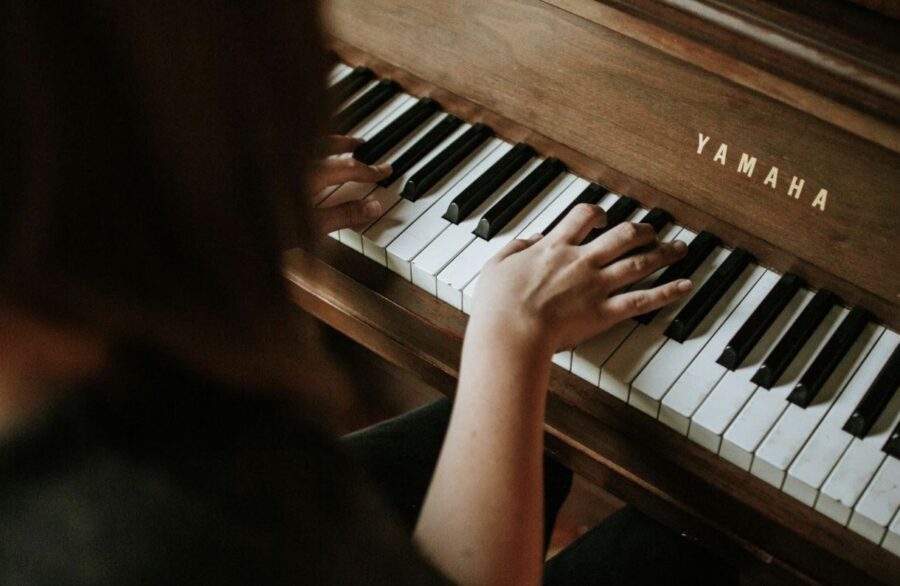
To bridge this divide, Kang seeks to express the aesthetics of “music of curves” through Western instruments and ensembles. “I try to find ways in which traditional Korean instruments can harmonize with or complement Western music,” she said. “For example, with instruments like the daegeum or haegeum, which emphasize breath and flexibility, I often aim to move away from the vertical and structured sound of Western music and instead create a more organic, flowing musical phrasing.”
Kang’s unique approach to composition has led to a number of notable works, including “Requiem” (2024) which was recorded by the Texas Tech University Choir, “Learned Helplessness” which was commissioned by SNATS (Student National Association of Teachers of Singing), “Bird, Bird, Bluebird” (2022) which premiered with the Texas Tech University Symphony Orchestra under Maestro David Cho, “A New Day” (2022), which was the opening piece featured at the distinguished IGNITE concert, and “Sinaui” (2024), which blends traditional Korean musical elements with contemporary Western composition techniques. “I have composed a piece for haegeum and string quartet,” Kang said, describing another one of her works.
“Since the haegeum is also a string instrument, I was very conscious of how it might get overshadowed by the sound of the Western string quartet. Therefore, I put a lot of effort into ensuring that the unique timbre and expression of the haegeum would not be lost.”
Kang’s performances serve as powerful extensions of her compositional vision, blending traditional Korean musical aesthetics with Western concert formats to create immersive sonic experiences. She has graced the stage alongside renowned musicians including Susana
Gómez Vázquez and organizations and ensembles such as The American Guild of Organists, Heavenly Light Korean Methodist Church, TMEA Region 6 Treble Choir, Midland College Choir, Gimpo Women’s Choir, Promise Youth Orchestra, The National Chorus of Korea, and Gunsan Civic Choir. These collaborations not only highlight the breadth of her musical reach but also affirm her growing influence and recognition within both Korean and international classical music communities.
Kang’s innovative approach to music composition has not gone unnoticed. She has received several awards and honors for her achievements, including being featured in Korea’s most prestigious music publisher, Chorus Center, and awards from Texas Tech University, Missouri State University and the National Chorus of Korea. She is also a member of various professional organizations, including the Society of Composers, Texas Music Educators Association, and the American Guild of Organists.
Kang’s work is a testament to the power of music to bridge cultural divides and bring people together. By fusing Eastern and Western musical influences, she is creating a new and exciting sound that transcends traditional boundaries and speaks to audiences around the world.