
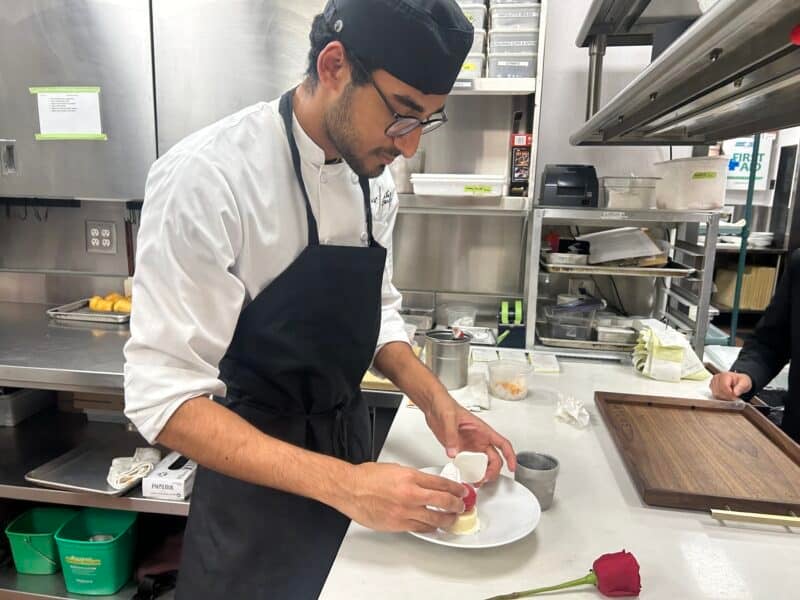

As the Junior Sous Chef at Atlanta’s Michelin-starred Atlas and The Garden Room, Chetanya Rai combines creativity with cultural depth to create new dishes that are meant to make a lasting impression.
And he has established himself as an expert in baking Indian inspired desserts. With creative and methodical routines, he says: “I’m driven by the opportunity to innovate and grow daily,” which reflects his dedication.
“I consider new dishes or methods I may learn every morning, frequently combining Indian and international flavors. I want my staff and our kitchen to improve, especially with the introduction of new pastries.”
Raised in the family kitchen in Bhopal, India, Rai learned how to make meals from his mother. This is where he believes he developed his hands-on approach to thinking.
He observed his mom and grandmother incorporate indigenous Indian spices into Western foods.
Rai recalls: “They prepared recipes in the kitchen, combining Indian ingredients with other foods that they discovered on the internet, such as American or Italian foods.”
He began experimenting with simple pastry recipes at the age of ten. During these early years, Rai started using local ingredients such as mustard oil, rye flour, and jaggery (unrefined Indian sugar) in new recipes.
He remembers his grandmother making a sweet and sour mango jam: “For the sweetness, she made a raw mango jam with kalonji seeds (Nigella sativa) and jaggery, a healthy Indian sugar. The sweet and sour jam, almost like a chutney, went well with salty flatbreads. These methods, which have their roots in regional ingredients and Indian customs, influenced how I make inventive desserts.”
Without formal training in his youth, Rai learned “by doing.” Despite limited equipment and material, Rai used his senses and intuition to experiment with baking and cooking in his home kitchen, an improvised laboratory.
His ability to find solutions helped him create new ideas, allowing him to safely try out different textures, flavors, and scents as he progressed in his career.
Rai’s menu now features a variety of unique dishes that blend upscale Western techniques with traditional Indian ingredients.
One example is his reimagined pani puri appetizer. Traditionally, a street-food snack, Rai tops the hollow puri shells with Beluga caviar, creating a guest favorite at Atlas. He explains the concept behind this dish: “By adding caviar, I fuse Indian and American cuisines, creating a sophisticated dish that’s both familiar and novel.”
Rai has also introduced other inventive pastries at Atlas. He invented ramp-flavored pretzels and ube baguette, which incorporates a sweet purple yam into French bread.
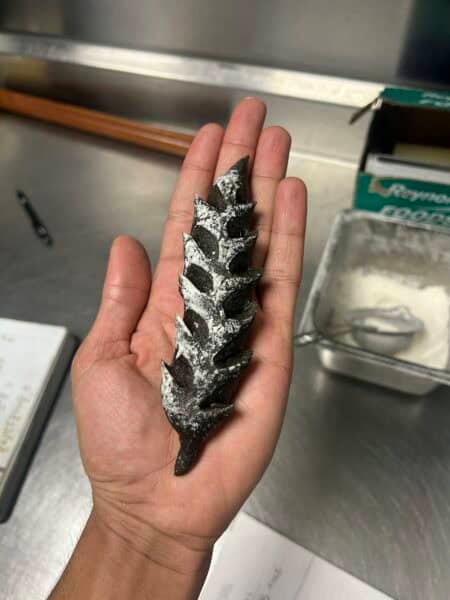
He even employs a wild sourdough starter to impart an earthy tang to croissants. His art is distinguished by these creative fusions.
Beyond his flavor breakthroughs, Rai’s culinary style is a new paradigm in pastry arts. His collaborative research and open communication approach have revolutionized kitchen dynamics in upscale establishments.
In Michelin-starred restaurants, Rai has started team brainstorming sessions. Junior chefs now help create recipes, transforming traditional kitchen roles. This has fostered cultures that strike a balance between technical perfection and experimental innovation.
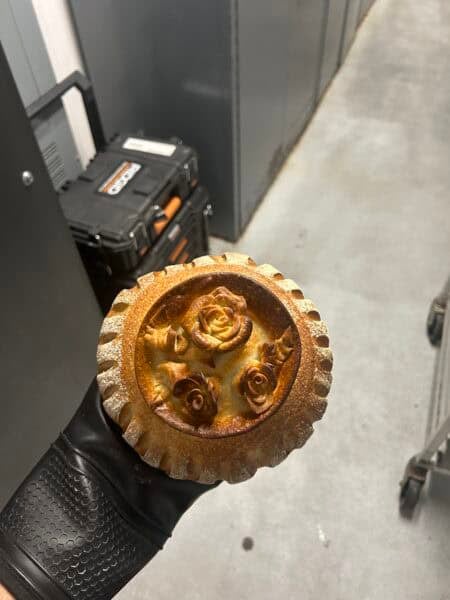
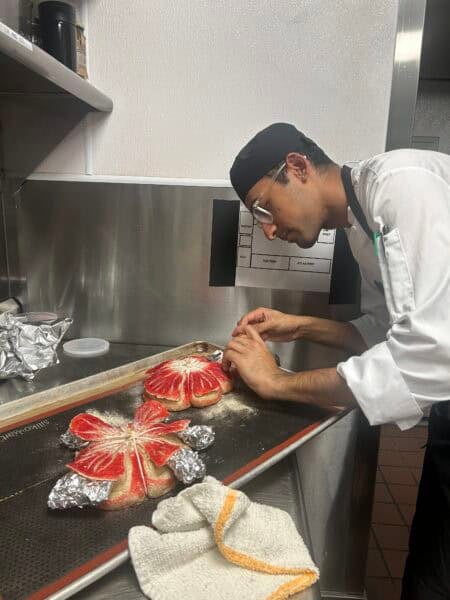
His focus on health-driven techniques, such as fermenting heritage grains and using mineral-rich jaggery, has had a considerable impact on industry benchmarks. Rai’s sourdough tomato rolls blend traditional fermentation methods with healthy ingredients. This dish demonstrates how he balances tradition with modern health trends.
Likewise, his intercultural creations, such as koji-cured caramel tarts and ube baguettes, demonstrate how historical traditions can inspire new applications and encourage peers to embrace global ingredient narratives while maintaining technical expertise.
Rai’s technical skills extend beyond flavor innovation to advance industry standards. His early Michelin training instilled in him rigorous procedures for dough hydration and fermentation control—techniques that not only inspire creativity but also set a high bar for industry standards.
Rai’s dehydration techniques, such as ramp-flavored pretzels and ramp powder, showcase local sourcing. They also prove that classic European bread can express local flavours. Furthermore, his wild-starter croissants show how bakers can regulate biological processes to enhance both nutrition and flavour complexity in viennoiserie, providing an example for artisan bakeries to meet the rising demand for health-conscious dietary needs.
He observes: ”I always turns a meal that may be considered conventional into a surprising treat, a creative advantage he credits to his Indian ancestry.”
Cardamom milk buns, which are exquisite Japanese-style dinner rolls scented with Indian cardamom, are one of his ethnic specialties. He attempts to balance the flavors subtly.
He explains: “I’ve created a distinctive taste profile that brings together two robust food cultures by infusing full-bodied, aromatic cardamom flavor—a traditional Indian spice—into light Japanese buns. In a modern reinterpretation of the Indian spirit, this combination creates a new sensory experience.” As a consequence, guests are frequently drawn to the unique creation that evokes an Indian scent and Japanese texture.
Rai’s art revolves around using food to tell the tale of his ethnic origin. In Atlanta, he continues applying traditional Indian methods and ingredients in the kitchen. Rai also brings values of resourcefulness and adaptability to his team.
He points out that in Bhopal, he had no access to professional equipment, but instead learned to create high-quality pastries with minimal tools. This practice of making the most of what is available has prepared him to excel under pressure.
To meet dietary requirements, Rai goes beyond taste fusion. For vegans, he substitutes whipped cream for buttercream and curd and baking soda for eggs in cakes. He modifies recipes that need fewer tools when equipment is scarce.
Talking about traditional Indian methods he uses to accommodate requests for allergen-free food, Rai says: “Cooking flourless, yeast-free breads using the flatbread of my grandmother turns obstacles into growth opportunities.”
He adapts Indian spices for sensitive palates at Atlas without sacrificing originality. Rai says: “I blend flavors with utmost care—adding butter, garlic, or citrus—to preserve tradition while adapting intensity.”
The scientific awareness also translates to his newer wellness-focused work with heritage grains. By upscaling traditional longer-fermentation techniques to local varieties like amaranth and heirloom rye, Rai creates nutrient-dense bases for items like his tomato sourdough rolls. Extending the fermentation period by 24–36 hours, known as ‘longer proofing’, he doesn’t create a simpler flavor. Instead, it results in a more intense taste and makes the food easier to digest. These creative options are a good example of how upscale restaurants can meet wellness demands without compromising creativity.
There is no doubt the Michelin Star earned in 2023 was due in some part to his expertise and strategy to adapt such flavors into its dishes.
Rai leverages his degree in business from Manipal University in India and is currently studying for his Master of Science in Business Analytics at Trine University in the US, and his past experience working at Amston Electronics as a finance analyst, where he handled strategic financial planning and budgets. His diverse background enables him to predict trends and manage finances, skills he applies in his cooking.
Rai uses this information to create spreadsheets that link frugality and flavor and to cook meals and procure food in a sustainable manner.
He credits his inspiration through baking by saying: “I wish to change attitudes about pastries, demonstrating they can be healthy and easily accessible.”
Rai uses locally sourced, flavorful ingredients to add flavor and uses minimal preservatives.
This practice embodies his “Baking with Purpose” manifesto, where mindful sourcing counters hidden ecological costs while honoring cultural narratives. Rai states in the thought piece: “In India, plant-based cooking and fermentation aren’t trends – they’re traditions. It’s time we bring these practices into the global pastry spotlight.”
That adaptability carried into his international career. Rai worked for the massive five-star Shangri-La hotel in Muscat, Oman’s capital, which included 21 restaurants and 650 rooms.
He attended negotiations with other countries, including a dinner invitation for an Italian ambassador. The King of Oman and other notable guests and leaders were also a welcome surprise for Rai. He prepared meals for dignitaries and nobility, including the King of Oman, and worked at diplomatic events, such as entertaining an Italian ambassador for supper.
Rai recalls: “These experiences gave me the skills to perform at the highest levels of pressure, blending Indian and global cuisines for elite clients”.
Throughout his tenure at Shangri-La and in other roles, he has served a range of high-profile clients. In addition to royalty, Rai has cooked for politicians and business leaders.
President Donald Trump is one of the VIP customers he has worked with. These experiences have enhanced his reputation as an exceptional pastry chef in high-end hospitality settings.
Rai credits his Indian ancestry with giving him the natural capacity to mentor others—someone who imparts information and fosters collaboration. He emphasizes curiosity and problem-solving in his kitchens.
He aims to be viewed as a trusted colleague who can help out wherever needed and guide new chefs through challenges. This blend of creativity and mentorship defines his leadership style.
Rai began developing this teaching mindset at an early age. After moving into professional kitchens, he led specialized baking workshops and masterclasses in India.
He explains: “I began with baking workshops and masterclasses in India at a bespoke baking shop, which led to a loyal following.”
Through these sessions, he spread awareness of traditional Indian pastry techniques among aspiring chefs.
Fast forward to today, Rai says: ”I have taught unique Indian techniques to hundreds. I strive to earn recognition as a supportive colleague who actively helps the kitchen team and guides new chefs through challenges.”
These teaching efforts further define his leadership style.
Rai hopes to define his legacy through both innovation and teaching. He reflects: “I hope colleagues and clients remember me for my innovative dishes and my passion for teaching, leaving a legacy of creativity and connection.”
Those words encapsulate his vision of linking culinary creativity to community building in the professional kitchen.
Beyond technique, Rai’s mentoring involves integrating sustainable, health-oriented practices. His expert knowledge helps teams create repeatable innovations.
For example, using baking soda and curd instead of eggs in cakes keeps the structure for vegetarian customers. Also, using mustard oil from traditional stone grinding in flatbreads gives a unique scent that’s rare in Western pastries.
He improves traditional French pastries by creating the first cultured butter croissants with live probiotics. His gluten-free breads reinvent traditional Indian recipes without flour or yeast, promoting inclusive dining. His blanching method in high-end ovens boosts hydration. And the way he prepares vegetables shows versatility, adaptability, and resourcefulness.
Each illustration trains chefs to pair cultural authenticity with nutritional understanding, turning limitations into creative catalysts.
Rai oversees a group of pastry chefs at Atlanta’s Atlas restaurant who are trained to Michelin-star standards. He promotes innovation while highlighting the value of cultural authenticity in his works.
His coworkers characterize him as kind yet exacting; he has high expectations for accuracy when it comes to mixing spices and working with dough, but he approaches these tasks helpfully.
His relaxed, cooperative approach helps novice chefs understand intricate pastry methods, enabling them to perform well under pressure.
Rai’s influence extends beyond his kitchen and serves as a positive example of how technical precision, combined with cross-cultural competence, inspires his industry peers. Signature items, such as cardamom-infused Japanese milk bread and ube baguette, have inspired chefs in the field. They are pushing boundaries with new ingredient pairings. It illustrates how dining is evolving and becoming increasingly global.
For his entire career, from Michelin-starred restaurants to luxury hotels, Rai has cultivated two standards: an unyielding discipline of execution and a dedication to mentorship. His early work in establishing a home bakery demonstrates how heritage methods can be integrated into larger production. This bridges the gap between niche craftsmanship and what institutions need.
Rai at Atlas fosters a kitchen culture that empowers younger chefs to express their ideas. His focus on mastering fundamentals—especially fermentation science and dough hydration techniques—has allowed many colleagues to create their signature dishes. Rai’s positive leadership and commitment to mentorship foster a teamwork culture. This culture boosts innovation and raises standards within his teams.
Rai actively develops extensive recipes behind the scenes. In addition to reviewing over 100 draft recipes that use products from across the world and locally, he has provided more than 150 recipes that are subject to peer review by various other chefs in the field.
His position as a recipe steward demonstrates the depth of his knowledge and his dedication to incorporating many influences while preserving consistency and quality.
Professional certifications and awards recognize Rai’s skill set. In addition to having two Outstanding Performance Awards during his time at Shangri-La, he holds Level 2 in Pastry and Level One in Wine and Spirits certifications from the City and Guilds of London.
Rai’s ongoing interest in the culinary sector is attested to by his membership in trade bodies such as the Indian Culinary Forum and the Craft Guild of Chefs.
Peers in the industry also observe Rai’s influence on others. According to Atlas Executive Pastry Chef Stephen Huang: ”Rai’s proactive research, testing, and plating attention elevates the dining experience and shapes trends across the broader industry.”
His impact extends beyond the food he prepares to include his colleagues’ career advancement. This kind of acknowledgment highlights how Rai’s impact goes beyond his kitchen. Huang continues by stating that: “Rai’s technical proficiency, artistic awareness, and cultural creativity make him a promising star of the culinary sphere.”
Apoorv Arastogi, the owner of Bonkey in India, agrees: “His vast understanding of fermentation methods and baking skills assisted us in creating a distinct pizza dough that is incredibly wet and has been a vital element of our brand from day one. It has been a life-changing experience to work with him.”
Regarding Rai’s leadership approach, his former coworker Chef Arsh says: “Chetanya teaches the science underlying something, not simply how to make it. He has a unique talent for simplifying intricate methods so that everybody in his kitchen can grasp them.”
Rai says: “I hope my peers and customers recognize me for my creative dishes and my enthusiasm for imparting knowledge, building a legacy of creativity and connections.”
This is the legacy he hopes to create through this mentoring. His dedication to pushing culinary limits and inspiring future generations is embodied in this goal.
As the culmination of his journey, Chef Rai is preparing to open The Rai, a boutique bakery and dessert studio in Atlanta that embodies his vision for sustainable and culturally rooted pastry arts. This renowned establishment blends traditional French techniques with Indian heritage using modern ideas. It focuses on sustainability and uses its Michelin-trained skills to build a business that honours the environment and cultural traditions.
The menu at The Rai is a testament to its commitment to high-quality and diverse offerings. It emphasizes minimal processing and artisanal integrity. Among the signature items are celebration cakes, such as the Dark Chocolate Ganache Cake, sourdough loaves made with natural leavening, and laminated viennoiserie, including butter croissants. Handcrafted items, such as Pistachio Rose Shortbread, reflect cross-cultural narratives. At the same time, plated desserts like the Lemon Meringue Tart show fine-dining precision. The Rai has something for everyone. Whether you love sweets or enjoy baking, there’s something for you.
The Rai will offer a three-course tasting menu that changes with the seasons as part of an exclusive dessert journey, available by reservation only. The bakery blends luxury with ethical cooking in every dish, using local ingredients that connect you to the community and tell a story with fine-dining care.
Rai developed a robust research and development method at Atlas, with a focus on fermentation science and hydration optimization. This technique produces nutrient-rich products, such as fermented garlic, sourdough, and organic ube baguettes. His mastery of both artisanal craftsmanship and scientific rigor is evident in these creations. His distinctive approach to pastry art combines traditional French methods with innovative flavor combinations, resulting in desserts that impress with their visual appeal and sophistication.
Rai says: “This endeavour is my legacy in concrete form. Besides offering outstanding flavors, The Rai serves as a venue for craft mentoring, showcasing how sustainability and cultural heritage enhance the art of pastry. We’re choosing treats that honour traditions and meet today’s needs for ethical sourcing.”
In all the quiet moments, you see him lead by example. Rai teaches by doing and brings age-old art into the new century with each innovative recipe he presents. Through technical excellence and cultural innovation, Rai continues to build a legacy that inspires pastry chefs globally. His work exemplifies professional culinary innovation—honoring tradition while exploring new frontiers through mentorship and technique.

