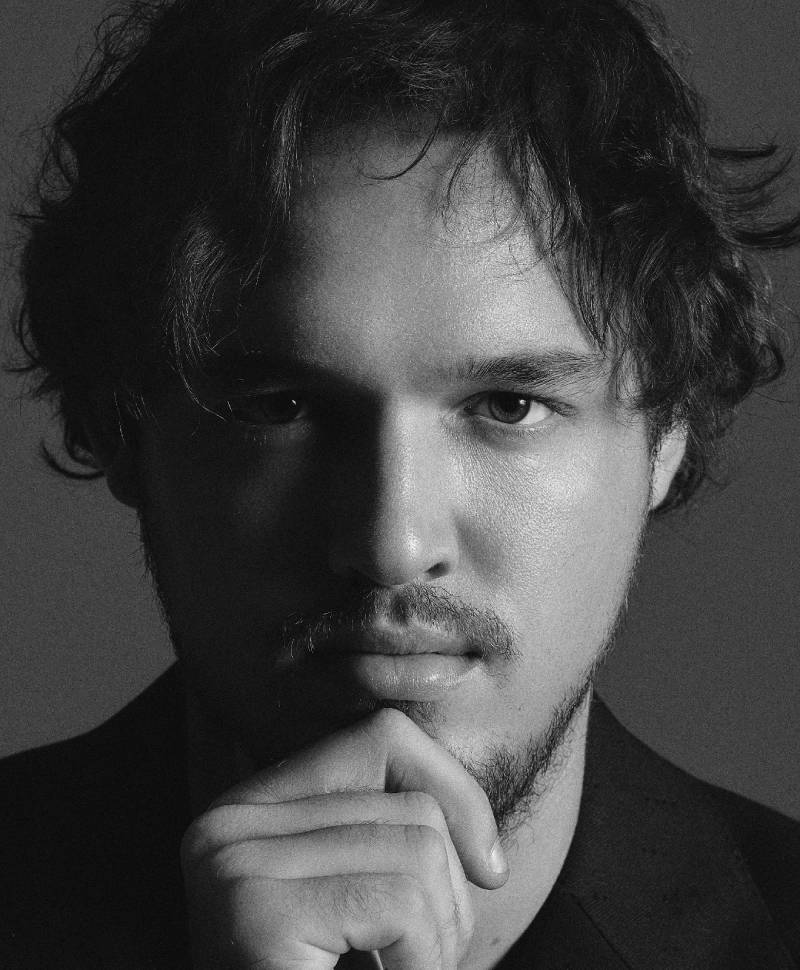

When Luca Schnetzler and an investing partner took the largest position in Gel Blaster, a fast-growing toy company, the conventional next step was to wait for quarterly updates. He took the chief marketing officer’s desk instead.
That sequence, capital first and then the operating seat, recurs across his career often enough to constitute a method. Schnetzler, who built his public reputation under the name Luca Netz, now runs Igloo Inc., the operating company behind Pudgy Penguins. The businesses he has backed most heavily are the ones he subsequently went to work inside, and the pattern reveals a specific view of where returns in consumer businesses actually come from.
A Narrow Mandate
The formal vehicle predates the acquisition that made his name. Netz Capital, the investment firm he founded, was built around a deliberately restricted mandate: direct-to-consumer brands and technology startups. Nothing broader.
Most angel portfolios are constructed on the opposite logic. Write enough checks across enough sectors, accept a high failure rate, and let a single outcome carry the arithmetic. Breadth substitutes for judgment, which is rational when the investor has no particular edge in any one category.
A narrow mandate discards that protection. It concedes the diversification benefit in exchange for a claim to superior selection within one field, and it only pays if the investor genuinely knows the field. Otherwise it is concentrated ignorance with a thesis attached.
Schnetzler’s mandate tracked his operating history rather than his interests. He had built an online jewelry business as a teenager, worked inside consumer companies through his twenties, and run marketing for a physical product sold at mass retail. Direct-to-consumer was the category in which he could plausibly outperform a generalist, and he confined himself to it.
The Gel Blaster Sequence
The toy company remains the clearest expression of the method.
He and his partner became its largest investor. He then took responsibility for the outcome by running its marketing, and the company grew quickly enough during that period to be described across the trade as among the fastest-growing toy businesses in North America.
The ordering matters more than the result. The common route is to join a company, develop conviction, and invest later on favourable terms. Reversing it collapses the distance between the person carrying the risk and the person managing it. A passive investor holding a deteriorating position can sell, dilute, or wait. An investor sitting in the operating chair has none of those exits and every lever.
It also changes what is being underwritten. A conventional angel check is a bet on someone else’s judgment, placed once and largely unmanageable thereafter. An operating position is a bet on one’s own, revisable weekly against evidence. The first is a wager. The second is a job with equity attached, and it is considerably harder to walk away from.
The Same Move at Scale
Read against that history, the 2022 Pudgy Penguins acquisition looks less like a departure than a larger instance of an established practice.
Netz Capital bought the brand and its intellectual property for roughly two and a half million dollars, a figure Blockworks put at 750 ETH. The asset was distressed. Its original community had lost confidence in the founders, and the category itself was about to cool sharply.
The financially conventional move was to restore the asset and sell it into a recovery. He took the operating seat instead. He and his team went roughly a year without salaries and reinvested their own capital while the brand was rebuilt, which is not how an investor behaves toward a position. It is how a proprietor behaves toward a business.
The subsequent record is consistent with that reading. Forbes has described a company whose model moved away from a volatile digital market toward physical toy sales, licensing agreements, and sponsored media, with product carried by Walmart, Target, and Five Below. Retail distribution of that kind is not a consequence of ownership. It is the output of several years of operating decisions, buyer relationships, and supply chain work, none of which a shareholder can direct from outside.
The Cost of the Method
The approach forecloses more than it opens, and the constraints are worth stating plainly because they are the reason most investors do not adopt it.
Attention, not capital, becomes the binding limit. An investor who insists on operating can hold only a handful of positions, which means declining opportunities a diversified investor would accept, including good ones, for no reason other than a lack of capacity to work on them.
Concentration risk follows. Fewer positions and larger stakes produce a return profile tied to the investor’s own execution rather than to the aggregate behaviour of a portfolio. Modern portfolio construction exists specifically to avoid this. Accepting it is a statement about where the investor believes their advantage lies, and it is a costly statement to be wrong about.
There is a career cost as well. Operating is slow. Fortune has traced a run through Ring, a drop-ship business of his own, the toy company, and then Pudgy Penguins, which is a short list for someone who has been working since his teens. A passive investor of the same vintage would show a portfolio of dozens. He has a handful of businesses he actually ran.
The trade only makes sense on one assumption: that in consumer businesses, returns are generated in execution rather than in selection. If that holds, picking well is the smaller half of the problem and the larger half cannot be delegated. If it does not, the whole method is an expensive detour around a solved problem.
His record is an extended argument for the first proposition. The businesses he backed and then ran have performed; the ones he might have merely funded are hypothetical. That is not proof, and a sample this size cannot supply proof. It is, however, a coherent position, consistently held, and expensive enough in foregone opportunity to be credible.
The question he appears to ask before committing capital is therefore not whether a business will succeed. It is whether he is prepared to go and run it. The cheque follows the answer.
This article is general business commentary and not investment advice. NewsBlaze has not independently verified all company-reported investment, performance, revenue, retail-distribution or operating claims.