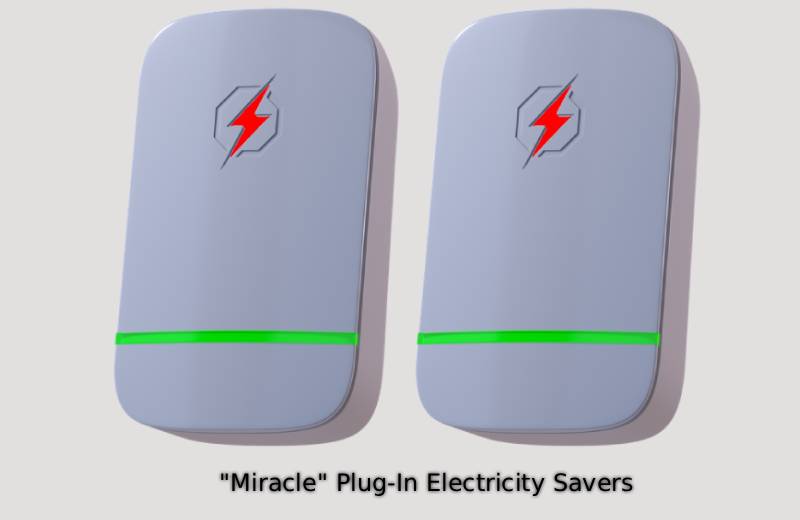

If you’ve spent any time on social media or browsing the web lately, you’ve probably seen the ads. They feature shocking headlines, deepfake videos of Elon Musk, or fabricated clips from Shark Tank, all promoting a small plastic box that you plug into your wall.
The promise? Devices with names like StopWatt, MiracleWatt, or Pro Power Save claim they will “stabilize” your home’s electrical current, filter out “dirty electricity,” and slash your monthly utility bill by up to 90%.
With electricity rates squeezing household budgets, it sounds like the perfect life hack. Unfortunately, it is nothing more than a masterclass in pseudo-science and marketing deception. Here is the real truth behind these so-called miracle devices.
The Kernel of Truth (that Doesn’t Apply to You)
The most successful scams are built around a tiny kernel of scientific truth, and these plug-in gadgets are no exception. They rely on misappropriating a real industrial engineering concept called “Power Factor Correction.”
An easy way to actually hear and feel this kernel, which is the electricity which sits in motors or transformers and which can be actually heard in larger units, is when a motor is running you can hear and even feel a hum or vibration.
Large transformers have the same power feeling when turned on. This is essentially the “waste” of electricity which is supposedly dirty electricity which is cleaned up by these tiny plastic boxes.
In the world of electricity, there are two types of power:
- Real Power: The actual electricity used to do work, like spinning your washing machine drum or heating your toaster.
- Reactive Power: A byproduct created by large motors (like your refrigerator compressor or HVAC unit). It doesn’t do actual work, but it bounces back and forth in the wires, creating a sort of electrical “slosh.”
Massive industrial factories with hundreds of heavy motors create so much of this “sloshing” reactive power that it strains the electrical grid. To penalize them, utility companies bill industrial complexes for this extra strain. To fight back, factories install massive, highly calibrated capacitor banks to smooth things out.
The scammers took this multi million dollar and multi ton industrial concept and shrunk it down into a $40 plastic box. They claim their little plug-in capacitor will fix the reactive power in your home.
Electricity Savers Catch
Here is the catch: Your residential utility company does not bill you for reactive power. While massive industrial installations have so much waste power that it is worth charging for, your home’s smart meter only measures and charges you for Real Power. Even if this little plastic box could perfectly smooth out your home’s electrical current, it wouldn’t lower a home utility bill one cent. You are fundamentally paying for the actual work being done, not the electrical efficiency sitting in the wires.
Get this clearly understood. IF these gadgets actually cleaned up electricity, which was never dirty in the first place, they would not lower your household bill anyway because you aren’t being charged for that because the meter needed for that would cost the electric utility thousands of dollars for every house or apartment and would only increase your bill by a few cents each year.
What Is Actually Inside The Box?
Electrical engineers and consumer advocates have dismantled dozens of these devices to see what makes them tick. The results are incredibly underwhelming.
When you crack open a MiracleWatt or StopWatt, you won’t find advanced microchips or revolutionary energy filters. You will find:
- A standard circuit board.
- A very small, inexpensive 2 microfarad capacitor – which is vastly too small to have any meaningful impact on your home’s power factor anyway.
- A 1 cent LED light.
Ironically, because that little green LED indicator light requires electricity to stay illuminated, plugging one of these devices into your wall actually increases your home’s total energy consumption.
The Bottom Line
These gadgets are modern-day snake oil. The Federal Trade Commission (FTC) and multiple state attorneys general have repeatedly warned consumers about these types of energy-saving scams. They use aggressive marketing, fake celebrity endorsements, and technical jargon to separate you from your money.
If you genuinely want to lower your electric bill, you have to do it the old-fashioned way:
- Upgrade to LED lighting.
- Seal drafts around your doors and windows.
- Have your HVAC system serviced regularly so it doesn’t have to work as hard.
- Unplug high-draw electronics when not in use.
Leave the magic plastic boxes on the internet where they belong. Save your money for real energy-efficiency upgrades that actually work.