
Ask a founder what they protect and you get a familiar list. The codebase sits in a private repository. The pitch deck goes out under NDA. The roadmap lives behind three logins. The company domain, meanwhile, is often registered to someone’s personal email address, sometimes a cofounder who left two years ago.
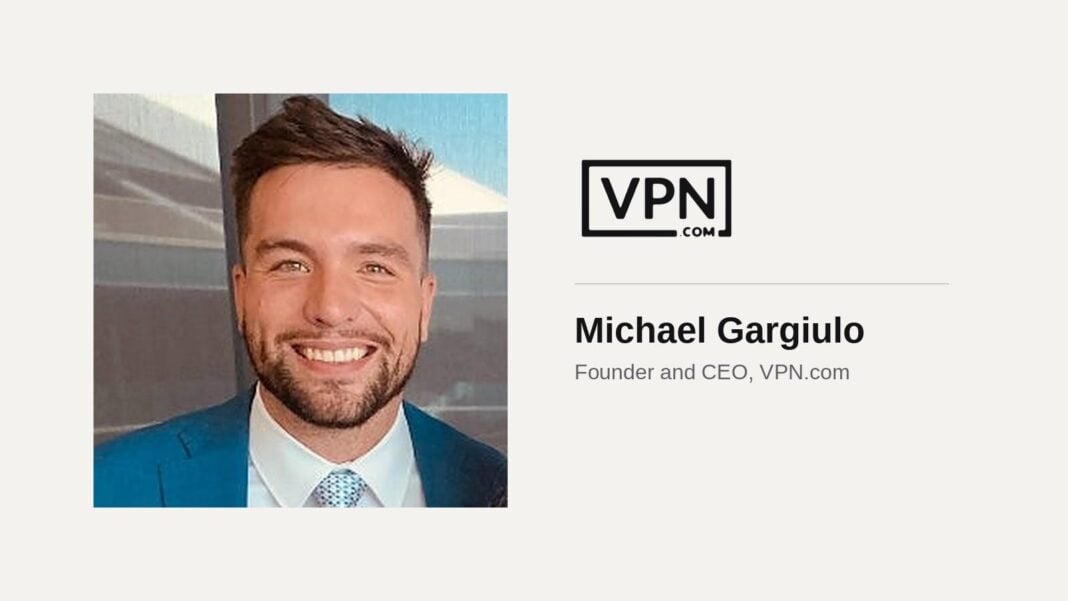
Michael Gargiulo, founder and CEO of VPN.com, thinks that list runs backwards. “The things that look small early on can become some of the most important assets in your business later,” he says.
He learned it the expensive way. VPN.com was first registered in December 1997. Gargiulo spent four years trying to buy it and closed in 2017 at $976,000, a figure his company publishes on its own site. He already knew the category: he had built three websites to four million monthly visitors while studying finance at the University of Georgia, then spent three years leading the team at ProxyServer.com. The purchase taught him something else, which was how a seller reads a buyer.
What the seller learns about you
Premium domain deals turn on information. Once a seller knows who is asking, how badly they want the name and what they plan to launch on it, the price moves. Gargiulo went through years of stalled attempts before he brought in a professional broker and treated the domain as an acquisition rather than a purchase.
“In business, sharing too much information at the wrong time can become expensive.”
That lesson pushed VPN.com into brokerage. The company now represents founders and businesses buying category-defining names, often anonymously, with escrow and due diligence built into the deal. Its site lists CoolMathGames.com, contracted at $1.8 million, among the transactions Gargiulo has worked on. He does not name clients who have not gone public, which suits a line of work where discretion is most of what the client pays for.
What AI can copy in a weekend
Generative AI has sharpened his argument. A competitor can now reproduce a landing page, a pricing table, an onboarding flow and a month of ad copy in days. Gargiulo’s reading is that features have become the cheapest part of a company to duplicate, so a business that leans on them alone has little left to defend.
Reputation, customer relationships and distribution take years to build and show up late on a balance sheet, and a clone cannot download them. “What’s much harder to copy is trust,” he says.
The login is the asset
Trust has a technical address. When a customer types a company’s domain or opens an email from it, they rely on registrar credentials, DNS records and email authentication that most leadership teams never look at. One compromised registrar account can reroute a website and hand an attacker the company’s inbox.
Gargiulo treats those controls the way a finance chief treats bank access. At VPN.com that has meant tighter access controls, monitoring, stronger authentication and written rules on who owns what. “Your domain, email, registrar access, and DNS shouldn’t be treated as minor technical details,” he says. “They’re part of the infrastructure that customers depend on to know they’re actually dealing with you.”
You can run the first pass yourself in an afternoon. Check whose email the registrar account sits under. Count how many people can change your DNS. Find out whether anyone who has left the company still holds a password. An uncomfortable answer to any of the three points at the asset you have guarded least.
A research site that sells no VPN
VPN.com is not a VPN provider. The company researches and compares providers on price, security, privacy and performance, and says its reviews cover more than 1,000 services. The brokerage runs alongside that work and draws on the same question: what makes a business credible to someone who has never met it.
Gargiulo, who works out of Atlanta, has coached more than 100 Future Business Leaders of America students since 2010. His advice to founders comes in the register he uses with those students. “Protect the brand. Build trust early. Surround yourself with people who know what you don’t.” The goal he sets for VPN.com is a platform people use to protect their digital identity and make better decisions about the assets they own online, built to last longer than any product feature he ships this year.
VPN.com is an independent VPN research and comparison platform that also advises founders and companies on premium domain acquisitions. Michael Gargiulo is its founder and CEO.