
As enterprises move AI agents from experimentation into production, a new challenge is emerging: giving those systems the right information without overwhelming them with everything a company knows.
Axios reports that Modus is entering that market with a $10 million seed round led by Insight Partners, alongside participation from Soma Capital, Bullet Ventures, and technology founders and operators including Eyal Kishon, Nadav Avrami of Wix and Dazl, the co-founders of Cyera, and the founders of Epsagon.
The Tel Aviv-based company is emerging from stealth with the Context Warehouse, an infrastructure layer designed to continuously learn how a business operates and provide AI agents with the context they need for individual tasks.
The Context Gap
Enterprise AI systems can already access information across data warehouses, BI tools, documents, tickets, code repositories, and collaboration platforms. But Modus argues that access is not the same as understanding.
An AI agent may be able to retrieve a dashboard, for example, without knowing whether that dashboard is actually trusted by the business. It may have access to multiple definitions of a metric without understanding which one takes precedence, or repeatedly query systems because it lacks the context to determine what information is relevant.
As companies connect AI agents to more systems, this can create higher costs, slower responses, and less reliable results. Modus describes the underlying issue as the “Context Gap”: the distance between what AI can access and how well it understands the business behind that information.
“Companies are no longer just trying to get their teams to use AI. They are asking how to scale it across the organization without accuracy dropping, governance breaking, or costs spiraling,” said Daniel Shimoni, CEO and co-founder of Modus. “Whether people call it a company brain, a context layer, or context engineering, they are all trying to solve the same problem. We believe every enterprise needs a continuously maintained understanding of how the business operates before it can build any of those things. That is what the Context Warehouse provides.”
A Continuously Updated Context Layer
Modus sees the Context Warehouse as a potential foundational layer for enterprise AI, similar in importance to the role data warehouses play in enterprise data.
Rather than simply storing information, the platform is designed to learn from how organizations actually use it. It analyzes metadata and usage patterns across data warehouses, BI tools, pipelines, code repositories, documentation, and collaboration systems.
The platform can also draw on signals that reveal how work gets done in practice, including recurring analyst queries, frequently used dashboards, pipelines, and decision threads. Modus says this allows context to be learned from real usage rather than documented once and left to become outdated.
The system then composes only the context relevant to each AI interaction. According to Modus, this can reduce unnecessary retrieval and token consumption by up to 10x, allowing agents to focus on relevant information rather than processing excessive amounts of data.
The Context Warehouse is designed to operate independently of any data warehouse, AI model, or application platform. It also works with the agents teams already use, including through MCP, allowing enterprises to adopt new models and tools without rebuilding their approach to context management.
Keeping AI Context Current
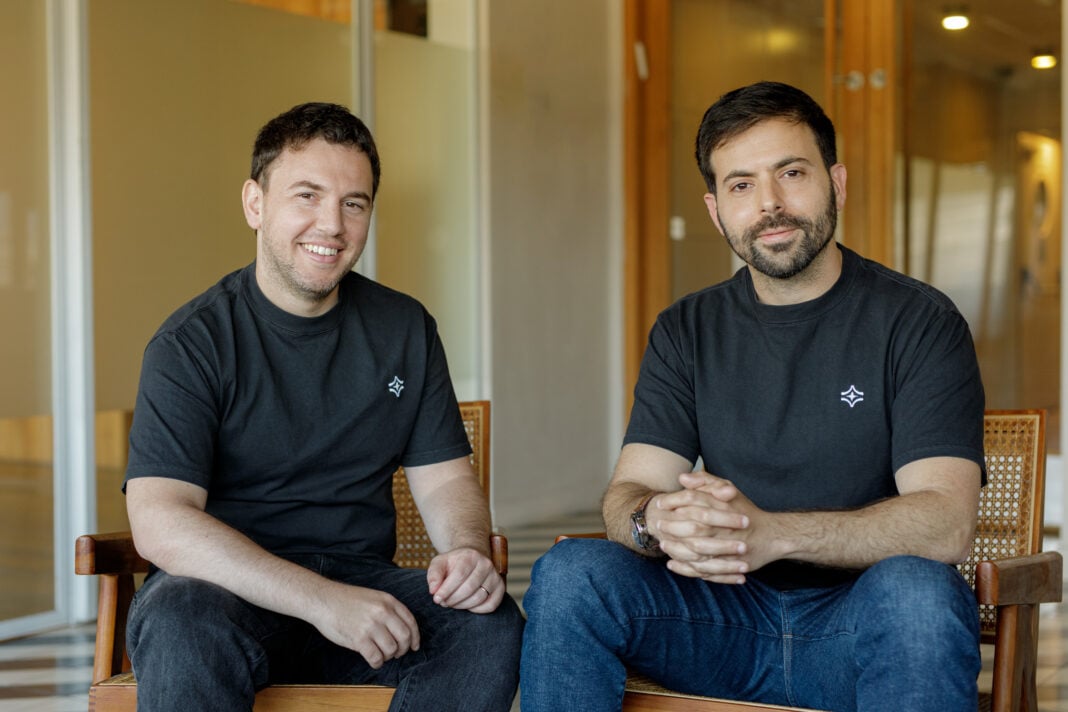
Modus was founded by Daniel Shimoni, former VP of Product at Lusha, and Tomer Mesika, former Head of Architecture at Cyera. Their experience led to the company’s focus on the infrastructure required to maintain context as organizations evolve.
The company argues that enterprises building their own context layers or company brains face a significant maintenance challenge. Business processes change, new information emerges, and the way employees use data evolves, potentially leaving manually maintained context out of date.
“Building a context layer is not the hardest part,” said Tomer Mesika, CTO and co-founder of Modus. “Keeping it current is. Every change your business makes changes the context AI depends on. The real decision is no longer buy versus build. It is whether you want to own the ongoing cost of maintaining that understanding. We built the Context Warehouse so engineering teams can build what differentiates their business instead of maintaining the infrastructure underneath it.”
Modus says its platform is already deployed with enterprise customers across financial services, technology, and SaaS, helping organizations improve AI accuracy, strengthen governance, accelerate response times, and reduce operating costs.
Building the Infrastructure for Production AI
Insight Partners’ investment reflects the firm’s view that AI adoption will require a new layer of enterprise infrastructure.
“Every major wave of enterprise software has required a new foundation,” said Ganesh Bell, Managing Director at Insight Partners. “Data warehouses became foundational infrastructure for enterprise data. As AI becomes production infrastructure, organizations need a system of understanding that every agent and application can build on. We believe Modus is defining that category with the Context Warehouse.”
For now, Modus is focused on helping enterprises make AI agents more accurate, efficient, secure, and scalable. Over time, the company sees its continuously maintained understanding of business operations supporting a broader class of AI systems, ones that can surface what matters, detect what has changed, and help organizations move from trusted answers to trusted action.