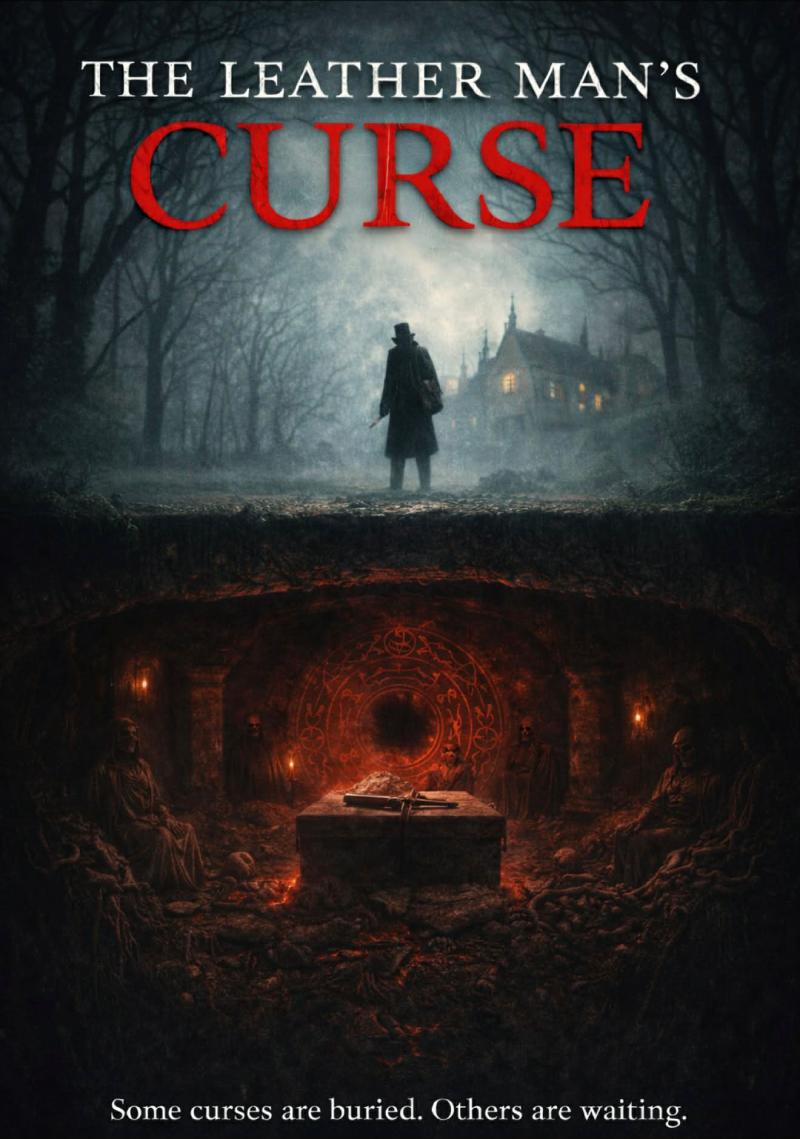

Russell W. Dickson does not use Gloversville as mere scenery in The Leather Man’s Curse. He makes the city feel wounded, watchful, and alive with Gothic horror, buried guilt, and deepening dread.
That matters because this novel works best when place, memory, and dread move together. The town’s dead factories, vanished glove wealth, and restless land give the story its first pulse and keep feeding it as the horror deepens.
The Leather Man’s Curse Review Finds Gothic Horror in Gloversville
Dickson calls the book historical and folklore-inspired Gothic horror, and the label fits. The novel draws on the violent aura of the Mohawk Valley, old religious structures, hidden chambers, and the fear that whatever was buried beneath the town never truly went away. The book’s own author’s note says it is fiction, but one rooted in the tension between land, belief, and power, where memory and myth meet in Gloversville.
The opening gives the reader a strong entry point. Jenny and John drift into Rail Fest in the abandoned rail yard, where carnival lights flicker across rust, weeds, and derelict buildings. That uneasy opening soon pushes them toward a ruined church, an undead storyteller, and a tale inside the tale. From there, Dickson shifts into the darker core of the book: Sister Sarah, Joe the leather smith, the convent, the rectory, the crypts, and the old mistake that still stains the ground.
That structure works well.
Instead of rushing straight at the monster, Dickson lets the book unfold like local legend spoken aloud at the wrong hour. He builds suspense through delay, suggestion, and place. The story keeps opening doors. Some lead into the convent’s corridors. Others lead down into the crypts. None lead anywhere safe.
The strongest element in The Leather Man’s Curse is atmosphere. Dickson knows how to make stone, dust, leather, candles, rotting wood, and cold air do heavy lifting. The convent feels oppressive. The old rectory feels sealed around its secrets. The hidden library and the chamber below it carry the kind of Gothic weight horror readers want from a novel like this. When Mother Superior reveals the crypt entrance and speaks of the Order of Shadows and a ritual mistake, the novel locks into its central dread.

The book also benefits from the tension between sacred duty and human feeling. Sister Sarah is not just another horror victim wandering into darkness. She stands at the edge of religious commitment while confronting desire, secrecy, and a place that seems to know more about her than she knows about herself. Joe gives the story a second emotional pole. He is practical, grounded in leather work and restoration, but he also becomes a path into the town’s deeper corruption.
That blend helps the novel avoid feeling like empty mood.
Gloversville Gives the Leather Man’s Curse Its Strongest Dread
Dickson wants more than shocks. He wants old guilt, failed containment, and the seduction of forbidden knowledge. The Grimoire, the crypts, and the Order of Shadows all push the novel toward a broader idea: evil here is not random. People tried to bind it, study it, and manage it. They failed. That gives the book a stronger spine than a simple haunted-convent plot.
Readers looking for hard-driving, relentless thriller pacing may find that Dickson prefers buildup over speed. He spends time on description, on corridors, on shadows, on the emotional and spiritual unease of the setting. But for readers who like Gothic horror, that is part of the appeal. He is more interested in pressure than sprinting.
That choice suits the book.
It also helps that Dickson writes Gloversville as a city that remembers. Early in the novel, the town’s decline, its leather past, and the land beneath it all feel stitched into the coming horror. By the end, that idea still holds. The closing pages return to Jenny and John and leave the reader with the sense that folklore was never only folklore. The Leatherman remains less a solved mystery than an old wound still capable of opening again.
Faith, Folklore and Buried Evil Drive the Leather Man’s Curse
The Leather Man’s Curse succeeds because it trusts its setting. Dickson gives readers decayed industry, sacred stone, hidden chambers, whispered history, and a curse that deepens instead of fading. The result is a Gothic horror novel that feels rooted in its place and confident in its mood.
Readers who enjoy folklore horror, religious dread, and small-town darkness should find plenty to like here.
The Leather Man’s Curse turns Gloversville into more than a backdrop. In Dickson’s hands, it becomes a city that remembers.
The Leather Man’s Curse is available at Amazon in hardcover, paperback and kindle format.