
When people say “rocket science,” they usually mean something impossibly complex. In reality, rocket science — or more precisely, system engineering — is about designing systems where failure is not an option, but to be precise: not the unexpected option, but identified and planned. Every subsystem, from propulsion to communication, must work together with near-zero tolerance for design errors. If one small assumption fails, an entire mission can be lost.
This discipline of planning, foresight, and risk mitigation is what allows humanity to launch satellites, build spacecraft, and explore the solar system. Now, Ivan Makarov believes the same principles can revolutionize how we build software.
Who Is Ivan Makarov?
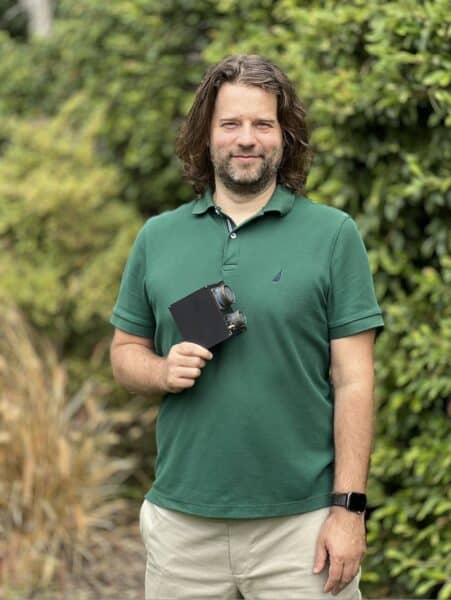
Ivan Makarov is an entrepreneur and engineer, originally from Siberia, and the city known as the birthplace of the GLONASS navigation satellites. Trained in rocket engineering, Ivan found his passion early in embedded systems and robotics. By his third year of university, he was already building autopilots for drones before open-source autopilots existed.
This passion turned into a full-fledged drone engineering company, where Ivan as founder led the design of drones for remote sensing and geology and their fly-by-wire systems. Building drones taught him to manage aerospace-grade complexity on a startup scale: designing systems that were not only reliable but also affordable, resilient, and built to handle real-world challenges.
The drones background gave him a unique perspective: if aerospace engineers could manage such complexity with limited budgets, why couldn’t software engineering adopt the same rigor?
The Problem with Software Today
Software development today is dominated by agile approaches — a culture where developers iterate rapidly without enough upfront planning, hoping that speed and patches will eventually deliver a working product. While Agile methods solved some of the rigidity of old Waterfall processes, they introduced new problems: lack of structure, mounting complexity, and fragile systems that break under scale.
The rise of AI coding agents has amplified the scale of this with ”vibe-coding”. These tools can generate code instantly, but they lack the architectural foresight to build large, reliable systems. Without a strong framework of requirements and system engineering, AI-generated projects stall at some level of complexity.
Ivan’s Vision: Requirements-First Development

Ivan is pioneering a paradigm shift he calls requirements-first development. Instead of treating requirements as documentation that sits on the shelf, his approach turns requirements into living, executable inputs that guide code generation.
This is what Ivan calls spec2code: the idea that specifications themselves are the code. Inspired by aerospace system engineering, where design errors must be eliminated in advance, Ivan’s vision is to bring that same rigor into software development — now supercharged with AI.
“Space is the ultimate domain of complexity, where any failure comes at the highest cost,” Ivan explains. “But today’s AI breakthroughs allow us to apply those same zero-error tolerance principles to how we build general-purpose software.”
Moving Forward
Ivan’s long-term goal is to help unlock a future where building complex systems becomes cheaper, faster, and more reliable by combining AI with the principles of system engineering.
Just as aerospace engineers design spacecraft with foresight and redundancy, Ivan envisions a future where software engineering is no longer limited by chaotic iteration. Instead, requirements and system design will be integrated into AI-assisted workflows, raising the bar for what small teams, startups, and even individuals can build.
Ultimately, Ivan sees himself playing a role in the next great unlock: contributing to an era where humanity can not only manage digital complexity but also expand into the orbital space industry and beyond. With frameworks that make complex systems affordable and accessible, he hopes to pave the way for technologies once thought impossible — from smarter software to interplanetary geology in the decades to come.