
More travelers are choosing to skip the checked suitcase. Instead, they show up at the airport with just a carry-on and a small personal item. No checked bag at all.
This way of traveling has a name: one-bag travel. What used to be a habit of backpackers and frequent flyers is now showing up in business trips, weekend getaways, and even week-long family vacations. And it’s growing fast in 2026.
What’s Driving the Shift
The reasons are practical. Airlines have raised checked baggage fees year after year. Most major U.S. carriers now charge $35 to $50 for the first checked bag on domestic flights. The second one usually costs more. International flights can be pricier still. For a family of four, those fees add up before the trip even begins.
Time is another big factor. Waits at baggage claim have grown longer at many airports. Skipping that step can save 30 to 45 minutes at the back end of your trip, and sometimes more if you’re connecting through a busy hub.
There’s also the risk of lost luggage. Even at the best airlines, thousands of bags go missing every month, according to U.S. Department of Transportation tracking. One-bag travelers don’t have to think about it.
Remote work has played a role too. People who spend two or three weeks in a new city want gear that’s easy to move around, not a suitcase that takes up half the closet of their rental.
The Basic System
One-bag travel is simpler than it sounds. The idea is straightforward. Pack everything into a carry-on and a small personal item. Leave room for what you’ll pick up along the way. And make sure each item earns its place.
A typical one-bag setup includes:
- A carry-on backpack or duffel for clothes and main gear
- A small personal item like a sling, tote, or daypack for the plane and daily errands
- A few packing cubes or compression sacks to keep things organized
- A lightweight, foldable bag for laundry, groceries, beach days, or anything you didn’t plan for
That last item is where most beginners slip up. People pack with the outbound trip in mind, but a real trip always involves a return with more than you started with. A souvenir, a gift, a new pair of shoes, a bottle of wine you wanted to bring home. Without a foldable bag, you end up squeezing everything into your carry-on or buying an overpriced tote at the airport gift shop.
Where Lightweight Bags Earn Their Place
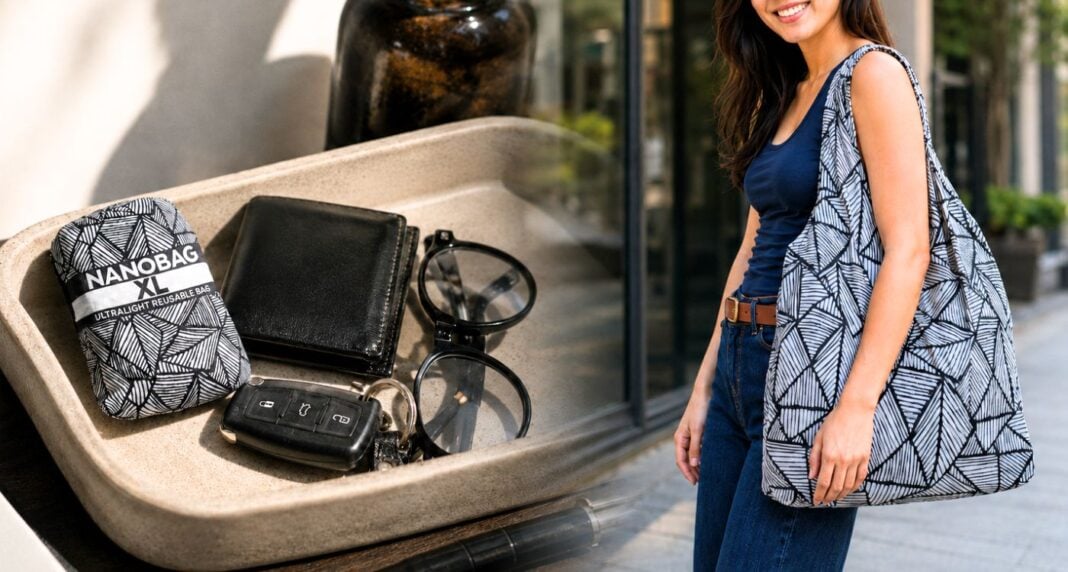
This is where brands like Nanobag have become quietly popular with frequent travelers. Their bags are made from a diamond ripstop fabric that weighs around an ounce in most sizes but can carry up to 66 lb. Each one folds into a small pouch that takes up almost no space inside another bag.
A folded Nanobag is easy to bring along even when you’re not sure you’ll need it. Once you arrive at your destination, that’s when it tends to earn its place. The market run you didn’t plan, the laundry day at the rental, a quiet beach afternoon, or the moment you realize your carry-on is full. Each of those moments calls for an extra bag, and a Nanobag is ready.
The lightweight travel bags collection covers a few different styles for these moments. A tote works for grocery and market runs. A crossbody sling is good for hands-free walks around a new city. A drawstring backpack handles day trips. A zippered daypack with a YKK zipper gives you a real backpack that packs flat when you’re not using it.
The fabric also has a PFC-free water-repellent coating that handles a passing rain or a damp seat without trouble. Bartack reinforcement at the stress points adds extra strength at the handles and seams, where most of the load is carried. And putting one away takes no thought. You press it into its pouch and it folds itself back into a tidy shape.
Tips for Your First One-Bag Trip
A few rules of thumb help if you’re new to the system:
- Pack for half the trip and plan to do laundry once. Most hotels offer it, and many short-term rentals have washers.
- Choose layering pieces over single-use outfits. One pair of pants can usually carry three days.
- Pick shoes carefully. Two pairs maximum, and one of them is what you wear to the airport.
- Bring a packable bag for the unexpected. A market run, a beach day, or a souvenir you didn’t see coming.
- Toiletries take less room than you think. Travel-size versions of your daily essentials handle most trips, and the hotel usually covers the rest.
The Bigger Picture
The one-bag trend isn’t really about luggage. It’s about how people want to travel today. Less waiting. Less worrying. Less of the small frustrations that can wear down a good trip.
The gear has caught up to the idea. Bags are lighter, fabrics are stronger, and the small accessories that used to take up space are now built to fold down to almost nothing when they’re not in use.
For travelers who haven’t tried the one-bag approach yet, the next trip is a good one to test it on. Most people are surprised by how little they actually need.