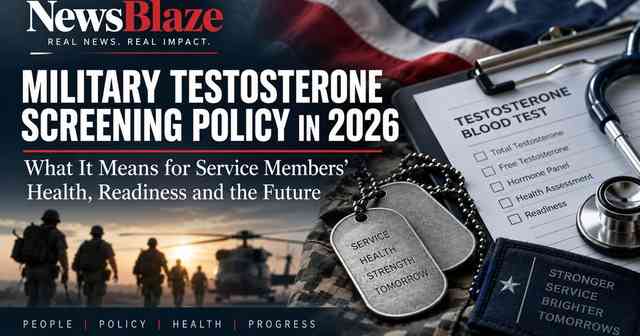

The Defense Health Agency has implemented a new testosterone-deficiency screening policy for male service members, creating one of the most notable changes to military men’s health screening in 2026.
Under the guidance released in September, male service members age 30 and older are to be screened for testosterone deficiency during periodic health assessments, entry examinations, or annual physicals. Men under 30 may be screened on request or when clinical indicators are identified.
Screening is not the same as universal blood testing
The DHA describes the screening itself as a structured review of symptoms and risk factors. When that process raises concern, clinicians can determine whether laboratory testing and further evaluation are necessary.
This distinction is important because social-media discussion has sometimes reduced the policy to “the military is testing everyone over 30 for low testosterone.” A more precise explanation of what the military testosterone screening policy requires notes that the initial screen and the later diagnostic evaluation are separate steps.
Treatment may include testosterone replacement
DHA says that when testosterone deficiency is found, replacement therapy or other hormone treatments can be discussed. Treatment is intended to be individualized and monitored by military medical professionals.
Medical groups have raised concerns
The Endocrine Society responded to the new guideline on September 24, saying evidence does not support population-level testosterone screening in asymptomatic men and warning about false positives and fertility issues.
The disagreement does not change the fact that the military policy is now in place, but it highlights the need for careful interpretation of results and individualized decisions rather than treatment based on a single number.
For active-duty members, outside treatment also raises TRICARE referral and military-readiness questions. Guard and Reserve members may have different healthcare arrangements depending on activation status and plan eligibility.