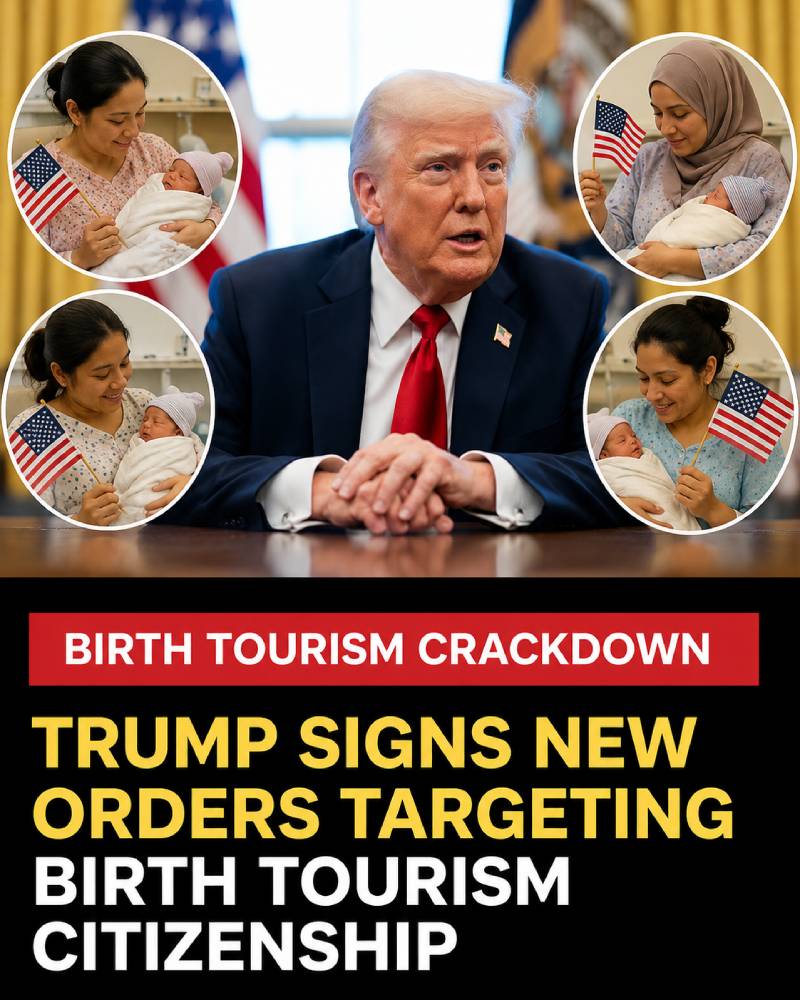

Despite losing the U.S. Supreme Court birthright citizenship fight almost two months ago, President Trump reloaded and fired off another round of ammunition to let the Supreme Court know there is more than one way to skin a cat. On Thursday, August 6, 2026, the relentless president launched a new effort to restrict specific birthright citizenship and birth tourism in the United States.
With the stroke of a black sharpie pen, Trump proudly signed two executive orders aimed at narrowing the circumstances of how children born in the country belonging to foreign diplomatic staff working in the U.S., as well as children born from designated alien enemies, including children born as a result of birth tourism schemes.
The Supreme Court on June 30 rejected Trump’s earlier, broader attempt to deny automatic citizenship to certain children born in the United States to noncitizen parents. The ruling, however, has prompted the administration to argue that longstanding exceptions to birthright citizenship leave room for narrower restrictions.
“I thought we were going to win it at the Supreme Court. Unfortunately, we had a bad decision, a very unfair decision. Our country suffers because of it and we’re ending it a different way,” President Trump said during a round table press conference.
The orders represent Trump’s second major attempt to limit birthright citizenship. Undoubtedly the administration’s latest action is expected to face an avalanche of legal challenges from immigrant-rights organizations, states and other opponents who argue that the president cannot unilaterally rewrite the constitutional guarantee contained in the 14th Amendment.
Legal experts around the country insist the future of birthright citizenship in America, a law which was made legal under the 14th Amendment of the Constitution, will become the same battle cry as the landmark abortion decision in Roe vs Wade.
“They turned birthright citizenship into the next Roe-vs-Wade, that we’re going to have to spend the next 50 years overturning,” said Mike Davis, in a Politico article. Davis is the founder of Article III Project, A Trump affiliated organization. As the political spotlight remains dead-set on birthright citizenship it is imperative the Republicans will keep pushing the fight to rewrite the rules of birthright citizenship.
“The Supreme Court already decided this issue. Birthright citizenship is guaranteed by the Constitution. No additional executive order can change the meaning of the Constitution. Any executive order that tries to rewrite birthright citizenship will meet the same fate as the last one,” said Cody Wofsy in a quote published by the Associated Press. Wofsy serves as the deputy director of the ACLU Immigrants’ Rights Project.
Nonetheless, birth tourism is a new road for the Trump’s Administration to travel down to justify the ending of birthright citizenship for foreigners when they come to this country only to give birth to Americanize their children.
We Didn’t Win Anything; Birthright Citizenship Was Ours Already
On June 30, when the U.S. Supreme Court Justices shot down the Trump’s Administration intent to eliminate birthright citizenship for children born to undocumented parents in the United States in Trump vs Barbara, the ruling only reaffirmed a historical landmark decision.
A 6-3 decision among the justices was undeniably a breathless relief for millions of people born to parents deemed illegal immigrants on American soil. This stunning ruling preserved the guarantee of citizenship enshrined in the Constitution under the 14th Amendment. Voices of civil rights groups, legal advocates, and political activists echoed throughout the news landscape.
“We are relieved and grateful that the rights of our children have been upheld,” Illinois Latino Agenda Co-Chair José Muñoz said in an interview with WTTW PBS TV reporter. “But make no mistake, we didn’t win anything. That right was ours before that case came to be heard.”
Thomas Wolf, director of democracy initiatives at the Brennan Center for Justice at NYU Law, made the following statement: “Today’s ruling is the right one amid an avalanche of Supreme Court opinions undermining our democracy.”
During his first day in office beginning in January 2025 – President Trump issued his executive order aimed at ending birthright citizenship for babies of undocumented immigrants and for people with temporary status in the U.S. – under Executive Order 14156: Protecting the Meaning and Value of American Citizenship.
Trump’s order drew immediate legal challenges with several lawsuits brought by 22 states, immigrant groups, and mothers expecting to birth children at the time.
Critics argued Trump’s order departed ‘millions of miles’ away from over 125 years of precedent allowing legal unrestricted birthplace-based citizenship under the 14th Amendment of the Constitution. And, further, advocates said the executive branch did not possess the authority to “rewrite or nullify a constitutional amendment.” Advocates insisted the birthright issue had already been decided by the Supreme Court in Wong Kim Ark vs U.S.
Birth Tourism Operators Sent to Prison
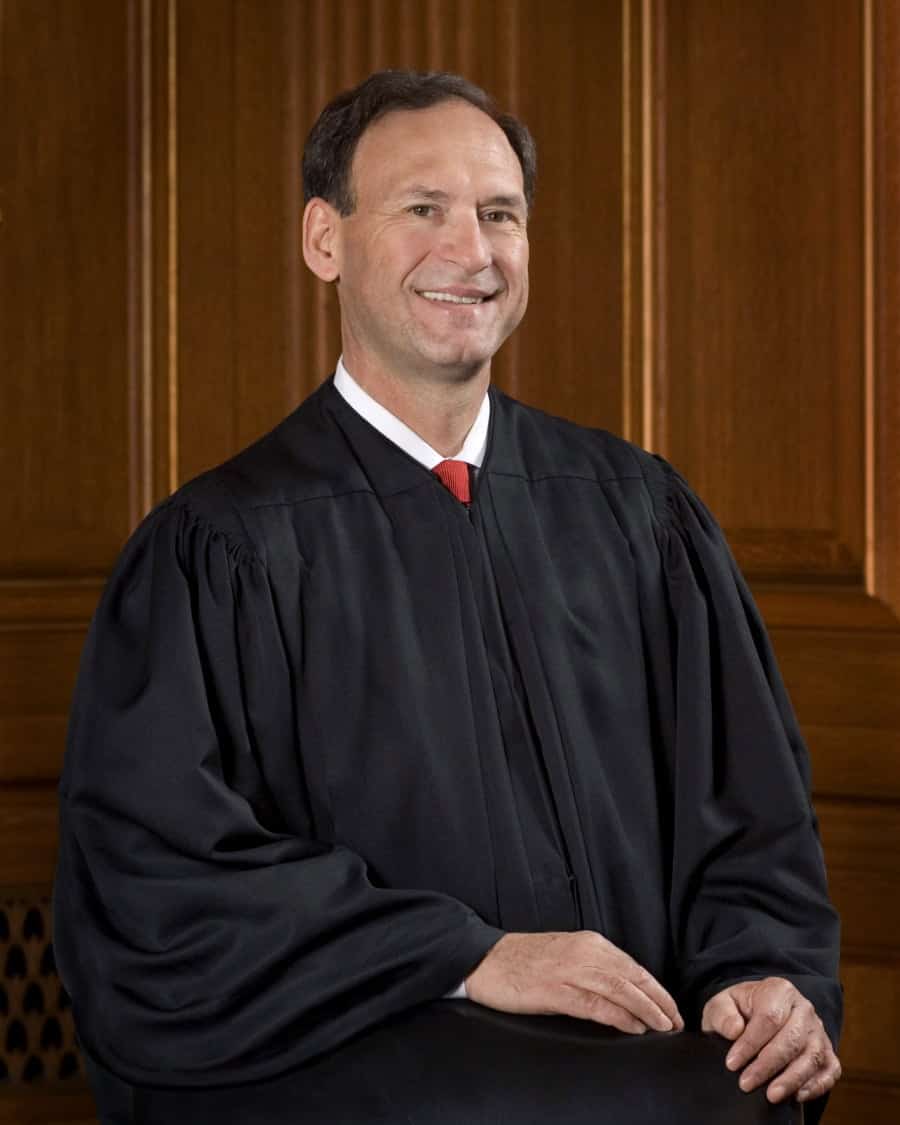
Writing in his dissent against birthright citizenship when it comes to foreign women, Supreme Court Justice Samuel Alito said, “Women who come here solely for the purpose of giving birth would be able to get automatic citizenship for their children.”
Alito said the 14th Amendment confers citizenship on “virtually everyone who happens to be born in this country, including the children of birth tourists.
Notwithstanding the loss of the Supreme Court ruling on birthright citizenship, the Trump Administration is teeing up to tackle America’s multi-billion dollar industry – illegal birth tourism. Birth tourism in the U.S. involves foreign nationals traveling into America on temporary visas with the intent of birthing a child on U.S. soil.
This 24-7 practice is carried out by paid shady operators highly knowledgeable about visa programs, immigration policies and rules including what it takes for foreign women to apply for permanent residency after giving birth in the U.S.
Although the 14th Amendment guarantees birthright citizenship, yet when foreigners use a tourist visa under false pretenses to secure U.S. citizenship for their newborn the scheme itself constitutes visa and immigration fraud.
Another major benefit for foreign women traveling into America to birth babies under false pretenses helps them to apply for permanent residency when the child turns 21. Crackdown on birth tourism operators began under then-president Barack Obama.
“It is fertile ground for this kind of scheme,” said Claude Arnold, who at the time was the special agent in charge for Immigration and Customs Enforcement’s homeland security investigations in Los Angeles. “These people were told to lie, how to lie, so that their motives for coming to the U.S. wouldn’t be questioned.”
There is no U.S. agency tracking the exact figures of how many women come to the U.S. to give birth so their children can automatically become citizens. The Center for Disease Control and Prevention estimated approximately 9,500 births to parents who reported a non-U.S. address in 2024.
According to the Oversight House in Washington, unfortunately, the birth tourism industry continues to thrive. Analysis by the Center for Immigration showed in 2020 an estimation of nearly 26,000 babies were born to women on tourist visas annually. A more recent estimate reports that approximately 70,000 births are attributable to temporary visitors in 2023 alone, suggesting the industry has grown significantly.
Last year, U.S. District Judge R. Gary Klausner in Southern California sentenced Phoebe Dong to 41 months in Federal prison for running an underground birth tourism business catering to helping pregnant Chinese women travel into the U.S. – to deliver babies that would become American citizens under the 14th Amendment of the U.S. Constitution. Dong and her husband Michael Liu had been convicted earlier of conspiracy and money laundering under their illegal company called “USA Happy Baby.”
Federal authorities said at the time the Dong couple earned ‘hundreds of thousands of dollars’ running the scheme and that their illegal assistance helped over 100 pregnant foreign women to execute the scheme of having their infants become American citizens.
In December 2019, a judge sentenced Dongyuan Li of Irvine California to 10 months in prison for running a birth tourism scheme called “YouWinUSA.”
Per Li’s plea agreement she agreed to forfeit more than $850,000, a luxury Murrieta home worth over $500,000 including several Mercedes-Benz vehicles. Federal authorities further said Li received a combined total of over $3 million in international wire transfers from China.
Nevertheless the impact of birthright citizenship is phenomenal for the American government.
Trump’s Executive Order is Designed to Smoke out Birtherism Schemes
As previously mentioned, President Donald Trump has launched a new effort to restrict birthright citizenship in the United States, signing two executive orders aimed at narrowing the circumstances under which children born in the country automatically receive U.S. citizenship and intensifying the federal government’s crackdown on the commercial birth-tourism industry.
The orders represent Trump’s second major attempt to limit birthright citizenship. The administration’s latest action is expected to face another legal challenge from immigrant-rights organizations, states and other opponents who argue that the president cannot unilaterally rewrite the constitutional guarantee contained in the 14th Amendment.
The Supreme Court on June 30 rejected Trump’s earlier, broader attempt to deny automatic citizenship to certain children born in the United States to noncitizen parents. The ruling, however, has prompted the administration to argue that longstanding exceptions to birthright citizenship leave room for narrower restrictions.
Under the new orders, the administration is seeking to address at least five categories of births, although some of the provisions would depend on additional action by Congress:
- The first involves children born in the United States to certain foreign diplomatic personnel. The 14th Amendment has long been understood not to confer citizenship automatically on children of foreign ambassadors and certain diplomatic representatives. Trump’s order seeks to extend that principle to additional noncitizen employees working on behalf of foreign governments.
- A second category involves children of people classified as alien enemies, including individuals associated with federally designated terrorist organizations. The administration contends that the constitutional citizenship guarantee does not extend to children born to members of invading or hostile forces.
- The orders also address births in U.S. territories. That provision would take effect only if Congress changes federal law governing citizenship in those territories. Puerto Rico would be among the territories most directly affected by such a change.
- Among the most controversial provisional orders targets so-called birth tourism — the practice of foreign nationals traveling to the United States primarily to give birth so that their children can obtain U.S. citizenship.
- Under Trump’s order, the administration seeks to deny automatic citizenship in cases involving mothers who deliberately and deceptively enter the United States for the sole purpose of giving birth, particularly when the arrangement involves commercial birth-tourism operations. The administration also seeks to address the use of surrogate mothers in arrangements designed to obtain U.S. citizenship for children.
Supreme Court Ruling Sets Legal Backdrop
Trump’s latest action follows the Supreme Court’s June 30 decision involving his earlier executive order on birthright citizenship. That earlier order attempted to establish a much broader restriction, including denying automatic citizenship to certain children born in the United States to parents who were not U.S. citizens or lawful permanent residents.
From a practical standpoint, the Supreme Court rejected the broader approach, leaving the administration to pursue narrower categories that it contends fall within historically recognized exceptions to the 14th Amendment.
The legal battle is likely to focus on whether those exceptions can be expanded through executive action and whether the president has authority to create new categories of people who would otherwise fall within the constitutional guarantee. Opponents argue that the administration is attempting to accomplish through narrower executive orders what it could not accomplish through the original sweeping order.
Congressional Investigation Examines Birth-Tourism Businesses
The Trump administration’s campaign against birth tourism also has support from congressional Republicans. The House Oversight Committee has been investigating birth-tourism centers and this past May, the committee requested documents from a Miami-area company known as “Have My Baby in Miami.”
Committee members expressed concerns that the industry could create national-security and election-integrity risks, particularly because officials say a significant portion of foreign women traveling to the United States for birth-tourism purposes come from countries such as China and Russia.
The Senate Homeland Security and Governmental Affairs Committee previously examined the issue in a 2022 report. Supporters of tougher enforcement argue that U.S. citizenship is an important national privilege and should not become a commodity that can effectively be purchased through commercial birth-tourism arrangements.
Critics, however, say the government already possesses tools to prevent visa fraud and improper entry and should enforce existing laws rather than attempt to change the constitutional rules governing citizenship.
At the heart of that dispute is a fundamental question: Can the executive branch narrow a constitutional guarantee through targeted enforcement and newly defined exceptions, or would doing so require Congress — or a constitutional amendment — to change the nation’s long standing citizenship rules?
The answer is likely to be decided in federal court, with the Supreme Court potentially facing the issue again as the administration’s latest restrictions move through the legal system.
Nevertheless the impact of birthright citizenship is phenomenal for the American government.
Clarence Walker is a senior legal and political reporter for NewsBlaze.com; Walker is also an editor at HoustonNewsTodayHe can be reached at HoustonNewsToday@yahoo.com