
The generative AI boom has unleashed a wave of innovation, with developers introducing everything from coding assistants to creative tools and industry-specific applications. But while launching AI products has become significantly easier, sustaining them financially has emerged as a more difficult challenge.
Velocity believes that gap represents the next major opportunity in AI infrastructure. The company announced a $27 million seed round led by NFX and Red Dot Capital Partners, alongside participation from Stardom Ventures, Corner Ventures, and Transcend, to expand a platform designed to help AI-native applications monetize users and accelerate growth.
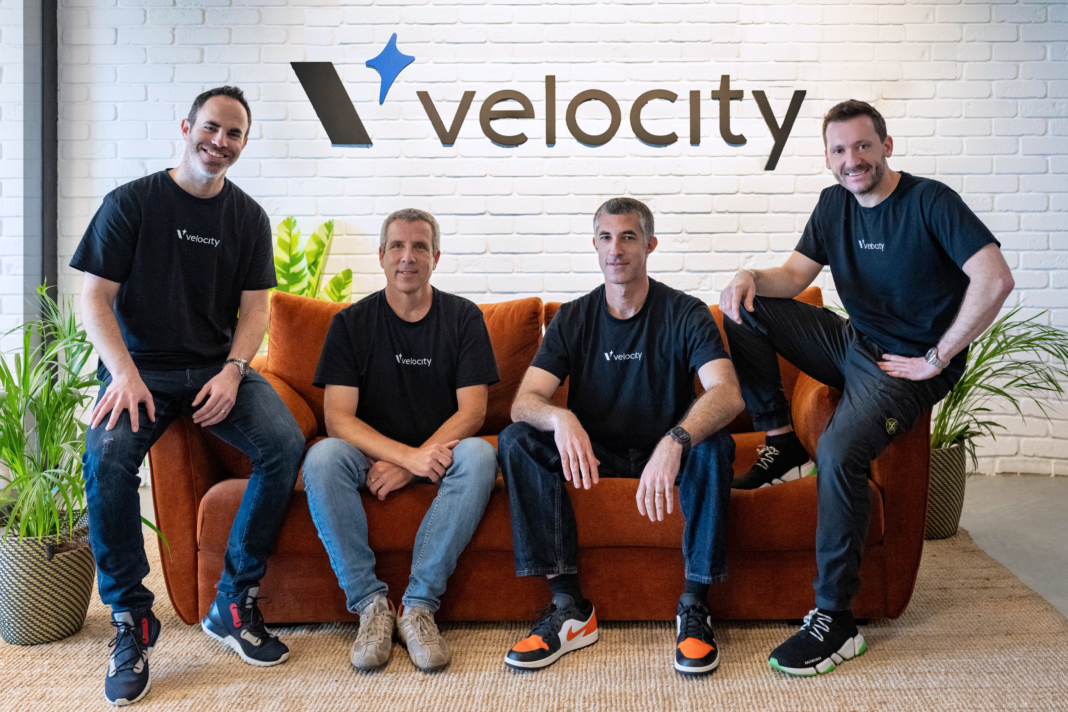
Founded by Tal Shoham with co-founders Amir Shaked and Nimrod Zuta, Velocity is focusing on the infrastructure behind AI businesses rather than the AI models themselves. The founding team previously spent more than a decade building monetization, advertising, and growth platforms at ironSource and Unity, experience they say informed the company’s direction.
Looking Beyond Subscription Revenue
As AI adoption has accelerated, many companies have embraced subscription-based business models. Yet subscriptions alone have not solved the economic pressures facing AI developers.
Growing usage often translates into higher inference costs, while only a fraction of users convert into paying customers. To manage those economics, developers frequently limit free usage through prompt restrictions or premium feature gates.
Velocity argues that these measures may help control costs but can also discourage engagement before users have fully explored an application’s capabilities.
The company’s alternative is to create an additional revenue stream that complements subscriptions rather than replacing them. By integrating intent-driven advertising into AI experiences, Velocity says applications can afford to offer more free usage while continuing to generate revenue.
“AI is becoming the dominant interface for software, creating entirely new opportunities around monetization and distribution,” said Tal Shoham, CEO and co-founder. “We believe the biggest opportunity of the AI era will not only be building products, but also monetizing and distributing them. We’re building the infrastructure layer that helps solve both.”
Building Around User Intent
Velocity’s technology is designed around a principle the company believes distinguishes AI from previous computing platforms: users openly communicate their intent through conversation.
Instead of relying on cookies or historical browsing behavior, the platform analyzes ongoing AI conversations to identify what a user is trying to accomplish. That information is then used to introduce relevant recommendations within the interaction itself.
According to the company, its platform combines three layers: an AI-native advertising network, a mediation and auction system that optimizes demand sources, and conversation intelligence technology that converts dialogue into structured, privacy-safe intent signals.
Shoham said the objective is to make monetization feel like part of the product rather than an interruption.
“AI monetization should feel native to the experience,” he said. “Users expect AI interactions to be useful, contextual, and trustworthy. Our goal is monetization, recommendations, and product discovery that enhance the experience rather than interrupt it.”
Customer Feedback Highlights Early Momentum
Velocity says early deployments indicate that AI applications can introduce monetization without sacrificing user experience, retention, or engagement.
Among its early customers is Leadtech / MAU. Diego Díaz, CEO of the Subscription Division at Leadtech / MAU, said the company has found Velocity to be “responsive, collaborative, and moves quickly,” adding that the partnership has created confidence about “meaningful outcomes as we continue building together.”
The company also cited results from its work with AIBY’s Chaton application.
Artsiom Turavets, Lead Product Manager at AIBY (Chaton), said Velocity has delivered “strong performance while maintaining a high-quality user experience.” He added that the company has seen “meaningful monetization outcomes alongside healthy engagement and retention metrics,” while describing Velocity as “a true partner” that consistently develops solutions tailored to customer needs.
Investors See a New Infrastructure Layer Emerging
For investors, the opportunity extends beyond solving today’s monetization challenges.
Gigi Levy-Weiss, General Partner at NFX, said the emergence of AI-native applications is creating another major technology platform, similar to previous shifts that gave rise to new infrastructure companies. He said Velocity is building “the growth infrastructure layer that enables that intent to drive monetization, distribution, and growth.”
Atad Peled, Partner at Red Dot Capital Partners, also pointed to user intent as a defining characteristic of AI-native software. He said the firm’s investment reflects confidence in both the market opportunity and the founders’ experience building global technology platforms.
Rather than viewing intent simply as a source of advertising data, Velocity believes it will become a foundational building block for AI software.
As Shoham put it, “Every major platform has been built around a dominant signal. We believe the AI era will be built around intent, and we’re building the growth infrastructure layer to monetize and distribute through it.”