

The line between corporate avarice and violations of human rights has vanished in a world where supply chains span 190 nations, from sanctioned ports to conflict mines.
Over 27 million individuals are estimated by the International Labour Organization to be ensnared in forced labor globally, many of them concealed at the lowest levels of international supply chains. It serves as a startling reminder that corruption extends beyond financial gain; it flourishes in places where exploitation is allowed to continue, covertly boosting earnings across various sectors.
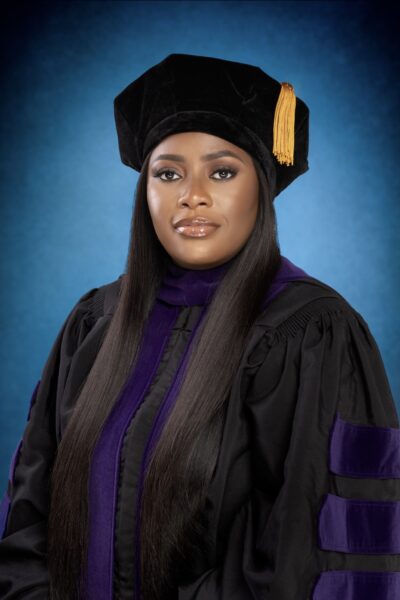
Enter Dr. Olayinka Reis, the compliance visionary whose forensic lens at McKinsey & Company is illuminating this toxic interplay and arming executives with the tools to dismantle it.
With a J.S.D. in Intercultural Human Rights Law and over a decade building ethical fortresses at firms like Thermo Fisher Scientific and Penumbra Inc., Dr. Reis isn’t just auditing ledgers; she’s rearchitecting global business for resilience.
“For me, compliance begins with how people think,” Dr. Reis says. “When integrity becomes instinct, you don’t need constant reminders or oversight; ethical choices start to happen naturally. That’s when you know the culture is working.”
That philosophy has turned her work into more than just risk management. It’s corporate triage in a world where ethics, if neglected, can bankrupt a brand faster than any market crash.
The Nexus of Abuse: How Rights Violations Breed Corruption
Corporate corruption rarely appears on its own; it often grows from ignored human rights. Consider the Democratic Republic of Congo’s cobalt mines, where forced labor extracts minerals for electric vehicles, only to fund local bribes that cascade into multinational scandals.
“Human rights violations create fertile ground for corruption,” Dr. Reis says. “It’s a feedback loop where exploited workers become unwitting enablers of illicit flows. When corporations ignore the dignity of those at the base of their supply chains, they create conditions where bribery and abuse thrive unchecked. You can’t separate forced labor from fraud; they grow from the same soil of neglect.”
Her insight echoes the UN Human Rights Council’s July 2025 resolution, which explicitly links corruption to rights erosions and urges businesses to sever these chains. In high-risk zones, from Brazil’s fined Japanese firms for graft-tainted contracts to cryptocurrency-fueled conflict financing, violations like child labor or land grabs distort markets, inviting FCPA breaches and sanctions.
Dr. Reis’s expertise shines in dissecting these webs. At McKinsey, she leads third-party due diligence under the FCPA and UK Bribery Act, probing suppliers for red flags like adverse media or scope creep in government-linked deals.
Her 2023 peer-reviewed paper in the Intercultural Human Rights Law Review mapped how unchecked abuses in supply chains, such as forced labor under the Modern Slavery Acts, erode anti-corruption safeguards —a thesis now prophetic amid 2025’s ethics scandals.
In an era of deferred prosecution agreements and mounting ESG scrutiny, Dr. Reis’s work has become a template for rebuilding trust in the corporate sphere. At McKinsey, she has helped overhaul the firm’s compliance architecture in the wake of global enforcement actions, embedding monitoring frameworks that regulators have praised as “robust and forward-facing.”
Her approach is both surgical and systemic; every third-party intermediary, from consultants to contractors, undergoes continuous monitoring, ensuring no blind spots remain in high-risk engagements.
“You can’t outsource accountability,” Dr. Reis says. “Every partner you hire mirrors your ethics; if they fall, you fall. That’s why due diligence isn’t just a regulatory requirement; it’s self-preservation. I’ve seen companies lose everything because they trusted convenience over character.”
It’s a standard she enforces not through fear, but through foresight: data-driven due diligence balanced with human judgment.
That balance defines her philosophy of ethical governance. Dr. Reis doesn’t see compliance as a bureaucratic burden, but as a moral technology — a way to embed responsibility into the DNA of business. Her internal training programs go beyond policy memorization, using real-world case studies to connect regulatory language to lived consequences.
“People don’t remember policies; they remember impact,” Dr. Reis says. “You can hand someone a hundred-page compliance manual, and they’ll forget it tomorrow. But show them how a single unchecked payment or ignored red flag costs a company its credibility, and you won’t need to lecture twice.”
The results speak for themselves: partner firms now approach McKinsey’s compliance division not as gatekeepers, but as collaborators in building resilient, transparent operations.
Dr. Reis’s influence extends beyond the corporate walls. As a certified U.S. Export Compliance Officer and a member of the International Law Association (Nigeria), she bridges academia and the private sector, translating human rights theory into actionable corporate reform.
Her upcoming publication examines how corruption in resource-dependent economies corrodes not only governance but also innovation itself, arguing that ethical business isn’t a limitation, but a long-term competitive edge. In a world racing toward automation and AI-driven supply chains, her warning is both pragmatic and prophetic.
“Technology can flag risks,” Dr. Reis says, “but only integrity can fix them. Artificial intelligence, analytics, automation, they’re powerful, but they’re not moral. A machine can identify a red flag, but it takes a human conscience to act on it. Strong principles are the foundation of genuine compliance.”
Dr. Reis’s Blueprint: Integrating Compliance with Rights Vigilance
Dr. Reis’s playbook is equal parts scalpel and shield. Drawing on Penumbra’s supplier audits, where she identified sanctions evasion in medtech supply chains, this highly sought-after expert in compliance champions risk-based SOPs: Level-one screenings via OneTrust for basic requirements, escalating to Refinitiv deep dives for high-stakes vendors.
“You must align human rights due diligence with anti-corruption protocols, train teams on OECD Guidelines alongside FCPA simulations,” Dr. Reis advises. “It’s not enough to run parallel programs that never intersect. Human rights and anti-bribery standards are two sides of the same coin; one protects people, the other protects institutions.”
At Thermo Fisher, this approach nixed debarred resellers, averting multimillion-dollar penalties and preserving jobs amid DOJ scrutiny.
Her McKinsey overhaul, following the 2022 $700 million fine in South Africa for bribery, exemplifies this fusion. Dr. Reis’s monitoring framework, now DOJ-vetted, mandates annual contract reverifications and cashless transactions, explicitly flagging human rights risks, such as those in conflict minerals reporting.
“Ethics isn’t siloed; a rights violation in one link corrupts the chain,” Dr Reis highlights, echoing Amnesty International’s cautions about how geopolitical changes can magnify misinformation and corruption.
Bronwyn Fortuin has been working closely with Dr. Reis for almost three years, during which time she has witnessed her proficiency in ethics and compliance as well as her sincere concern for the people she works with.
“Dr. Reis is not only a knowledgeable compliance expert but also a natural mentor who uplifts those around her,” Fortuin says.
“She ensures that all views are heard by approaching every task with honesty and respect. She is a vital collaborator due to her ability to engage stakeholders, oversee complex evaluations, and deliver significant results.”
As a member of the International Law Association and a qualified U.S. Export Compliance Officer, Dr. Reis instills these values in 15 protégés. Her upcoming paper examines the role of crypto in illicit flows, urging boards to adopt integrated ESG-compliance dashboards.
Human Dignity: Dr. Reis and the Architecture of Corporate Integrity
For Dr. Reis, the link between human rights and corruption extends far beyond theory. Her work has shown that weak governance around labor, resource extraction, and privacy often incubates systemic bribery. At McKinsey, she has observed how gaps in supplier oversight can evolve into full-blown compliance crises when human dignity is treated as expendable.
“Corruption is a virus,” Dr. Reis says. “It destabilizes corporations, it destabilizes countries, and the entire world if you let it. Once it takes root, it corrodes from within, policies, partnerships, and even people’s judgment. I’ve seen how one unethical decision can cascade through a global system, unraveling years of progress.”
Her warning is blunt but empirical: every time human rights are ignored for profit, corruption finds a new breeding ground.
Her stance is now mirrored by leading ethics frameworks, including OECD and UN mandates, which require firms to report not just on corruption risks but also on their human impact.
Her advocacy extends beyond policy into personal conviction. A self-described “analytical thinker with a moral compass,” Dr. Reis sees her mission as bridging the gap between regulation and responsibility. She believes that integrity must be designed into systems — an architecture of conscience that outlasts leadership cycles.
“I see a world where there is human dignity,” Dr. Reis explains. “Where everyone behaves morally and contributes daily to ensure that there is no corruption or bribery. Every action I take is motivated by this vision as ethics is about the actual lives that underlie all laws, agreements, and transactions.”
In this kind of environment, ethics shape the way to long-term profitability, and compliance serves as a disciplined practice.
Uthman Alapa has been working with Dr. Reis for several years, and he has personally witnessed how her knowledge and guidance enhance business ethics and compliance operations.
“Through her work, Olayinka inspires meaningful ethical change,” Alapa says.
“Her collaborative approach unites diverse teams, rebuilds trust, and empowers people to act with integrity. She doesn’t just fix compliance systems; she helps shape the culture behind them. Her impact on our organization has been both structural and deeply human.”
Dr. Reis’s ability to convert intricate regulatory theory into workable business frameworks is the source of her impact. Her leadership at McKinsey has transformed the way global corporations do due diligence, transforming it from a simple checklist exercise into a dynamic accountability framework. Her work on risk-based evaluations and third-party monitoring shows that ethical oversight not only supports but significantly improves performance.
“Rules don’t slow business; they secure it,” Dr. Reis explains. “You can’t scale innovation without trust, and trust collapses the moment compliance does. Every process I build is designed to make ethics the engine, not the obstacle, of performance. Companies that see compliance as red tape are missing the point; it’s the framework that keeps growth sustainable and leadership credible.”
For Dr. Reis, ethical resilience functions as a competitive advantage, safeguarding both capital and conscience.
Beyond her professional achievements, Dr. Reis’s commitment to education and mentorship ensures that her impact extends across generations of compliance professionals. At McKinsey and beyond, she has guided rising specialists in developing what she calls “ethical foresight”, the capacity to act before harm occurs. Her teachings emphasize that corruption prevention begins not with policy but with perspective: understanding the human cost behind every decision.
“People rely on me a lot for advice,” Dr. Reis notes. “Not because I have all the answers, but because I help them see the ethical dimension behind every choice. My role isn’t to dictate, it’s to illuminate.”
It’s that human-centered leadership, grounded in empathy, law, and lived experience, that continues to position Dr. Reis as one of the foremost voices shaping the moral frontier of global business.
Toward an Unbreakable Ethical Horizon
The imperative is clear: Firms ignoring this link risk obsolescence. According to 2025 analyses, illicit finance fuels conflicts and diverts climate funds into graft. Dr. Reis envisions AI-augmented vigilance, where predictive analytics flag abuses before they occur.
“Safeguarding the future demands audacity to treat rights as revenue protectors,” Dr. Reis concludes. “If companies truly understood that human rights compliance safeguards their financial longevity, they’d invest in ethics the same way they invest in innovation. The future of business depends on courage, the courage to see dignity not as a cost center, but as capital.”
Dr. Reis’s vision for the next decade of corporate ethics blends technological sophistication with human accountability. She’s already piloting models that integrate AI-driven risk mapping with human rights metrics, programs designed to detect anomalies that traditional audits often miss. For Dr. Reis, automation is only as ethical as the hands programming it.
As her PhD dissertation adviser at Thomas University, Craig Hammer, Manager in the Office of the World Bank Group Chief Economist and Development Data Group, has known Dr. Reis for more than four years. She carried out a thorough investigation under his guidance on the relationship between global supply chains and human rights, a topic closely related to international development, ethics, and compliance. Over time, Craig grew to respect her exceptional intelligence, moral rectitude, and special capacity to combine professional brilliance with warmth and genuineness.
“What most impresses me is how she applies her intellect to real-world impact,” Hammer says. “She is driven by a genuine desire to do the right thing and is methodical, selecting strict frameworks that direct ethical decision-making. Dr. Reis is a powerful force for human growth and moral leadership because she contributes perspective, empathy, and purpose to every professional activity.”
In practice, that people-first philosophy manifests through education. Dr. Reis has mentored over a dozen emerging compliance professionals across global offices, teaching them not only to interpret the law but also to anticipate its spirit. She designs training that doesn’t preach morality but translates regulation into personal agency, why an export screening in Houston matters as much as a supplier audit in Lagos.
“You can’t protect what you don’t understand,” Dr. Reis says. “Regulations only work when people see themselves in them, when compliance becomes part of how they think, not just what they do. That’s why I emphasize context and empathy in every training.”
“The challenge is getting buy-in,” Dr. Reis admits. “People resist what they don’t understand, but when you show them the real consequences of ignoring ethics, the pushback turns into partnership. I’ve seen it happen in boardrooms. Once leaders connect the dots between integrity and impact, between prevention and profit, they stop viewing compliance as an obstacle.”
Her philosophy is rooted in transformation through truth, meeting resistance not with pressure, but with evidence.
Institutions are beginning to mirror that vision. The compliance frameworks she has pioneered, combining due diligence, export control, and human rights oversight, are being adopted as blueprints across various sectors.
“Third parties are where the rot starts,” Dr. Reis cautions. “Catch it there, or you’ll be catching headlines later.”
Under her influence, ethics and governance are no longer competing forces; they are the twin engines of sustainability. At McKinsey, this means that every advisor, supplier, or consultant is viewed not just as a contractor but as a custodian of the firm’s values.
“You can’t claim clean operations when exploitation funds your inputs,” Dr. Reis says.
“Corporate responsibility forms the foundation of long-term survival. You can’t declare your business ethical if the foundation is built on abuse or evasion. Every supply chain decision carries a moral cost, and sooner or later, that cost comes due.”
Dr. Reis is shaping a generation of professionals who view integrity not as a constraint, but as a form of power.
“My job is simple,” Dr. Reis says. “Make corruption so inconvenient, so costly, that companies would rather build integrity than buy influence. I design systems that make doing the right thing the path of least resistance. When integrity becomes profitable, that’s when real change begins.”
That conviction reframes the future of global business, replacing fear with foresight and rules with responsibility. Dr. Reis isn’t just enforcing ethics; she’s engineering endurance. In her world, integrity doesn’t slow ambition; it sustains it.

