
Choosing insulation isn’t about picking a winner. It’s about matching the material to the climate, the assembly, and how it will actually be installed. Expert Lane Pace explains what to prioritize.
Homeowners searching for the best type of insulation often expect a single winner. Spray foam, fiberglass and cellulose all show up in comment threads and contractor pitches, usually with someone insisting one is objectively superior.
Lane Pace takes a building-science-based approach to that question. He’s a building science specialist serving homeowners across Louisiana, Mississippi, Alabama and Texas, and his work through Luas Insulation centers on how insulation interacts with air sealing and moisture management. In his eyes, which material wins depends on climate, the assembly being insulated and whether the installation itself is done correctly.
Why Insulation Choice Matters More Than Most Homeowners Realize
Insulation rarely works alone. It’s one piece of a whole-home building performance system, interacting constantly with air sealing and HVAC efficiency.
R-value gets most of the attention in insulation conversations, but installation quality and air leakage matter just as much as the number printed on the package. A cavity filled with a high R-value material but left with gaps around wiring or plumbing penetrations can perform far worse than the rating suggests.
The Department of Energy and ENERGY STAR tie recommended insulation levels to climate zone rather than one national standard, which is part of why a strategy built for a cold climate doesn’t automatically translate to a hot-humid one. As Pace puts it, “Building science isn’t about applying one product and calling it a day. It’s about understanding how air, moisture, heat and materials interact across an entire building system and making sure every decision serves the occupants inside it.”
That systems thinking is also why Pace pushes back on the idea that spray foam causes mold. “The narrative that spray foam causes mold has stuck around because it’s a simple explanation for a complicated problem,” Pace says. “The real culprit is almost always pre-existing moisture or installation quality, not the material.”
The Three Main Options for Insulation
Spray foam, fiberglass and cellulose behave differently once they’re inside a wall, attic or crawl space, and understanding those differences matters more than picking a material based on reputation alone.
Spray Foam
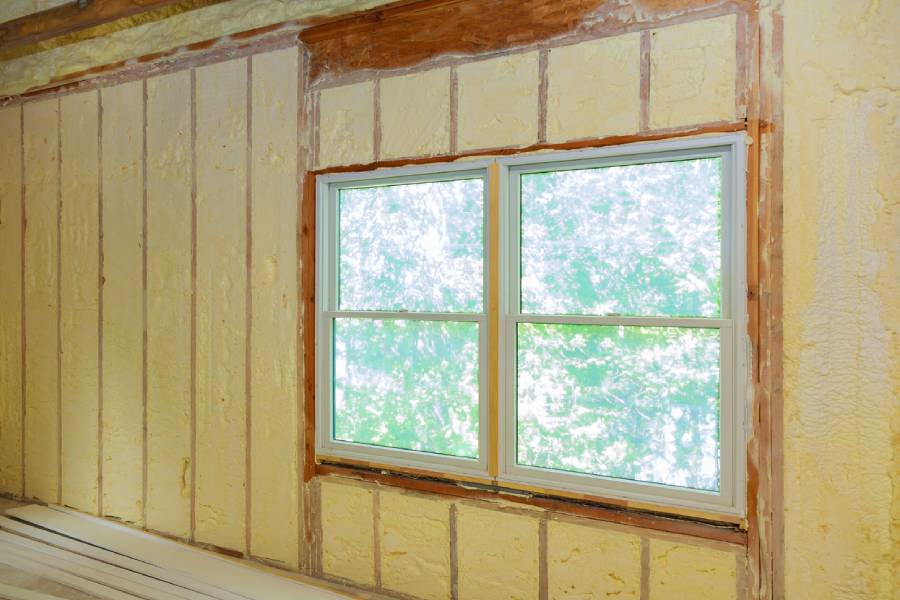
Spray foam insulation is a liquid plastic that expands and hardens after it’s sprayed into place, filling cavities and sealing gaps as it cures. It comes in two main types, open-cell and closed-cell, which differ in density and how they handle moisture.
Unlike materials that only insulate, spray foam air-seals and insulates in a single application, which is a big reason it is often specified for harder-to-seal areas like roof decks and rim joists.
Benefits
Spray foam’s ability to air-seal and insulate in a single application sets it apart from batt and blown-in materials. Closed-cell spray foam also delivers a higher R-value per inch than fiberglass or cellulose, which matters in tight assemblies where space is limited and in hot-humid climates.
Considerations
Spray foam only performs as intended when it’s mixed and applied correctly. Off-ratio mixing (when the two chemical components aren’t blended in the correct proportions) or inconsistent thickness can leave weak spots in the assembly. Even properly installed spray foam doesn’t replace the need for a proper ventilation strategy. A tightly sealed home still needs a plan for managing indoor air quality.
Fiberglass
Fiberglass insulation is made from fine glass fibers formed into batts or loose fill. It insulates but doesn’t air seal on its own, so how well it performs depends heavily on whether the cavity was sealed before installation. It’s also the most familiar option for homeowners and contractors, appearing in standard wall and attic cavities across the country.
Benefits
Fiberglass is widely available, well understood and typically the most affordable option upfront. It has a long history of use in standard wall and attic assemblies.
Considerations
Fiberglass batts are more prone to settling, gaps around penetrations and thermal bypass than spray foam. In humid climates, its real-world performance depends on the air-sealing and vapor-control strategies paired with it. Without that extra layer of work, fiberglass alone can fall short of its rated R-value.
Cellulose
Cellulose insulation is made mostly from recycled paper treated with fire retardant, and it’s installed by blowing it into cavities, attics or existing wall spaces. Its density can reduce air movement more than standard fiberglass batts, but it’s also more sensitive to moisture than spray foam.
Benefits
As a dense-pack option, cellulose offers good sound damping and a high recycled-content rating. It’s a strong fit for retrofit work since it can be blown into existing cavities without major demolition.
Considerations
Cellulose is more sensitive to moisture than spray foam and can lose performance when it gets wet, making proper vapor control and a clear moisture management strategy especially important in humid climates.
What to Ask Before Choosing an Insulation System
A handful of pointed questions can help homeowners cut through marketing and get a clearer sense of whether a contractor’s recommendation actually fits their home.
- How does the contractor address air sealing in addition to the insulation material itself?
- How will the assembly manage moisture and condensation risk over time?
- What installation quality control standards does the contractor follow, and how do they verify that the work was done correctly?
- Is the recommendation based on the home’s specific climate zone and assembly type, or does it sound like a generic pitch that would apply to any house?
- Is the recommendation backed by documentation that aligns with local code, rather than general claims with nothing behind them?
A contractor who welcomes these questions and answers with specifics rather than reassurance is usually the one worth hiring.
Getting Started With the Right System for Your Home
The right insulation system comes down to the specific home, climate and assembly in front of you, not a fixed ranking of materials. That’s the kind of judgment call Pace’s education-focused approach is built around.
Homeowners who prioritize professionals who can explain their reasoning, rather than those who simply push a single product, tend to end up with systems that actually perform as promised. If you’re weighing spray foam, fiberglass or cellulose for your home, it’s worth consulting a building performance professional for a recommendation tailored to your specific climate and assembly.