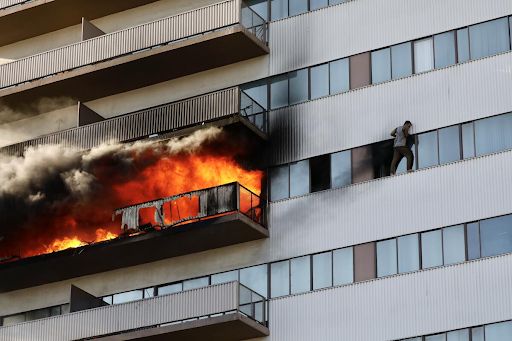

Year after year, tragic fire hazards claim countless lives across the globe. These devastating incidents extend far beyond simple kitchen mishaps, with a disturbingly common culprit often going unnoticed until it’s too late: faulty electrical cables. These hidden dangers frequently escalate into full-blown infernos before any detection, posing immense challenges for firefighters and highlighting the critical importance of electrical safety compliance.
The rapid spread of fire is heavily influenced by the type of building infrastructure cables. In many scenarios, fires originating from electrical faults prove particularly difficult to combat because burning cables release highly hazardous and toxic smoke. This noxious byproduct not only obscures vision, hindering rescue efforts, but also causes rapid asphyxiation in exposed victims, adding a critical layer of urgency and danger to an already chaotic situation.
In the chaos of a rescue, every advantage counts. Low-Smoke-Zero-Halogen (LSZH) cables in buildings offer a critical edge. While not a complete fix, they significantly reduce dense smoke and corrosive gases. This means less toxic fumes for firefighters, allowing them to focus more effectively on saving lives and navigating a slightly safer environment during their perilous work.
Here’s how they enhance safety:
Minimizing Toxic Fumes and Smoke: Unlike traditional PVC cables that release corrosive halogen gases and thick, blinding smoke when burning, ÖLFLEX® cables designed with Low-Smoke-Zero-Halogen (LSZH) properties drastically reduce these hazards. This distinction is crucial; it preserves visibility in escape routes, giving occupants more precious moments to evacuate and allowing firefighters clearer access to the heart of the emergency, significantly improving the chances of survival and effective intervention.
Adherence to Rigorous Safety Standards: JJ-LAPP ensures that its fire-safe cabling solutions, including the ÖLFLEX® FR-6387 and ÖLFLEX® CLASSIC 130 H/135 CH ranges, meet stringent international and regional fire safety standards. This includes compliance with IEC 60331, IEC 60332, IEC 60754, and IEC 61034 standards, and crucially, they align with key ASEAN codes such as Singapore’s Fire Code 2023 (BS 6387 CWZ compliance) and Malaysia’s BOMBA regulations (MS IEC 60331 & 60332). This adherence means the cables are independently verified to maintain circuit integrity, reduce smoke emissions, and prevent harmful gas release during a blaze.
Protecting Critical Infrastructure: Beyond safeguarding human life, these advanced cables also protect sensitive electronic systems and vital building automation hardware. In a fire, conventional cables can quickly short-circuit, crippling essential systems like fire alarms, emergency lighting, and ventilation. JJ-LAPP’s certified cables are engineered to withstand extreme temperatures, ensuring these life-saving systems remain operational for extended periods, a critical factor for coordinated evacuation and effective emergency response.
Comprehensive Support for Engineers: JJ-LAPP actively supports engineers and building managers by offering a comprehensive range of certified cabling solutions. They provide readily available certifications and test reports, confirming compliance with various standards. Their commitment extends to offering specialized solutions, recognizing that retrofitting older buildings often presents unique challenges.
Wrap up
Property loss can be redeemed by insurance coverage but who can replace the absence of loved ones from our lives who die in fire accidents. Think about smarter ways to build infrastructure that helps contain the damage.