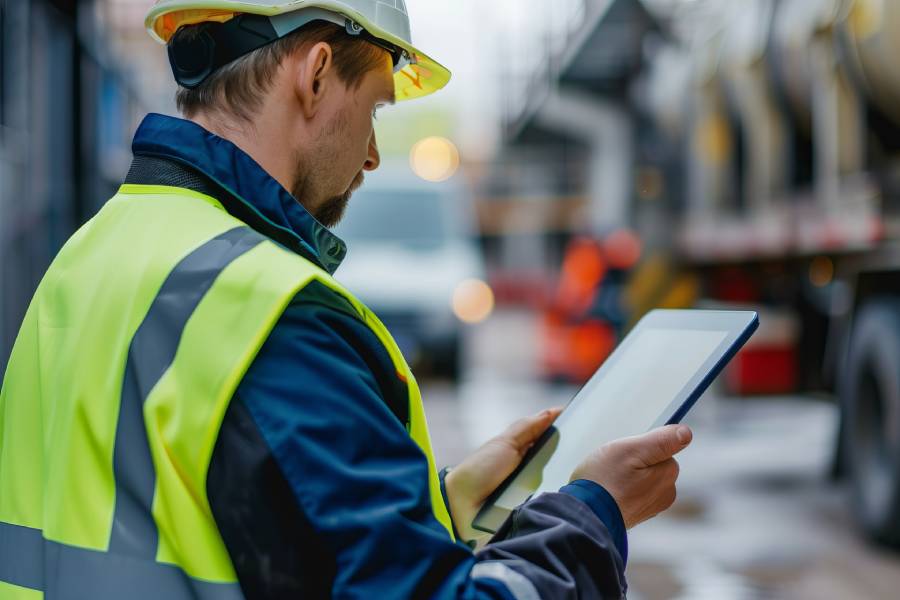

The intermodal freight sector is one of the most operationally complex environments in American logistics, and it’s running short on the skilled workforce it needs to keep pace. As inland terminals handle increasing volumes, the gap between what operators demand and what the available labor pool can deliver is widening into a structural problem.
Executives who understand that throughput isn’t just an equipment question but a people question are the ones who’ll define the next era of intermodal performance. Vahooman “Shadow” Mirkhaef, a Chicago-area operations executive with experience across logistics, terminal operations and industrial services, is among those pushing that conversation forward.
A Workforce Problem Hiding in Plain Sight
The logistics industry has long treated its talent pipeline as a secondary concern, prioritizing capital investment in equipment and infrastructure while underinvesting in the people who operate it. That’s now catching up with the sector.
Employment for logisticians is projected to grow by 28% from 2021 to 2031, far surpassing the average for all occupations, according to the Bureau of Labor Statistics, yet the pipeline of trained terminal operators, equipment handlers and dispatch coordinators isn’t keeping pace with that demand. Trucking and warehousing sectors continue to struggle with high turnover rates and aging workforces, a dynamic that extends directly into intermodal yard operations.
The problem is compounded at the terminal level. Intermodal operators face evolving challenges including chassis shortages, volume volatility and operational inefficiencies. When those pressures collide with a workforce that hasn’t been trained to execute under load, throughput degrades.
This isn’t because the assets aren’t there, but because the human systems surrounding them aren’t calibrated to perform. Mirkhaef, who has managed multi-site teams and network-adjacent terminal operations, frames the issue in systems terms. Untrained labor doesn’t just slow individual tasks. It creates drag across the entire operational chain.
The Training Gap and What It Costs
Organizations are starting to reckon with the cost of neglecting workforce development. U.S. training expenditures increased by 4.9% to $102.8 billion in 2025, according to Training Magazine, yet the distribution of that investment remains highly uneven.
A full 41% of organizations identified the lack of resources and personnel as their top training challenge. That’s a figure that takes on sharper meaning in intermodal environments where equipment velocity and asset utilization are the metrics that determine whether a terminal is profitable or not.
In practical terms, the cost of undertrained personnel shows up in dwell time, mishandled chassis, container placement errors and the downstream delays that ripple out through carrier networks. Mirkhaef’s operational approach, which is grounded in throughput performance and asset optimization, recognizes that these aren’t random inefficiencies. They’re predictable outcomes of a training deficit, and they can be addressed systematically.
What Best-Practice Training Looks Like at the Terminal Level
Operators who take workforce development seriously build training into the operational cadence that’s recurring, role-specific and tied directly to the performance metrics that matter at the yard level. That means separating training programs by function. Equipment operators, yard spotters, gate clerks and supervisors each operate in distinct risk and performance environments and need instruction tailored accordingly.
Mirkhaef’s work at CUB Terminal reflects this systems-level thinking. Rather than applying generic logistics training to specialized terminal roles, best-practice operators develop competency frameworks that map training content to job function and then measure whether that training is actually translating to improved execution.
Effective compliance training has been shown to boost engagement, retention and reduce incidents by 28%. That’s a figure that makes training investment not just a workforce concern but a financial one. When incident rates drop and equipment is handled with greater precision, the operational savings accumulate quickly.
Cross-training across functions is another lever that high-performing terminal operators use well. When a gate clerk understands the downstream implications of a data entry error, or a spotter understands how improper chassis placement creates delay at the rail ramp, it creates a workforce that can adapt to volume fluctuations rather than one that breaks under them.
That kind of operational resilience is what distinguishes terminals that can scale from those that can’t.
Compliance as a Foundation, Not an Afterthought
Workforce training in intermodal doesn’t exist in a vacuum. It operates inside a dense regulatory framework that carries real consequences for noncompliance.
Federal Railroad Administration regulations under 49 CFR Part 243 mandate FRA-approved training programs for every safety-related railroad employee, including annual reviews and refresher cycles. OSHA standards require documented training for cargo-handling employees including crane operators and lashers, and FMCSA rules mandate training documentation for drivers picking up and dropping off intermodal chassis at rail ramps.
The regulatory architecture governing intermodal terminals is multi-agency and overlapping. OSHA has authority over off-highway loading and unloading including marine terminals, wharves and piers, while the Department of Transportation has authority over interstate highway driving under FMCSA regulations.
Operators who don’t maintain clear documentation across all applicable frameworks risk more than just fines. Noncompliance can lead to increased insurance premiums, loss of operating authority or criminal charges depending on the severity of the offense.
The practical upshot is that compliance and performance training aren’t separable. The documentation requirements that accompany regulatory compliance, such as training records, certification logs and refresher schedules, are also the infrastructure of a well-run workforce development program.
Operators who maintain rigorous compliance posture are, almost by definition, also the ones who know what their people have been trained to do and when that training needs to be refreshed. That’s the integrated approach Mirkhaef applies across his operations. “Compliance frameworks aren’t obstacles to throughput. They’re the foundation it’s built on,” he explains.
Building for the Next Generation of Intermodal Labor
The World Economic Forum’s 2025 Future of Jobs report indicates that 59% of the workforce will need reskilling training by 2030, with significant demand for workers who can operate at the intersection of physical logistics and digital systems.
For intermodal terminal operators, that convergence is already here. Terminal operating systems, electronic logging devices, gate automation and data-driven dispatch all require a workforce that’s literate in the physical and informational dimensions of freight movement.
Forward-thinking operators are building training pipelines that account for this shift. They’re not just training workers for the jobs that exist today but are developing the competencies that next-generation terminal operations will demand.
That means investing in structured onboarding, role-specific certification tracks and ongoing development programs that keep pace with the technology being deployed at the yard level. It also means creating environments where experienced operators pass institutional knowledge to the next cohort rather than carrying it out the door when they retire.
Mirkhaef’s operational philosophy, which is focused on scalable systems, measurable performance and infrastructure resilience, maps directly onto what the intermodal sector needs from its next generation of operators and the executives who develop them. The terminals that will lead on throughput over the next decade won’t just be the ones with the best equipment. They’ll be the ones who invested seriously in the people running it.