

Understanding why people respond differently to health advice is one challenge. Helping them act on what they learn is another.
Genetic differences can contribute to those varied responses, alongside lifestyle, environment and medical history. Functional genomics examines how genetic variations may influence biological processes and how those processes interact.
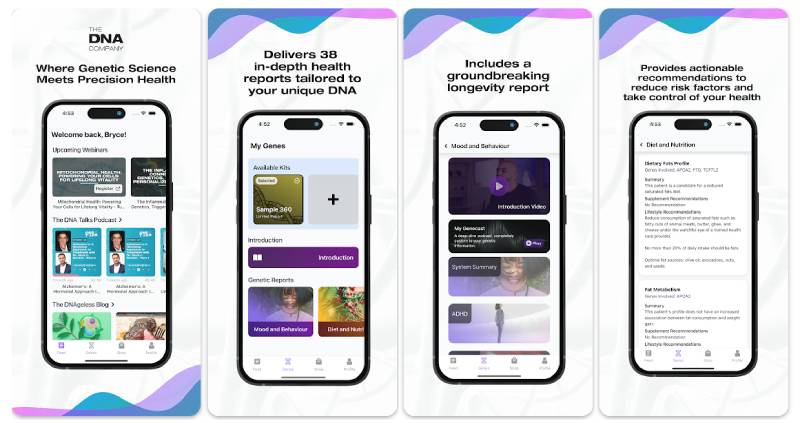
The DNA Company, based in California, develops genetic reports intended to make this information useful to individuals and health practitioners. Its DNA360 platform examines genetic variations associated with multiple biological functions, helping practitioners consider factors that may contribute to individual responses.
The company established DNA University to help practitioners understand functional genomics and use that knowledge when advising clients.
When Understanding Does Not Lead to Action
“Knowing is the first step to doing,” said Tracy Wood, CEO of The DNA Company.
Wood believes practitioners need more than the ability to interpret genetic information. They also need ways to explain it and help clients put useful insights into practice.
DNA University already provides education in functional genomics. To extend that work into communication and behavior change, the university added New Avalon’s Evolved NLP Practitioner Certification.
The program gives practitioners another set of tools to help clients turn understanding into action.
New Avalon developed the training independently. DNA University hosts the program as part of its practitioner education offerings.
Wood said New Avalon’s established reputation in the NLP community influenced the decision. She considered careful selection of educators particularly important in a field where practitioners can encounter pseudoscientific claims.
Understanding Why Change Can Be Difficult
New Avalon’s Evolved Neuro-Linguistic Programming (NLP) training focuses on communication, beliefs, values, goal-setting and behavioral patterns that can influence how people approach change.
The program builds on traditional NLP methods while incorporating contemporary understanding of memory, habits, emotions and nervous-system regulation. New Avalon describes this approach as neuroscience-informed and trauma-conscious.
Kelley Oswin, a registered social worker and co-creator of New Avalon, says one challenge keeps appearing in her work training coaches and practitioners: “insight alone doesn’t always create change.”
Someone may genuinely want to improve their health but struggle to follow through. Fear, overwhelm, conflicting motivations or established habits can interfere, even when the person understands what they want to achieve.
Rather than assuming that such difficulties reflect a lack of motivation, New Avalon’s training encourages practitioners to explore what may be preventing someone from moving forward.
The approach emphasizes curiosity, client choice and awareness of individual circumstances. Practitioners also learn when to seek help from, or refer clients to, other qualified professionals.
Turning Intentions Into Practical Steps
Wanting to change something is not the same as having a plan to do it.
One practical approach is to turn a general intention into a specific action.
Psychologists Peter Gollwitzer and Paschal Sheeran examined this approach in a 2006 analysis of 94 independent tests. They studied implementation intentions, which connect a goal with a specific plan for when, where or how to act.
The researchers found that people who made specific plans were more likely to reach their goals.
For example, someone who wants to exercise more might decide to walk for 30 minutes every morning before work. That gives the person a specific action to follow rather than a general intention.
The findings support the value of practical action planning.
Oswin identifies clear goals, manageable steps, support and accountability as important elements of helping clients make changes. Practitioners can also help clients consider what may be getting in the way and adjust their plans as they learn what works.
Connecting Biology With Behavior
The DNA Company’s work in functional genomics helps practitioners examine biological differences that may influence individual health and wellness needs. Through DNA University, the company teaches practitioners how to understand and use that information.
New Avalon’s Evolved NLP program adds another dimension: helping practitioners communicate more effectively and support clients as they work toward personal goals.
The approaches address different aspects of the same challenge. Biological information may help explain individual differences, while communication, planning and an understanding of behavior can help people decide what to do with that information.
DNA University’s addition of Evolved NLP brings these areas of practitioner education together, addressing the practical challenges that can remain after useful information is delivered.
Genetic information can help practitioners understand individual differences, but its practical value also depends on how people use what they learn. By bringing functional genomics and behavior-change education together, The DNA Company and New Avalon address both sides of that challenge.