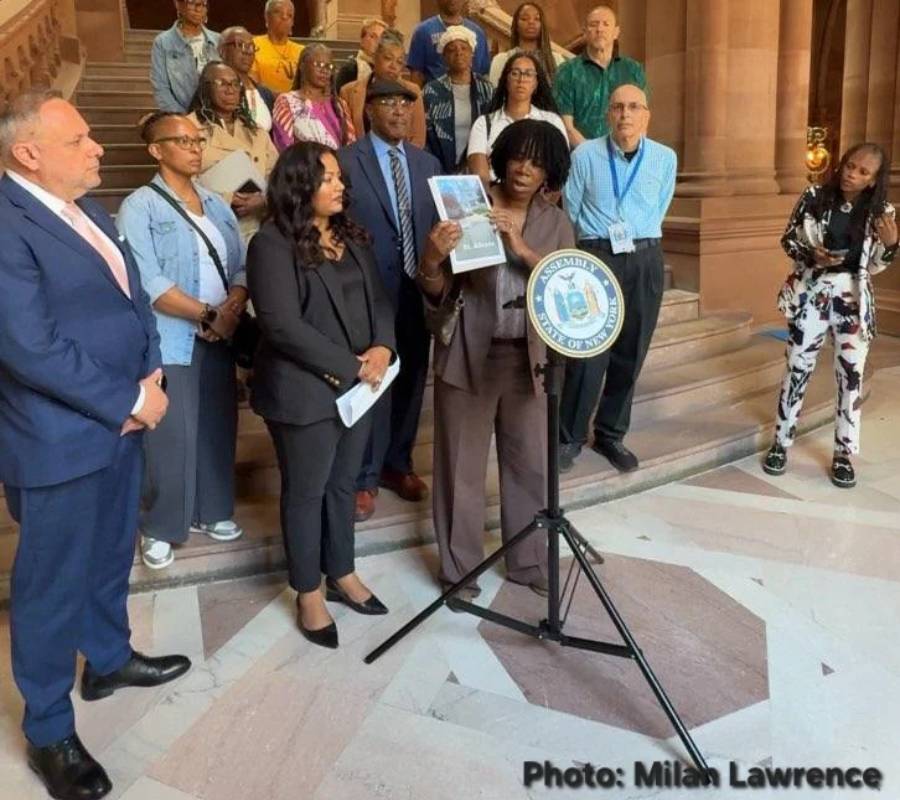

A battery storage setback bill put New York lawmakers on notice after Queens residents traveled to Albany to demand stronger protections near homes, schools and hospitals.
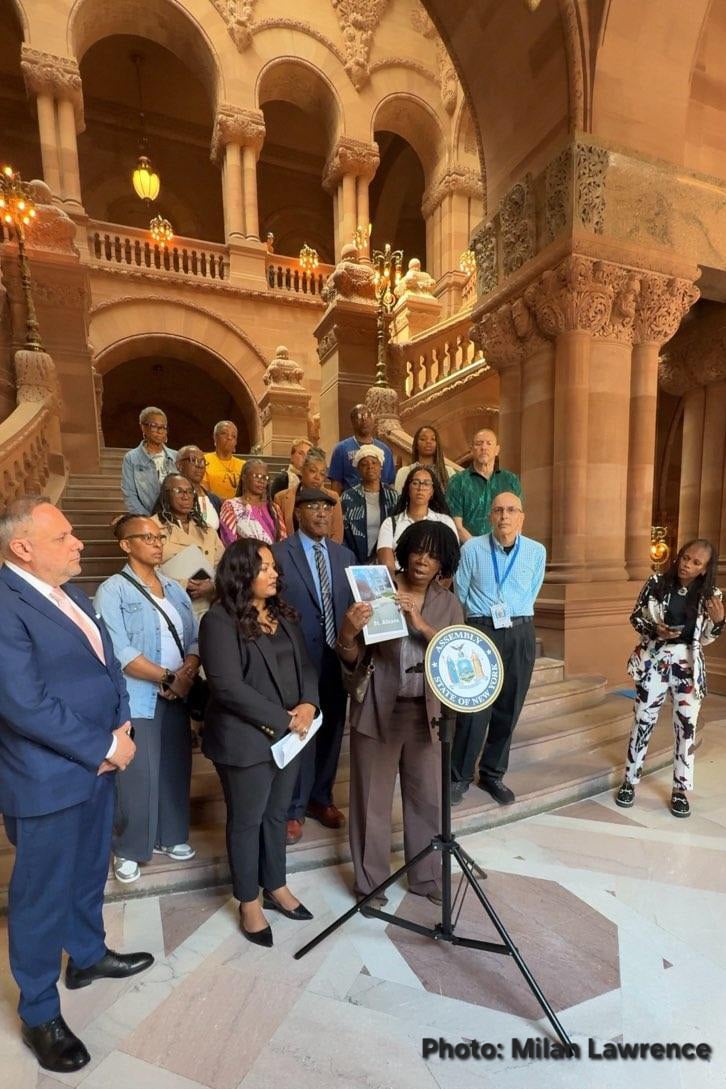
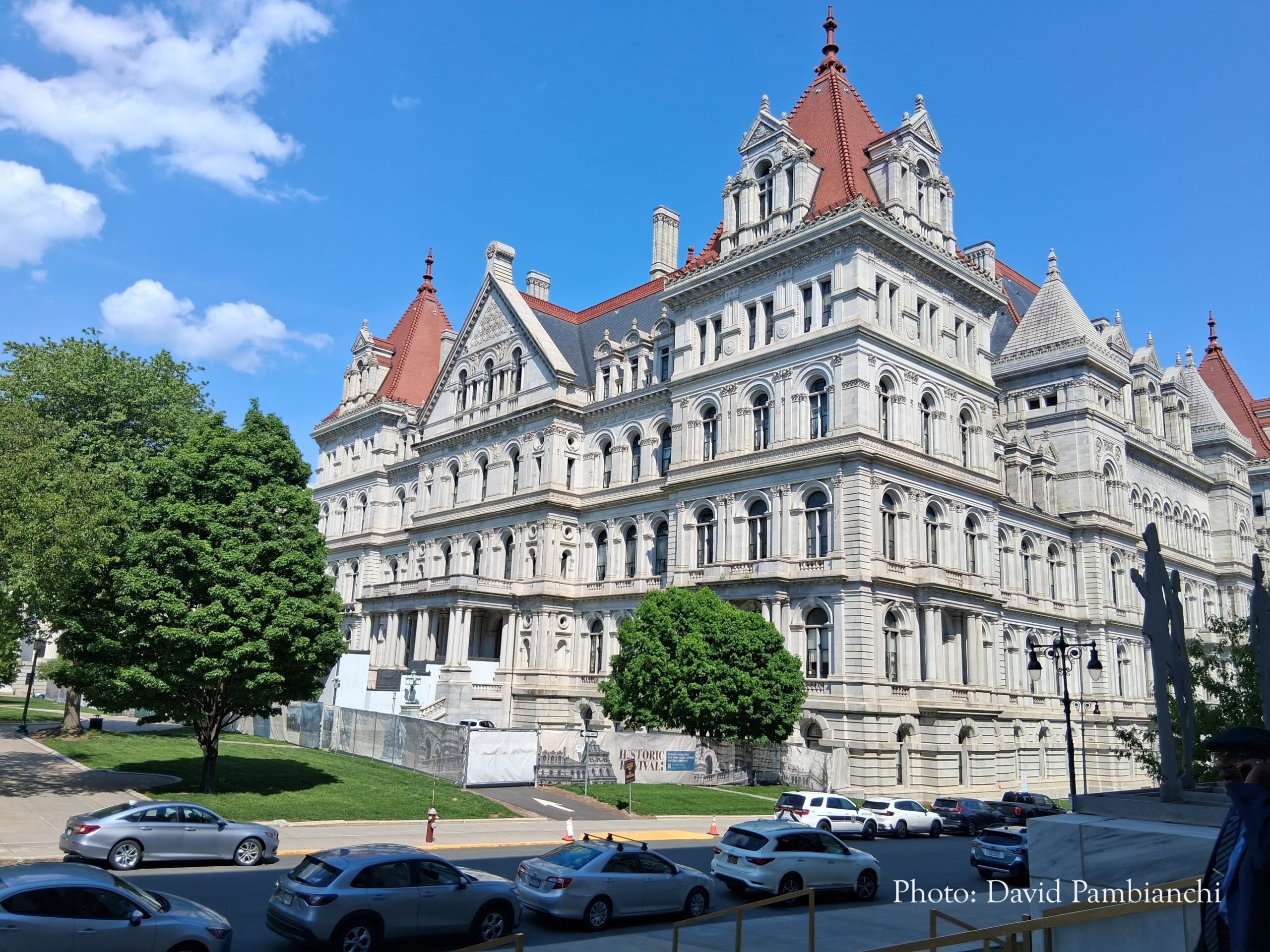
The residents went to the State Capitol on May 18 for Lobby Day. They met with representatives, spoke with staff members and left information for lawmakers.
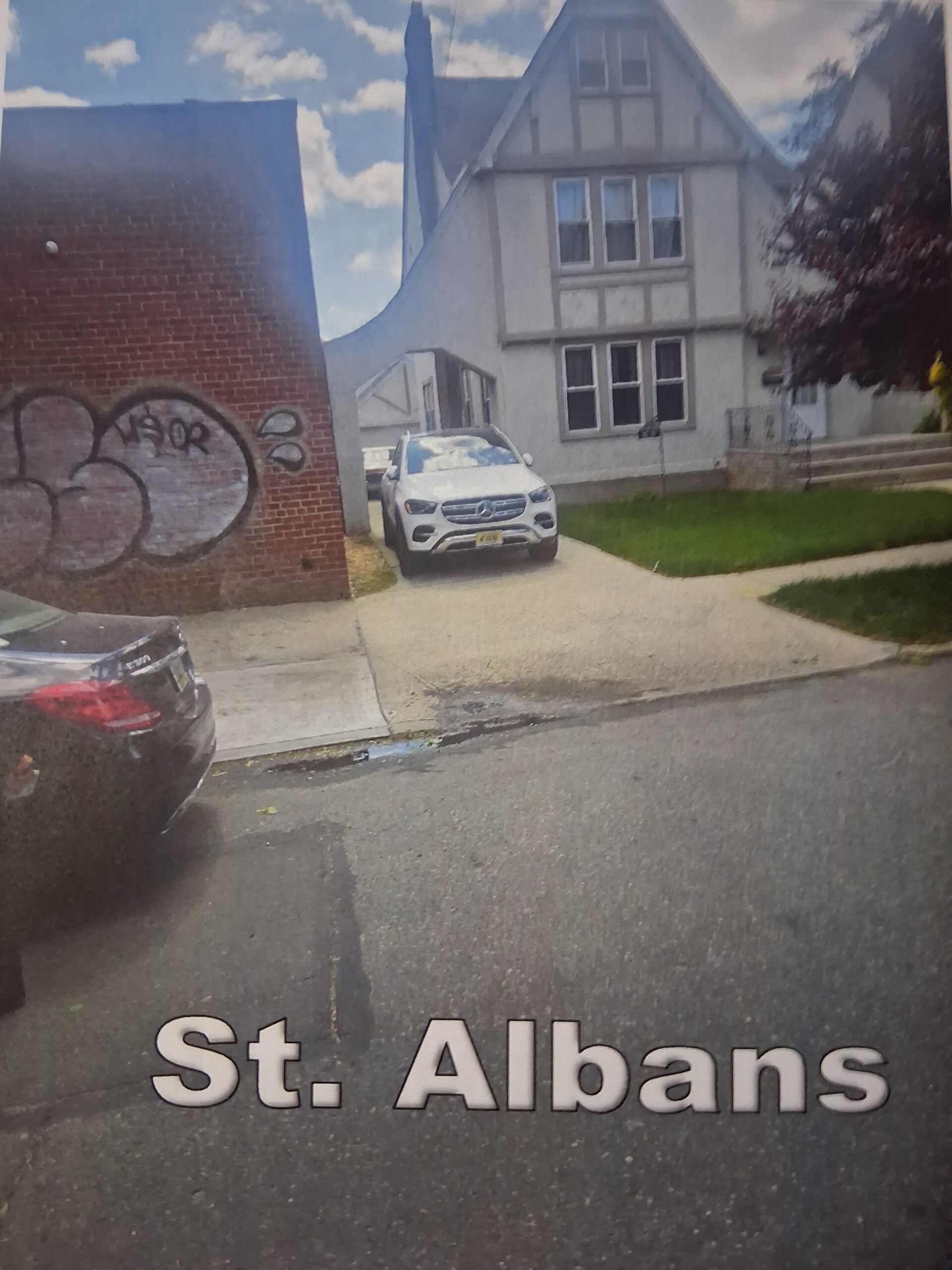
Andrea and William Scarborough hosted the trip and led members of Queens communities who oppose the spread of NineDot Energy battery storage facilities in dense neighborhoods.
The residents say lawmakers need to act before more battery energy storage systems advance near families, classrooms and medical facilities.
Their target is Assembly Bill A6955C and its Senate companion, S7197B.
The bills would require New York’s Department of Public Service to develop rules, regulations and model policies for battery energy storage siting.
They would also require minimum setbacks for commercial battery energy storage systems with a capacity over three megawatts.
Under the Senate bill text, those systems would need to sit at least 750 feet from an occupied dwelling, house, farm building or school building. In cities with a population of one million or more, the setback would be at least 300 feet.
The bill also calls for public hearings before permit approval.
Related Story: Lithium Battery Storage Facility: UPON THE INNOCENTS THEY PLAN TO BUILD THEIR INFERNO
Energy Committee Holds Battery Storage Setback Bill
The Assembly version remains before the Assembly Energy Committee.
That committee now faces pressure from residents who say it must act before battery storage approvals create more neighborhood conflicts.
Assemblymember Didi Barrett chairs the Assembly Energy Committee.
Residents identified Barrett as a key official because the bill needs to move through that committee before it can advance.
They also named Energy Committee members they say should step up and defend constituents.
Those members include Khaleel Anderson, Ken Blankenbush, Sarah Clark, William Conrad, Landon Dais, Erik Dilan, Scott Gray, Nikki Lucas, Brian Manktelow, Philip Palmesano, Sam Pirozzolo, Jonathan Rivera, Angelo Santabarbara, Sarahana Shrestha and Steve Stern.
Residents also named Sen. James Sanders Jr. among the officials they want to see act on the battery storage setback bill.
Their message was direct: lawmakers should not wait until a battery storage incident forces the issue.
Residents Accuse NineDot of Misleading Communities
The dispute centers on NineDot Energy and its push to build battery energy storage facilities across New York City neighborhoods.
Residents accuse NineDot of misleading communities about energy needs, site locations, safety and environmental risks.
They also point to Con Edison concerns about rapid battery storage growth and grid impacts in New York City.
NineDot rejects claims that its projects endanger communities.
The company says its battery storage sites follow FDNY and Department of Buildings rules. It says its systems use multiple layers of safety protection, including monitoring, fire detection, pressure vents, backup power and FDNY coordination.
NineDot also says battery storage helps create a cleaner and more reliable grid by storing energy and discharging it during peak demand.
Opponents do not accept that answer.
They say the question is not whether New York should use battery storage at all. They say the question is why commercial lithium-ion battery systems should sit near homes, schools, hospitals and other public-facing sites.
To residents fighting the projects, the dispute no longer looks like a planning disagreement.
They say developers and public officials continue to minimize fire risk, neighborhood density, emergency-response concerns and the siting of battery systems near families.
Fire Risk Drives Albany Pressure
Residents also raised concerns about battery fire hazards.
Lithium-ion battery thermal runaway can release flammable and noxious gases. Residents say a fire at a commercial battery storage site could threaten more than the property where the system sits.
Their material cited concerns about toxic gases, particulates, heavy metals and combustion byproducts.
Those concerns include:
- Hydrogen fluoride, a corrosive and toxic gas linked to burning fluorinated battery materials.
- Hydrogen cyanide, a fast-acting toxic gas associated with burning plastics and synthetic materials.
- Carbon monoxide, a dangerous asphyxiant produced in fires.
- Hydrogen chloride, an acid gas released when certain plastics and wiring materials burn.
- Particulate matter, including PM2.5 and PM10, which can carry toxic residues deep into the lungs.
- Heavy metals, including lithium, nickel, cobalt, manganese and copper residues.
- VOCs, PAHs and dioxins, which residents cite as part of the wider smoke and fallout concern.
Those risks fuel the residents’ demand for enforceable setbacks and public hearings.
They say communities should not need to discover proposed battery storage sites after plans already advanced through government agencies.
Public Hearings Could Change Battery Storage Approvals
The public hearing requirement may become one of the most important parts of the bill.
Residents say public hearings would force developers, agencies and lawmakers to answer questions before projects move forward.
Those questions include site selection, battery chemistry, fire response, evacuation planning, runoff, smoke exposure, insurance, property values and long-term responsibility after decommissioning.
Opponents also say hearings would give residents a record they could use to challenge weak approvals.
That matters because many residents believe the current approval process leaves neighborhoods with too little warning and too little power.
A battery storage setback bill would not ban battery energy storage systems.
It would force state and local authorities to treat siting as a public safety issue, not only an energy policy issue.
Queens Residents Warn of Ballot Box Response
The May 18 trip to Albany showed that opposition to neighborhood battery storage sites has moved beyond local meetings.
Queens residents now want the State Legislature to act.
They say lawmakers who delay or ignore the issue may hear from voters.
That warning gives the battery storage debate a political edge.
Residents say the issue touches public safety, local control, transparency and trust in government.
They also say elected officials should not wait for a battery storage fire near homes, schools or hospitals before taking action.
For Queens residents, the battery storage setback bill now gives Albany lawmakers a clear choice: move the safety debate into public hearings and enforceable distance rules, or leave voters to conclude that neighborhood warnings were ignored.
From The National Fire Prevention Association, Etc.:
Fires involving Battery Energy Storage Systems (BESS) and general structure fires release highly toxic plumes of smoke, ash, and gases. The primary toxins depend on the materials burned and battery chemistry, but generally include the following dangerous compounds and heavy metals:
Toxic Gases Hydrogen fluoride (HF): Highly corrosive and toxic, created when the fluorine in battery electrolytes burns.
Hydrogen cyanide (HCN): A deadly, fast-acting gas produced by the burning of plastics, electronics, and synthetic materials.
Carbon monoxide (CO) & Carbon dioxide (\(CO_{2}\)): Toxic asphyxiants that displace oxygen and are universally produced in fires.
Hydrogen chloride (HCl): An acid gas released from burning plastics (like PVC) and wire insulation.
Particulates & Heavy Metals- Metallic particles: Ash and dust can contain high levels of lithium, nickel, cobalt, manganese, and copper.
Particulate Matter (PM2.5 and PM10): Soot and dust that deeply penetrate the lungs, often carrying trace toxic metals.
Volatile Organic Compounds (VOCs) & Toxins- Benzene: A known carcinogen released from burning plastic, petroleum-based materials, and solvents.
Polycyclic Aromatic Hydrocarbons (PAHs): Carcinogenic chemical compounds that result from the incomplete combustion of organic materials and plastics.
Dioxins: Highly toxic chemical byproducts that settle in ash after synthetic plastics and electronic components burn.
For detailed information on exposure symptoms, air quality safety, and hazardous fallout protocols, consult the New York State Department of Health or the IAFF Known Carcinogens Factsheet.
Review of gas emissions from lithium-ion battery thermal runaway …May 15, 2024 — 2.3. Toxicity * Several toxic compounds commonly discussed include CO, HCl, HCN, NO, SO2, HF, fluorinated carbonates, POF3, COF2, acrolein, and formaldehyde [29…ScienceDirect.comToxic fluoride gas emissions from lithium-ion battery fires – PMCIn the event of overheating the electrolyte will evaporate and eventually be vented out from the battery cells. The gases may or may not be ignited immediately.
National Institutes of Health (.gov)Assessment of Potential Impacts of Fires at BESS Facilities
Aug 21, 2025 — • Common Gases Released: BESS fires primarily emit CO, CO2, and volatile organic compounds (VOCs), and may emit other trace gases such as HF, HCN, or others dep…
The American Clean Power Association (ACP)Toxins released from battery energy storage system fires – Facebook
Mar 21, 2025 — A partial list of toxic chemicals released with BESS fires. Carbon dioxide, Cause headaches, dizziness, confusion, loss of consciousness …Facebook·Stop the proposed Covington Battery Energy Storage System (BESS)Battery Energy Storage Systems – FlirThe fire released toxic gases, forcing the evacuation of 1500 residents. And it was challenging to extinguish due to the nature of lithium-ion batteries, which …FlirPhoenix Fire Department – Facebook
Jan 6, 2026 — We aren’t where we need to be as an industry with recognizing and protecting our staff and clients from the hazards from structure fires, but we are getting the…Facebook·Phoenix Fire DepartmentCurrent Practices: Electric Vehicle and Energy Storage Systems | TEEX.ORG
Jan 15, 2025 — The tests concluded that: * Li-ion battery thermal runaway fires are an extreme emissions event, releasing highly toxic gases and particles that exceed the Occu…TEEX.ORGKnown Carcinogens* in the firefighting Environment | IAFFBladder, Lung, Skin. Asbestos. Naturally occurring minerals used in fireproofing and. insulation. Primarily in building and building materials. before 1989. Col…IAFFMain products of combustion: gases – EMME AntincendioGases are the most dangerous combustion residues, for human health. Combustion residues depend on the original chemical composition of fuels and, as most fuels …EMME AntincendioExposure to Smoke from Fires – New York State Department of HealthAll smoke contains carbon monoxide, carbon dioxide, and particulate matter (PM or soot). Smoke can also contain different chemicals, like aldehydes, acid gases,www.health.ny.govEnvironmental Impact of Lithium-Ion Battery Fires vs Other Common …
Oct 1, 2025 — In summary, the main materials that make up a BESS include metallic compounds (nickel, manganese, cobalt, lithium, iron, aluminum, copper, steel); carbonaceous …National Fire Protection Association (NFPA)Chemical Poisonings in Fire Conditions and its Treatment
May 16, 2025 — Fire smoke contains several toxic substances, the most widely recognised of which are carbon monoxide (CO) and hydrogen cyanide (HCN).Discovery Scientific Society
Information Spreads Fast
Information about inherently dangerous battery storage facilities spreads fast despite secrecy and NineDot endeavors.
Residents says that if fiercely enraged voters think a representative is stalling or not doing enough to stop an inextinguishable “Battery Storage Fire-Bomb” being located near homes, schools, and hospitals, constituents will also be heard through the ballot box.
At a press conference in Albany, Assemblymember Williams joined Assembly colleagues. She called for the passage of her legislation that aims to ensure that battery energy storage systems are sited with appropriate distance from neighboring properties and are developed with meaningful community input to protect public safety and local interests. (A.6955C)
See the video: Assemblymember Williams’ Video