Are we watching the robotization of the world?
The answer appears to be yes.
Robots now work in hospitals, factories, construction sites, farm fields, city streets and defense planning. The robotic world is no longer a distant theory. It is moving into daily life.
The trend is often called “Globotics,” a term used to describe the combined force of globalization and robotics. Economist Richard Baldwin popularized the term in his work on automation, remote work and the future of jobs.
Globotics And The U.S.-China Robotics Race
The future of American defense is moving into a high-tech robotics phase.
Foundation Future Industries, a San Francisco robotics startup, secured $24 million in Pentagon research contracts to test humanoid robots. Eric Trump, son of President Donald Trump, serves as the company’s chief strategy adviser.
The company’s Phantom robots aim at military and industrial work. Reports say two Phantom MK-1 units went to Ukraine for logistics and reconnaissance testing, not combat. That distinction matters because humanoid military robots remain at the testing stage.
China already dominates industrial robot deployment.
The International Federation of Robotics says China represented 54% of global industrial robot deployments in 2024. The country installed 295,000 industrial robots that year, and its robot stock passed 2 million units.
China also accounts for a large share of the global robotics market. China Daily, citing Morgan Stanley, said China’s robotics market could more than double from $47 billion to $108 billion by 2028.
Robots On City Streets
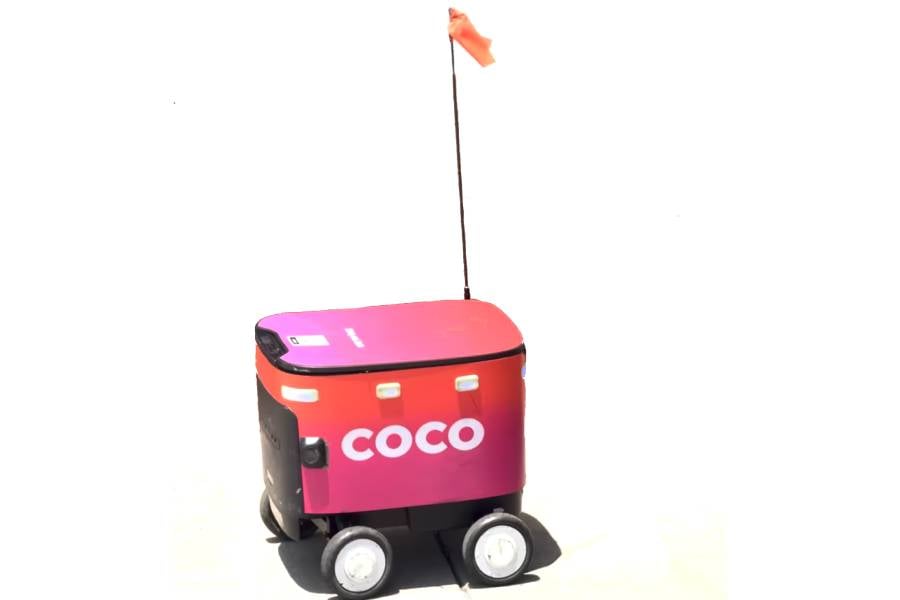
Coco Robotics shows how robots are entering ordinary urban life.
The company’s delivery robots carry food, groceries, pharmacy orders and other small goods across short urban routes. Coco says its new Coco 2 robot marks a shift from human-guided robotics toward full autonomy.
The robots operate like small mobile lockers. They navigate sidewalks, bike lanes and roads where allowed. Coco says its system improves through millions of real-world data points gathered across city environments.
For customers, the robot may look amusing.
For workers, city planners and regulators, it raises bigger questions about jobs, safety, liability and public space.
Robots On Construction Sites
Construction also faces pressure from robotics.
Labor shortages, safety risks and the cost of repetitive work have pushed companies toward automation. Some systems now handle tasks that once required workers to perform dusty, noisy or repetitive jobs.
Schindler’s R.I.S.E. robotic installation system drills holes and sets anchor bolts inside elevator shafts. The company says the system can complete that work faster than conventional installation methods.
HP SitePrint handles another construction task. HP describes it as a robotic layout solution that combines autonomous layout work with floor-level measurement and real-time on-site marking.
These machines do not replace every construction worker.
But they show how robots can take over precise, repetitive and hazardous construction tasks.
Robots In Medicine
Robotic medicine may be the most familiar example.
The da Vinci Surgical System helps surgeons perform minimally invasive procedures. Cleveland Clinic says potential benefits include less blood loss, less tissue trauma, smaller incisions, shorter hospital stays and quicker recovery.
But the robot does not act alone.
The surgeon controls the instruments. The robotic arms move only when the surgeon directs them. That makes the technology an extension of human skill, not a replacement for medical judgment.
Rehabilitation robots also help patients rebuild movement after injury or illness. These systems point toward a future where robotic medicine becomes more precise, more personalized and more common.
Robots In Agriculture
Agriculture is also entering the Globotics age.
Ecorobotix uses AI-powered precision farming technology to identify plants and target treatment more precisely. The company says its system can reduce plant-protection product use by up to 95%.
That matters for farmers who face labor shortages, rising input costs and pressure to produce more food with fewer resources.
Robots In Dangerous Places
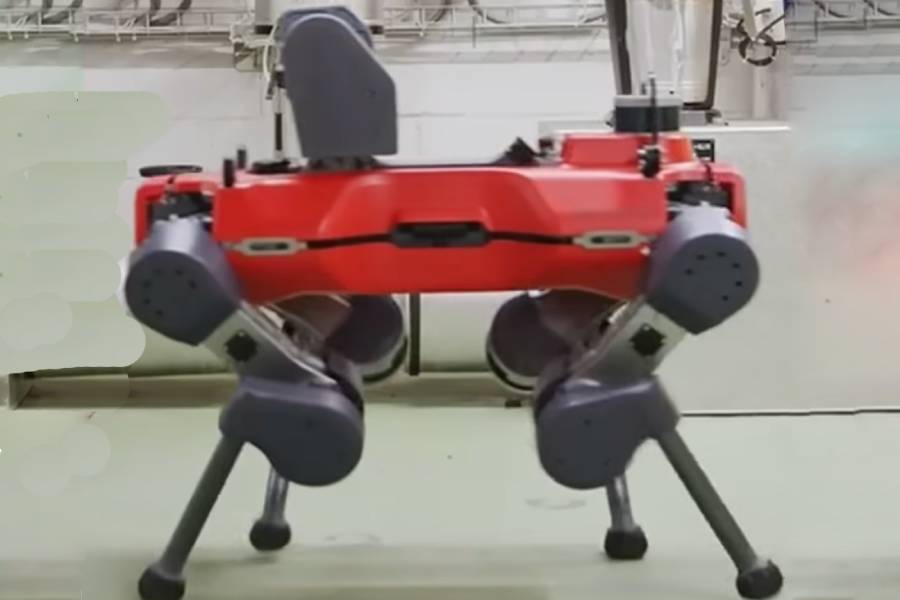
Four-legged robots add another dimension.
ANYmal, developed by ANYbotics, is a rugged four-legged robot built for autonomous inspection in demanding environments. It can work in industrial plants, handle stairs and uneven terrain, and carry sensors into places that may be unsafe for workers.
Robots like these may support inspection, emergency response and hazardous-site work.
They can go where people should not.
The Humanoid Robot Arrives
Humanoid robots remain the most dramatic part of the robotics story.
In Beijing, a humanoid robot named Lightning completed a half-marathon in 50 minutes and 26 seconds. The robot, developed by Honor, used long legs modeled on elite human runners and a liquid-cooling system adapted from smartphone technology.
The achievement looked historic.
But it also showed the limits of the technology. Scientific American reported the robot crashed into a barricade, fell, and needed handlers to set it upright.
That is the real state of Globotics.
Robots are advancing quickly, but they still depend on human design, human oversight and human rescue when systems fail.
One day, a robot may help train marathon runners.
For now, robots are already reshaping delivery, defense, construction, medicine, agriculture and hazardous work.
The robotic world’s takeover is not complete.
But Globotics is no longer science fiction. It is already rolling, drilling, cutting, carrying, spraying and running into the future.