The Istanbul peace talks once offered Ukraine a way out of full-scale war. They did not end the fighting.
Now leaked files about Boris Johnson’s £1m donor and a later Kyiv trip raise new questions about who shaped that outcome, and who profits when a war keeps going.
Istanbul Peace Talks Offered a Path That Closed
In March and April 2022, Ukrainian and Russian delegations met in Belarus and Istanbul. They explored a framework that included Ukrainian neutrality, limits on its armed forces and security guarantees from third countries, in exchange for a Russian pullback to pre-war lines and further talks on disputed regions.
Former Israeli prime minister Naftali Bennett, who tried to mediate, later said both sides showed more flexibility than many expected. He described a moment when he thought a ceasefire and political deal sat within reach, if leaders accepted compromise.
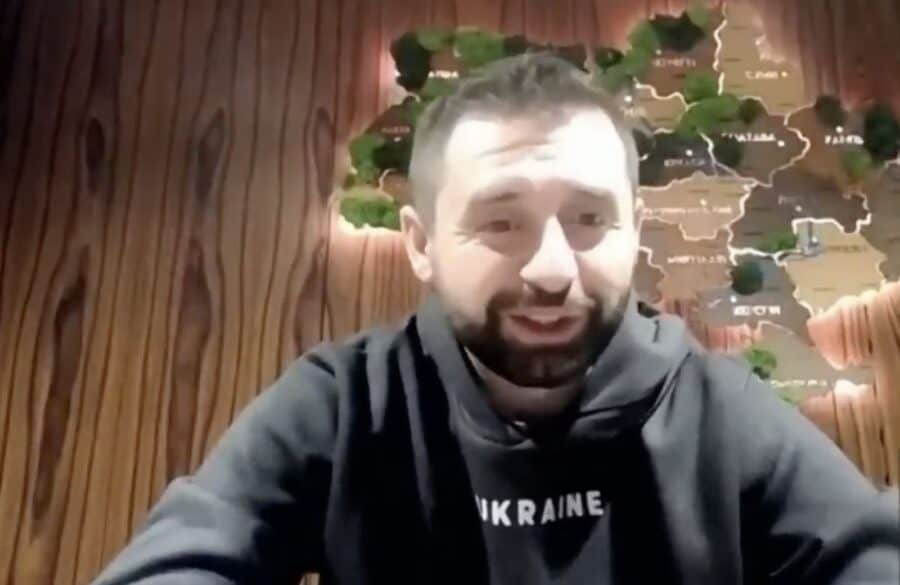
Davyd Arakhamia, chief of Ukraine’s negotiating team, said Moscow signalled it would end the war if Kyiv accepted neutrality and abandoned its NATO membership goal. He also stressed that trust was low, security guarantees remained vague and any agreement would need constitutional change and a summit between Volodymyr Zelenskyy and Vladimir Putin, which never happened.
Critics of Western policy say these accounts point to a real missed chance. Supporters of Kyiv reply that Russian demands still went beyond what Ukrainian law and public opinion could accept.

Johnson’s Kyiv Visit and Western Pressure
While talks continued, Boris Johnson arrived in Kyiv on 9 April 2022 as UK prime minister. He met Zelenskyy and senior officials, and made clear that Britain stood behind Ukraine’s resistance.
Arakhamia later claimed Johnson urged Ukrainian leaders not to sign anything with Russia and to keep fighting, saying Western governments would back them with money and weapons instead. That remark fits with Johnson’s broader public message that Putin must not win and that any deal with the Kremlin would be risky.
Johnson rejects the idea that he “sabotaged” peace. Zelenskyy, for his part, says Russian terms at the time breached Ukraine’s constitution and citizens’ rights, and that he would not accept ultimatums presented under military pressure.
What is clear is that, after the Istanbul round and Johnson’s visit, the war moved back to the battlefield. Front lines shifted. The chance for an early settlement faded.
Harborne, Qinetiq and a £1m Question
More than a year later, Johnson’s relationship with a major political donor added another layer to the story.
In November 2022, he recorded a £1m payment from businessman Christopher Harborne to a private company he set up after leaving office. It was one of the largest donations ever declared by a sitting MP. Harborne’s holdings include airlines, crypto ventures and, crucially, a large stake in QinetiQ, a British defence contractor whose robots and drones support Ukrainian forces.
In September 2023, leaked files show Johnson travelled again to Kyiv, this time as a private citizen. Harborne joined him on that two-day trip. The pair attended the Yalta European Strategy forum and met Ukrainian political and security figures. Conference organisers listed Harborne as “adviser, Office of Boris Johnson.”
The leaks do not show what they discussed in private. They do show a former prime minister, now a strong public advocate for Ukraine’s war effort, arriving in Kyiv with a donor who stands to benefit from Western defence spending.
Information War and a Possibly Fabricated Claim
Once the Guardian reported these details, the story took on a life of its own. Russian state media and some online outlets began to claim that the paper revealed a £1m bribe for Johnson to pressure Kyiv against peace. Some went further and linked the payment directly to the Istanbul peace talks.
The Guardian article does not say that. It describes the donation, Harborne’s QinetiQ stake and the joint Kyiv trip in 2023. It raises questions about conflicts of interest and blurred lines between public advocacy and private money-making. It does not mention the Istanbul peace talks or any explicit payment to derail them.
Fact-checking groups picked up the distortion and pointed out the gap between what the Guardian printed and what Russian outlets claimed. In a crowded information war, though, many readers only see the most dramatic version. Once a narrative about “£1m to block peace” circulates, it tends to stick, even when the underlying documents do not support it.
At a minimum, the idea that the Guardian proved a direct bribe looks like a heavily stretched claim built on a real donation and a later trip. We don’t know if the claim of bribery is true or fabricated.
Who Gains From a War That Did Not Stop?
None of this removes Johnson’s political responsibility for the stance he took in April 2022. His visit to Kyiv came when the Istanbul peace talks still moved, however slowly. Ukrainian and Israeli accounts point to strong Western scepticism about any deal with Putin and a clear preference to keep pressure on Russia.
The Harborne files do not show that money drove that position. They do show that, within a year, one of Ukraine’s loudest Western backers accepted a huge payment from an investor with clear defence interests, and later brought that investor into high-level Ukraine meetings.
For critics, this pattern captures a wider problem. Weapons makers, political donors and former leaders often sit close to decisions about war and peace, while ordinary soldiers and civilians bear the cost. Supporters of long-term backing for Kyiv respond that Ukraine cannot defend itself without Western arms and that defence companies supply those arms, whatever one thinks of the profit motive.
What both sides in that argument often skip over is the simplest question: who in government checks, in real time, that people who gain from war are not steering key choices about whether an early peace gets tested or ruled out?
Istanbul Peace Talks Still Matter for Today’s Funders
The Istanbul peace talks sit in the past. Front lines look different. Trust between the sides eroded further. Casualty counts climbed into the hundreds of thousands killed and wounded. No one can say with certainty that any deal reached in spring 2022 would still hold now.
Yet the story still matters. It shows that, at one point, Moscow and Kyiv explored a framework that could have frozen the front before Russia held so much Ukrainian territory. It shows that Western leaders, including Boris Johnson, played a decisive role in encouraging Ukraine to keep fighting. And it now shows that at least one major donor with defence interests stood close to Johnson as he built a post-Downing Street career on unwavering support for war.
For taxpayers in countries such as Australia, Canada and the UK, who fund Ukraine’s defence while facing their own housing and cost-of-living pressures, the Istanbul peace talks raise a sharper question. When leaders say there is no alternative to continued support, how sure can the public be that this reflects only principle and strategy, and not the quiet pull of money from those who gain when a war that once could end, does not?
For how these choices look from Australia’s side, see our report on Ukraine war funding and Australia’s housing crisis.