
Miami has a distinct energy. It’s a city that buzzes with style, speed, and a forward-thinking vibe. But let’s be honest, it’s also a city defined by its traffic. That soul-crushing, bumper-to-bumper crawl on the Palmetto or I-95 is a daily reality.
For decades, we’ve just accepted that this stop-and-go grind is a waste of time and gas. But what if it wasn’t? What if your car could actually recapture energy in that traffic?
This is just one reason why the electric vehicle isn’t just a trend; it’s the smartest automotive decision a Miamian can make. The shift is undeniable, and the latest generation of Ford electric vehicles seems almost tailor-made for the unique challenges and perks of life in the 305.
It’s about more than just sustainability; it’s about performance, convenience, and a level of resilience that our gas-powered neighbors just can’t match.
Turning Traffic Jams into Free Fuel
Think about your daily commute. Every time you tap the brakes in your gas car, you’re burning off energy as waste heat. It’s literally just throwing money and momentum away.
Electric vehicles, like the Mustang Mach-E, flip this script with a feature called “regenerative braking.” When you lift your foot off the accelerator, the electric motor reverses, acting like a generator to slow the car down. That momentum, instead of being lost to heat, is converted back into electricity and sent straight to the battery.
Many drivers end up using the “one-pedal driving” mode, which makes navigating dense Brickell traffic a breeze. More importantly, it means that your stop-and-go commute is actually recharging your car. You’re gaining range while sitting in traffic, while the car next to you is just burning gas.

The Ultimate Hurricane Prep: Your Truck Is Now a Generator
This is the one feature that should make every single South Florida homeowner pay attention. We all know the pre-storm ritual: fill up the gas cans, stock up on water, and hope the power grid holds.
The Ford F-150 Lightning, with its available Pro Power Onboard system, completely changes the game. It’s not just a truck; it’s a 9.6kW mobile generator on wheels.
When the next hurricane inevitably knocks out the power, you don’t have to scramble for a loud, smelly gas generator. A fully charged F-150 Lightning can power the essential parts of your home—think refrigerators, lights, fans, and even a small AC unit—for several days. You can keep your family safe and comfortable, your food from spoiling, and your phones charged, all with no noise and no exhaust fumes. This isn’t just a “nice-to-have” gadget; it’s a revolutionary tool for resilience in a storm-prone area.
Sustainability That Matters in a Coastal City
We live at sea level. The conversations about environmental impact and rising tides aren’t abstract here; they’re happening in our backyards. Driving an EV is one of the most significant personal changes you can make to be part of the solution.
A Ford EV has zero tailpipe emissions. That means a quieter, cleaner, and less odorous experience for you as a driver, but it also has a massive cumulative effect. It means less smog hanging over the city and a direct reduction in the carbon footprint that impacts our sensitive coastal environment. The U.S. Environmental Protection Agency (EPA) has a great resource that debunks common myths about EVs and confirms their powerful environmental benefits.
Performance That Doesn’t Compromise
Let’s talk about the “fun” part. We’re in Miami, after all. A car needs to have some thrill.
This is where the Mustang Mach-E shatters old stereotypes. Electric motors deliver instant torque. There’s no lag, no waiting for the engine to rev. You tap the pedal, and the power is there, now. This makes merging onto the highway or navigating city intersections an entirely new experience.
Plus, the design is just smarter. Without a bulky engine block, you get a “frunk” (front trunk) that adds a massive amount of storage. It’s the perfect, isolated spot to throw a wet beach towel or sandy cooler without ever dirtying your car’s interior.
“But Where Do I Charge It?”
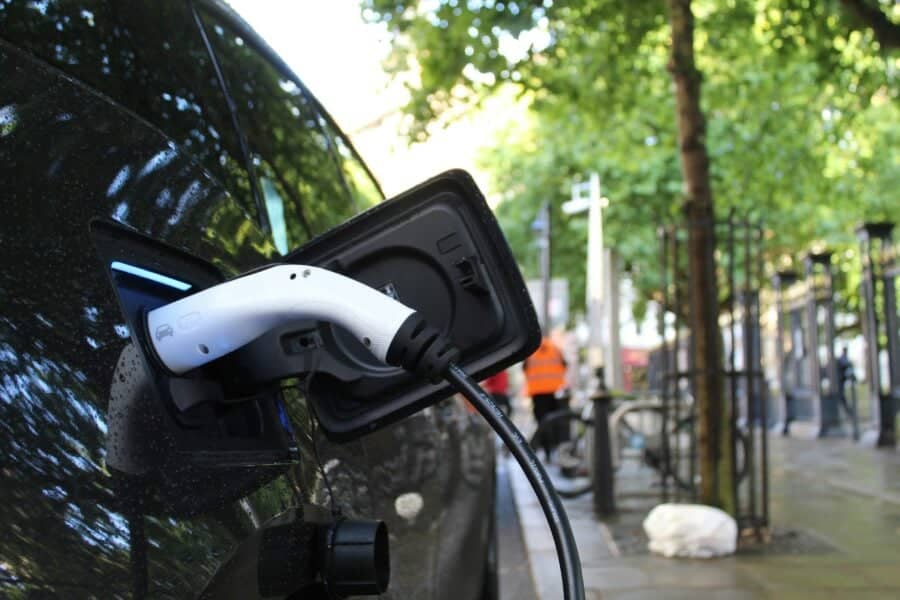
This is the number one question people have, and the answer is simpler than you think. For most drivers, you’ll never use a public charging station. You’ll install a Level 2 charger in your garage or carport and plug your car in at night, just like you plug in your phone. You wake up every single morning with a “full tank” of 250-300 miles of range, all for a fraction of the cost of gasoline.
For longer trips or for those living in condos, the public charging network in South Florida is growing exponentially. You can find fast-charging stations at grocery stores, shopping centers, and along all major highways. The U.S. Department of Energy has an excellent Alternative Fuels Data Center map that shows just how many options are already available.
Upgrading to an EV in Miami isn’t a sacrifice. It’s a clear win. You get a car that is faster, quieter, more efficient in the traffic you already drive in, and a powerful source of backup power for when you need it most.