
Global freight rail is entering a period of intense economic pressure, where operators are being forced to reconcile rising fuel costs with accelerating decarbonization mandates. Yet the dominant path to electrification, or fixed overhead wiring, has remained financially out of reach for most networks. Voltify believes that tension is not a constraint, but an opportunity.
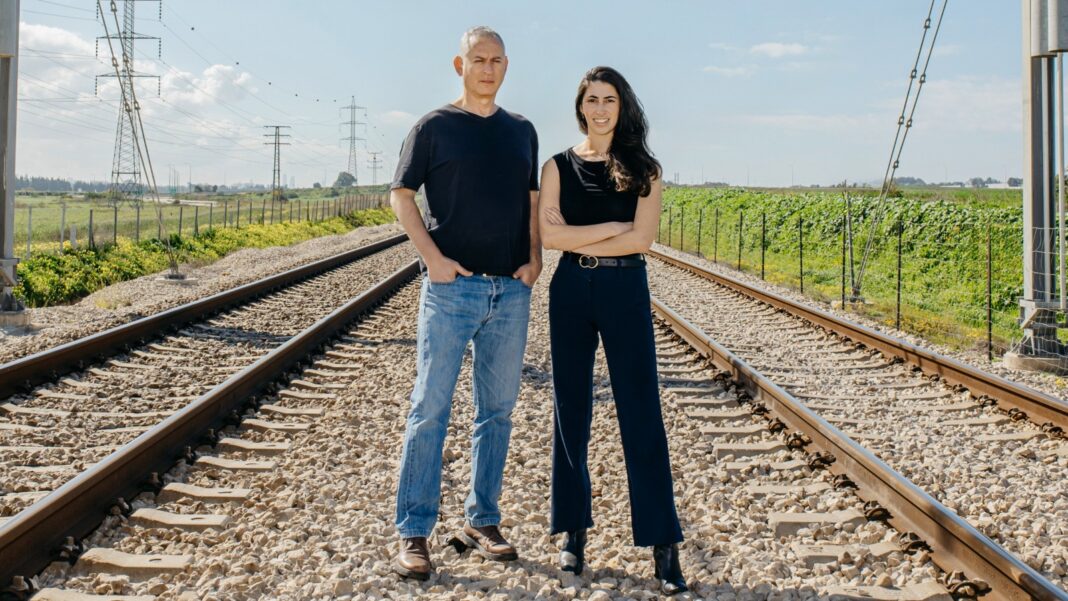
The startup, founded by Dafna Langer and Alon Kessel, has raised $30 million in seed funding to accelerate its effort to transform how rail systems source and consume energy. The round was co-led by Aleph and Fortescue, with participation from additional strategic investors and angels.
Voltify’s pitch is not incremental efficiency; it is structural cost reduction in one of logistics’ most entrenched energy systems.
Breaking the $11 Billion Diesel Dependency
In the United States alone, freight rail operators spend approximately $11 billion annually on diesel fuel. While electrification could theoretically reduce those costs, the infrastructure required (estimated at over $1 trillion) has made full conversion largely impractical.
Voltify is positioning itself as a third path between diesel dependency and capital-intensive electrification. Its platform aims to reduce energy costs by more than 20% without requiring rail operators to overhaul operations or invest in large-scale infrastructure.
“We built Voltify to solve one of the rail industry’s biggest challenges: energy costs,” said Langer, Co-founder and CEO of Voltify. “Our platform allows rail companies to access clean, affordable energy without changing the way they operate. If you can reduce energy costs by even 5%, it’s huge. If you can reduce them by more than 20%, it becomes transformative.”
Electrification Without Grid Lock-In
Rather than relying on stationary electrified tracks, Voltify is developing a distributed energy architecture built around battery-powered locomotives, fast-charging systems, and renewable microgrids placed along rail corridors.
This structure enables energy delivery without halting freight operations, addressing one of the core inefficiencies of traditional electrification models.
“Importantly, the company’s model removes the so-called “green premium. Our goal is to lower energy costs by over 20%; this is not just the diesel costs, but all the next energy that the industry needs,” Langer said. “Rail companies shouldn’t have to choose between sustainability and economics. We’re making clean energy the financially smarter option.”
A Strategic Industrial Bet
“Voltify is redefining the energy supply chain for global rail networks”, said Tomer Diari, General Partner at Aleph. “Their electricity-based solution will help rail operators dramatically reduce costs, pollution, and dependency on diesel, and make transporting goods in the US cheaper and more reliable for everyone.”
Fortescue echoed the strategic alignment with its broader decarbonization goals.
“Fortescue is committed to investing in the research and development of innovative technologies to drive Real Zero and accelerate decarbonisation across our operations and beyond. Voltify’s mission to eliminate emissions in the heavy rail industry aligns with ours at Fortescue, and we’re encouraged by the solutions they are working on,” said Gus Pichot, CEO Growth & Energy at Fortescue.
From Energy Consumer to Energy Owner
Voltify’s long-term thesis extends beyond electrification. It aims to reposition rail operators as energy owners through localized microgrids that generate and store renewable power along rail corridors.
“Our vision is to bring the power back to the industry, without dependency on buying diesel elsewhere; this gives the company complete ownership, thus complete freedom,” said Langer.
The company expects to demonstrate its full system later this year, with pilot deployments already underway.