

Healthcare has become a primary target for cyber-threats. In 2023, IBM found that the typical cost of a healthcare data breach had climbed to $10.93 million, the highest of any sector.
Ransomware incidents against U.S. hospitals nearly doubled during the year, resulting in delays in patient care and even the cancellation of surgeries. The Change Healthcare attack alone compromised information on roughly 100 million patients — the largest known healthcare breach to date.
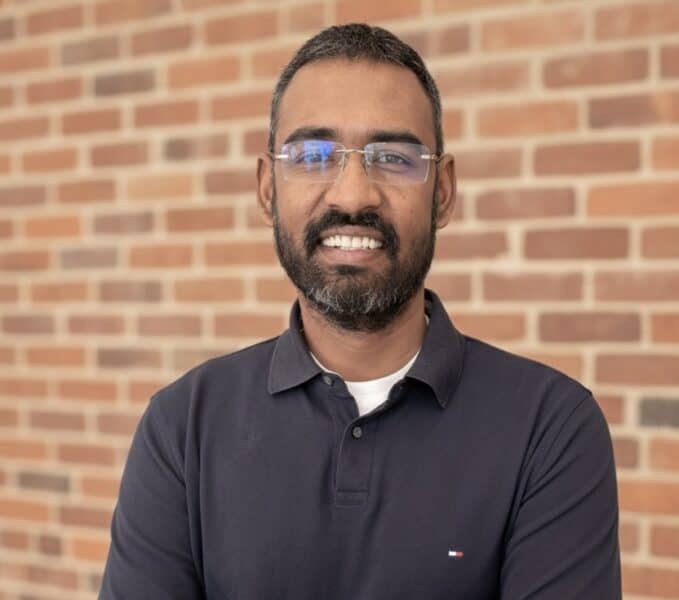
Few professionals understand this urgency better than Ganesh Prabhu Jayachandran, a Principal Enterprise Architect with nearly two decades of experience. He says: “When technology fades into the background, doctors and pharmacists can focus on patients — that’s when infrastructure really proves its value.”
Given the staggering numbers, electronic health records have emerged as prime targets for criminals, transforming their protection from a mere best practice into an essential requirement.
Ganesh’s passion for creating secure, dependable systems drove him from New Delhi to Arizona State University, where he earned a Master’s degree in Computer Science, with a concentration in network security. The skills he established there are the foundation for the healthcare cloud transformations Ganesh now directs, safeguarding patient information as providers transition.
Pioneering Secure Statewide Health Information Exchanges
Secure interoperability is at the core of modern healthcare, ensuring that hospitals, pharmacies, and insurers can exchange information without compromising confidentiality.
One of Ganesh’s most transformative projects, Washington State’s Health Information Exchange (HIE), remains a model for how critical patient data can be shared at scale with confidence.
At Axway, he architected a system connecting hundreds of organizations and thousands of facilities. Ganesh says: “We integrated systems for medical journeys — from a doctor’s prescription to a pharmacy pickup. That meant hospitals, clinics, and even national providers could finally share documents electronically instead of relying on fragmented, manual processes.”
To get there, his team overhauled aging data structures, translating them into national standards such as NHIN, HL7, and EDI-X12. Meanwhile, they created automated mechanisms to store and encrypt data. What was previously reliant on slow, error-prone handoffs was transformed into secure, traceable transactions that could be completed in real time.
The system subsequently expanded to Connecticut, where national chain pharmacies joined it. This statewide adoption is an example of how Ganesh’s work is already of significance in the field, shaping healthcare data infrastructure across multiple regions.
He reflects on the experience: “Healthcare data can only flow at scale when standards and security go hand in hand — once both are in place, every participant benefits.”
Cloud Migrations, Zero Trust, and Cultural Change in Healthcare
HIEs represent the “nervous system” of data sharing, and cloud migrations are the muscle that gives health systems resilience and scalability. Ganesh has led high-stakes migrations to modernize outdated legacy platforms for Kaiser Permanente, HCSC, and Anthem.
He moved an extensive managed-file-transfer system to a modern Linux/Oracle stack at Kaiser Permanente. Ganesh added real-time web services, enabling labs and clinics to exchange records with ease. While working for HCSC (Health Care Services Corporation), he improved backend resilience by integrating IBM MQ and MLLP protocols. Ganesh also created API-driven systems for tracking transactions at Anthem and automated large-scale data archiving. This work enabled millions of insurance claims to proceed without complications.
He acknowledges: “Migrations are always a challenge. Healthcare organizations want the cost savings and resilience of the cloud, but moving away from entrenched legacy systems requires persistence and trust.”
These migrations were both technical and cultural, influencing broader adoption across health systems. By refactoring applications for cloud-native scalability — introducing autoscaling clusters, elastic load balancers, and redundant failover zones — Ganesh ensured systems could withstand crises like pandemic surges without downtime.
Elamparithi Kuppusamy, CEO of Radixlink, who managed Ganesh on multiple enterprise-scale cloud initiatives, recalls: “Ganesh consistently combined deep architectural insight with an unwavering sense of responsibility. When we built our Health Information Exchange, he designed a platform that handled millions of healthcare transactions securely, implementing AS2, SFTP, HTTPS, REST APIs, and FHIR protocols to keep sensitive data compliant and traceable.’’
He further says: ‘’What stood out was his calm focus during high-pressure moments — he resolved complex integration issues, mentored engineers through them, and never lost sight of the client’s mission. His reliability made him the technical backbone every project leader hopes for.”
Ganesh adds: “Seeing hospitals securely share patient data or insurers process claims faster — those are the improvements that remind me why this work matters.”
Central to his approach is the Zero Trust concept. In his architecture, Ganesh micro-segments networks through AWS VPCs, manages identities with precision, and requires multifactor authentication across applications.
He emphasizes: “Zero Trust is obviously a design framework, but the mindset I help organizations adopt is what’s really valuable. Every identity and every access point must undergo verification, and once teams internalise that, they make compliance proactive rather than reactive.”
For CIOs, Zero Trust is a safeguard and backbone of modern healthcare resilience. As one healthcare executive put it: “Ganesh doesn’t just migrate us to the cloud — he gives us prescriptive frameworks that change how we think about compliance and resilience.”
Leveraging AI, Automation, and Cross-Industry Expertise for Cyber Threats
Ganesh has leveraged artificial intelligence and automation not just as buzzwords, but as effective defenses to keep healthcare systems both secure and efficient.
He urges: ‘’Providers need to embed AI-driven anomaly detection into the everyday plumbing of their operations — scanning EHR access logs, telehealth portals, and other critical systems.’’ The approach, often built on tools like Amazon Bedrock and Amazon Q, can identify an unusual login pattern the moment it occurs, long before it escalates into a breach.
Ganesh has also prototyped generative AI contact-center chatbots that summarize patient calls, suggest follow-up actions, and cross-check records to reduce errors. Smart automation bots perform vulnerability scans and recommend patches, turning compliance into a daily discipline rather than a periodic scramble.
He highlights: “Generative AI is transforming healthcare operations by taking on repetitive work — summarizing calls, flagging anomalies, scanning servers. That frees professionals to focus on complex decisions while strengthening compliance and resilience.”
However, Ganesh is quick to point out that automation is about both efficiency and confidence. He says: “When compliance is continuous and built into the workflow. Healthcare teams feel assured that both their data and their patients are protected.”
Although healthcare is where he has made the deepest mark, Ganesh often borrows strategies from other industries, adapting them to fortify the systems he designs. He has deployed GenAI tools that accelerate the processing of insurance claims. In addition, Ganesh supported an AWS-powered application for visualizing property features and valuations.
These experiences reinforce healthcare innovation by demonstrating that secure automation can scale across various sectors.
As he puts it: “What excites me is how lessons from insurance or real estate can circle back into healthcare. But more than that, it proves that secure automation and AI are reshaping resilience across industries.” It’s a philosophy that Ganesh puts into practice by drawing insights from outside sectors and integrating them back into healthcare.
The result is an infrastructure that not only safeguards patient information but also withstands stress, introducing innovation that yields tangible improvements in the delivery of care.
Industry-Wide Impact and Leadership Transformation
The influence now extends well beyond the organizations Ganesh advises. Across healthcare and, increasingly, in adjacent industries, peers are adopting the benchmarks he has set, reflecting how his approach has begun to shape the broader field.
His early statewide HIE designs in Washington and Connecticut became models that others replicated nationwide, proving that secure interoperability could be both practical and scalable.
Ganesh says: “The statewide HIEs we built became models others could replicate. It showed that secure interoperability was possible, could scale, and become the standard.”
What started with bespoke cloud migrations and Zero Trust architectures for industry giants such as Kaiser Permanente, HCSC, and Anthem soon found resonance across the broader healthcare industry.
Years passed, and Ganesh’s strategies for resilience, compliance, and scalability are still innovative and the gold standard—benchmarks that peers across the industry began to follow.
The same influence extends beyond healthcare. As Ganesh puts it: “I started in healthcare — secure data exchanges and resilient platforms — and I’ve replicated this across finance, insurance, and even real estate. Once people see the savings, reliability, and security, adoption spreads quickly.”
This ripple effect also applies to AI and automation. Tools he first deployed in healthcare — such as anomaly detection and automated security scans — are now used in financial services and other sectors.
His frameworks have transformed compliance from a mere box-checking scramble into an inherent, automated discipline—one that bolsters resilience not only in healthcare but also across other industries.
Samantha Wagen, a Senior Enterprise Integration Lead who partnered with Ganesh during his Axway tenure, explains: “Ganesh had a remarkable ability to translate high-level strategies into architectures that were both secure and scalable. I watched him guide teams through complex B2Bi and analytics projects where reliability, compliance, and cost efficiency all had to align. He dissected technical dependencies, removed roadblocks before they surfaced, and built proofs of concept that validated every design choice.’’
She further reflects: ‘’Beyond the technical depth, his responsiveness and customer-centric mindset elevated how our teams delivered — he made collaboration smoother, outcomes measurable, and resilience a built-in principle rather than an afterthought.”
Ganesh has demonstrated how technical precision, combined with stable models and clear-headed thinking, can elevate standards for an entire industry, transforming the notion of resilience for critical infrastructure.
Building Leaders and Setting Benchmarks
He has taken on a visible leadership and mentorship role, working with new hires during onboarding to walk them through core processes, cloud architectures, and the principles of secure deployments.
Ganesh reveals: “The engineers I mentor often go on to lead migrations themselves. That creates a multiplier effect — spreading secure practices across industries and reinforcing a culture of excellence.”
His commitment to developing others began at Axway, where he trained new consultants in secure B2B integration and client-facing workshops. These sessions span three to four days for groups of 5–20 participants and cover Axway and AWS services, generative AI applications, and strategies for secure cloud integration.
By bridging technical knowledge with practical application, Ganesh equips teams to operate independently and fosters their confidence in innovation.
Throughout his career, Ganesh has conducted peer reviews for 20–30 colleagues, assessing technical documentation, integration solutions, and healthcare standards. These reviews elevate quality standards and propagate best practices across teams.
He says: “Even in tough situations, I focus on solutions and on helping others grow.”
In professional circles, Ganesh contributes to the IEEE, the Institute of Electrical and Electronics Engineers—the world’s largest professional association for technical professionals, including engineers, scientists, and technologists—further amplifying his influence.
Industry recognition has matched his career achievements. He received the Albert Einstein Award at Axway for his role in building the OneHealthPort Health Information Exchange. This platform set a statewide standard for secure interoperability.
Early in his career, Ganesh was recognized with TCS’s Outstanding Performance Award for designing a company-wide intranet that streamlined collaboration for hundreds of employees. At AWS, he has since drawn notice for scaling generative AI solutions and steering some of the firm’s most complex client migrations.
To his colleagues, he is generally regarded as “the architect they consult for the most difficult migrations.”
Together, these awards define a career of technical innovation and level-headedness under pressure—underpinned by a history of team leadership and setting standards that peers across a wide range of industries have eagerly emulated.
A Safer, Resilient Digital Healthcare Future
For Ganesh, protecting patient data has never been just a technical exercise; it has been a personal commitment. He sees it as a responsibility that extends to millions of lives.
During his professional life, he has combined deep technical expertise with a distinct vision: leveraging automation, safe cloud designs, and innovation to simplify the most sensitive healthcare systems.
His track record spans from building seamless health information exchanges to deploying AI-driven tools for processing insurance claims. Each project has the same thread running through it — keeping key operations safe, fast, and resilient.
But what sets him apart goes beyond the code. Ganesh prizes collaboration, curiosity, and a focus on customer impact. The solutions he designs are built to outlast him, multiplying across teams, organizations, and even industries.
Ganesh stresses: “If physicians, payers, and patients can rely on the systems I create to make certain that care arrives unobstructed, then I have accomplished my purpose.”
Now, as he trains emerging engineers, guides clients through safe integrations, and reimagines workflows for a digital world, the legacy of that mission is felt throughout the health care landscape.

