
Key Takeaways
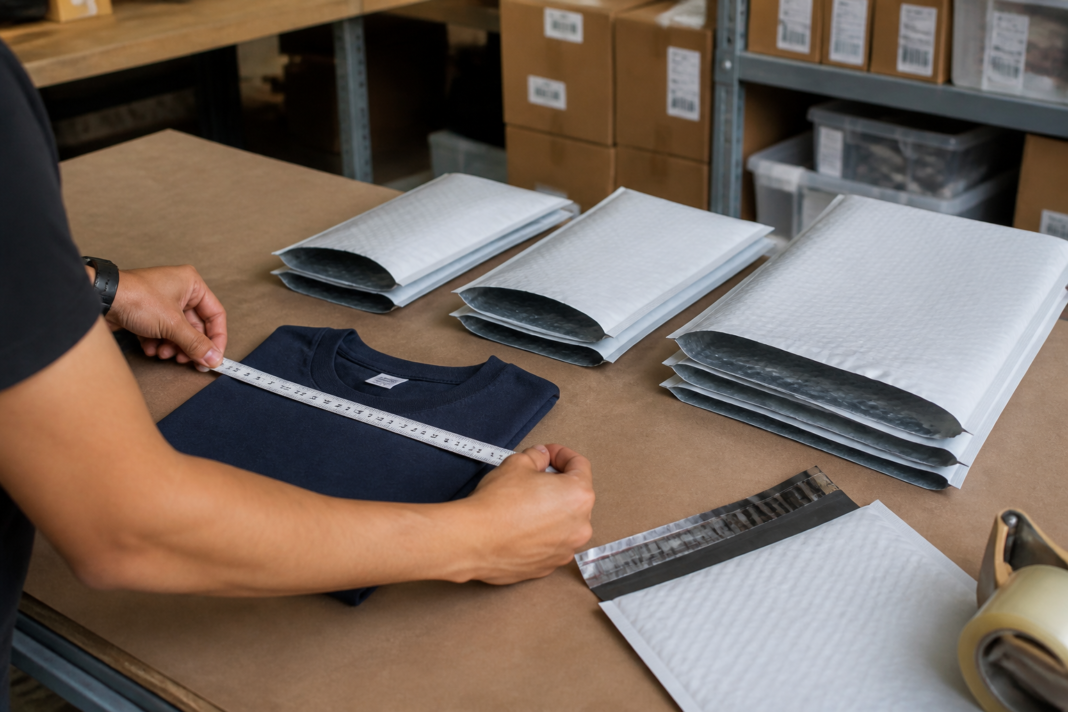
- Measure the folded garment first, then size up one notch — most apparel sellers grab a 10×13 poly bubble mailer when a 6×9 or 6×10 would ship the same shirt for half the postage.
- Dimensional weight math kicks in fast on oversized poly mailers, so a mailer that’s two inches too big can quietly turn a $4 shipment into a $7 one.
- Reach for 4×8 bubble mailers on jewelry, scarves, and thin accessories — they qualify for cheaper First Class rates and skip the extra padding a bigger mailer forces you to add.
- Buying poly bubble mailers bulk instead of restocking from retail multi-packs cuts your per-unit cost by 50% or more once monthly volume passes a few hundred units.
- USPS accepts poly bubble mailers under First Class and Priority, but check your combined weight and thickness before printing labels — mismatched postage is the top reason packages get held at the counter.
- Custom poly bubble mailers with logo printing cost only a few cents more per unit than plain black or kraft options when ordered wholesale, and they turn every shipment into free brand exposure.
A t-shirt weighs about 6 ounces.
Stuff it into an oversized poly mailer and you’re not just wasting plastic — you’re paying for air. Fifteen years of watching apparel sellers fight their own packaging costs has taught this simple truth: the wrong mailer size quietly eats profit on every single order, and most sellers never catch it because the damage hides inside shipping invoices they barely glance at.
Poly bubble mailers seem like a solved problem. Grab a box of 6x9s, toss in whatever fits, slap on a label, done. But apparel comes in wildly different shapes — a folded hoodie and a pair of socks have nothing in common dimensionally — and sizing them the same way costs real money at scale. Get the size wrong on 500 monthly shipments and you’ll bleed hundreds of dollars a year in wasted postage, crushed product, and returns from customers who got a mailer stuffed tighter than a sausage casing. Get it right, and bubble mailers become one of the cheapest, most effective tools in an apparel seller’s fulfillment kit.
Why Bubble Mailer Sizing Is a Profit Decision, Not an Afterthought
A seller ships 40 hoodies a week in a 12×15 mailer built for a queen-size comforter. The shirts rattle around, the mailer folds over itself three times at the post office counter, and the label barely fits. That’s not packaging — that’s money leaking out of the business one shipment at a time. Picking the right poly bubble mailers size isn’t a cosmetic choice. It’s a line item that touches postage, damage claims, and how the product looks when it lands on someone’s porch.
The Real Cost of Guessing on Bubble Mailer Sizes
Oversizing by even two inches on both dimensions can bump a shipment into a higher postage bracket. Run that across 500 monthly orders and you’re paying for air, not apparel. Undersizing is worse — stretched seams split in transit, and a torn mailer means a refund plus a lost customer.
How Dimensional Weight Rules Change the Math on Poly Mailers
USPS calculates pricing off the outer dimensions of a package, not just the scale weight. A folded t-shirt in a mailer two sizes too big still gets billed like it’s bigger. Soft goods sellers who match mailer size to product size routinely shave 8-15% off average postage cost per order — real savings that show up on the P&L every single month.
Matching Bubble Mailer Sizes to Common Apparel Categories
Size mismatches cause more damage claims than weak padding ever does. Ship a t-shirt in a mailer built for a hoodie and you’re wasting cubic space, paying more per shipment, and giving the item room to shift around during transit. Apparel sellers who standardize on 3-4 mailer sizes based on product category cut both damage rates and postage costs.
Small Bubble Mailers for T-Shirts, Socks, and Accessories
A 6×9 poly mailer handles a single folded t-shirt, a pair of socks, or a hat without excess air pocket. Anything smaller wastes bubble cushioning and inflates your per-unit cost for no protective benefit.
6×9 and 6×10 Poly Bubble Mailers for Folded Apparel
Move up to a 6×10 bubble mailer bulk pack for layered items like long-sleeve shirts or lightweight sweaters. This size gives you an extra inch of clearance for double-folded garments while keeping shape flat enough for standard letter or first-class mail rate tiers.
4×8 Bubble Mailers for Jewelry, Scarves, and Add-On Items
A 4×8 bubble mailer fits thin scarves, jewelry, or add-on accessories that ship alongside a primary order. Sellers running fragile add-ons should check poly bubble mailers for fragile items with reinforced bubble lining rather than standard stock.
10×13 and Extra Large Poly Bubble Mailers for Bulk or Layered Clothing
A 10×13 poly bubble mailer or extra large option handles jeans, jackets, or multi-item bundles. Going oversized here still beats box shipping on postage, — don’t jump a size class just because it’s in stock — that’s where margin quietly disappears.
USPS Rules, Postage Rates, and Class Requirements for Poly Mailers
Ever wonder why one poly mailer ships for a couple bucks — another triggers a postage jump you didn’t budget for? It comes down to size, weight, and thickness — and the USPS checks all three before your package moves.
Does USPS Allow Poly Mailers? What Ships First Class vs Priority
Yes, USPS allows poly mailers, including padded versions, as long as they meet flexible-mail standards (no rigid seams, no metal clasps). A poly mailer under 13 ounces and 3/4-inch thick usually qualifies for First-Class mail. Go heavier or thicker — think folded hoodies or two-pack apparel bundles — and you’re bumped into Priority territory, where flat-rate boxes might actually beat mailer pricing.
Stamps, Forever Rate, and Prepaid Postage on Bubble Mailers
For lightweight apparel like a t-shirt or scarf, Forever stamps still work fine on a small bubble mailer under 3.5 ounces. Anything heavier needs additional postage or a scale-calculated prepaid label — guessing here costs you returned mail and delays. Buying bubble mailers bulk alongside a postage scale keeps your shipping desk running without daily post office trips.
Certified and Return Options When Shipping Apparel in Poly Mailers
Certified mail isn’t standard for poly mailers but it’s available if you’re shipping high-value apparel and want delivery confirmation. Build in a return option too — a printed return label inside the mailer cuts customer service back-and-forth and speeds up exchanges.
Buying Bubble Mailers Bulk vs Retail: Cost Comparison for Apparel Sellers
Here’s a stat that catches most new sellers off guard: buying in 500-unit cases can cut your per-mailer spend by more than half compared to grabbing 25-packs off a store shelf. Same 6×10 poly mailer, same bubble lining — just a different math problem depending on where you buy it.
Bubble Mailers Bulk Cheap vs Retail Store Multi-Packs
Retail multi-packs work fine while you’re testing a new apparel line at low volume. But once you’re packing 50-plus orders a week, that convenience starts eating your margin. Sourcing bubble mailers bulk cheap from a wholesale supplier is the move once volume climbs — the savings stack up fast at 200+ shipments a month.
Wholesale Custom Poly Mailers and Why Minimums Matter
Custom printing builds brand recognition without much added weight or bulk. But minimums matter a lot here. A supplier demanding thousands of units before you can print a logo isn’t realistic for a seller moving a few hundred orders monthly. Look for wholesale custom poly mailers with low minimums — that’s the range where testing a design won’t tie up your cash flow for months.
Recyclable Poly Bubble Mailers and What “Eco-Friendly” Actually Means
Not every mailer marked “green” actually runs through curbside recycling. Check the store drop-off code before making that claim to your customers — mislabeling it hurts trust more than it helps. And if brand color matters more than eco-messaging on a given order, colored poly bubble mailers let you skip generic gray without paying custom-print rates.
Custom Poly Bubble Mailers With Logo Printing for Apparel Brands
Here’s the myth: custom printing only pencils out once you’re moving 10,000+ units a month. Not true anymore. Digital printing has pushed minimums for custom bubble mailers wholesale down to a few hundred pieces — small apparel brands can print logos on poly bubble mailers the same month they launch. Skipping custom printing to “save money” often costs more in lost brand recall than it saves in unit price.
Black Bubble Mailers and Color Options for Brand Positioning
Color does real work here. Streetwear and athleisure brands lean toward black bubble mailers for a premium, understated look. Beauty and lifestyle apparel brands often go white or pastel to signal a lighter, softer aesthetic. Either way, ordering custom poly bubble mailers with logo printing turns a shipping necessity into a marketing touchpoint — customers photograph it, and that’s free reach. Go with recyclable poly film where possible; more shoppers check for it before repeat purchases than most sellers realize.
What to Ask Before Ordering Custom Printed Poly Mailers
- What’s the actual minimum for poly bubble mailers custom runs — not the marketing minimum, the real one?
- Is the ink water-resistant, or will it smear in transit?
- Can they match sizes you already use, like 6×9 or 10×13, without a redesign fee?
- How fast is turnaround once art is approved — three days or three weeks?
Frequently Asked Questions
Does the USPS allow poly mailers?
Yes. USPS accepts poly bubble mailers under First-Class Package, Priority Mail, and even Ground Advantage, as long as the mailer meets minimum thickness and size rules. Just make sure the mailer isn’t so flimsy that it tears in transit — a rejected or damaged package costs you more than the few cents you saved on a thinner bag.
Does the USPS give out free poly mailers?
Only for Priority Mail and Priority Mail Express. Those flat-rate and Priority-branded envelopes are free from USPS, but you can only use them if you’re shipping Priority — you can’t grab them for First-Class or Ground Advantage shipments. If you’re mailing lightweight apparel or accessories at the cheaper rate, you’ll need to buy your own poly bubble mailers.
Where’s the cheapest place to get bubble mailers?
Big-box retailers like Walmart and Target work fine if you need 20 mailers this afternoon, but the per-unit cost climbs fast once you’re shipping more than a handful of orders a week. Buying bubble mailers bulk cheap from a wholesale packaging manufacturer almost always beats retail once you’re past 250 units — often by 30 to 50 percent per piece. If you’re ordering custom poly mailers with your logo, going direct to a manufacturer also skips the markup that Amazon third-party sellers tack on.
How many stamps do I need for an 8.5 x11 bubble mailer?
An empty 8.5×11 bubble mailer usually weighs under 3 ounces, which means one Forever stamp covers it under First-Class Package rates — — that’s only true if it stays under the 1-ounce letter threshold, which most padded mailers don’t. Realistically, once you add product weight, you’re looking at 2 to 4 Forever stamps or, better, a calculated postage label through USPS.com or a shipping platform. Guessing on stamps is how sellers end up with postage-due notices landing back on the customer’s doorstep.
What size poly bubble mailer should I use for apparel?
For a folded t-shirt or a pair of socks, a 6×9 or 7×11 poly bubble mailer usually does the job without wasting material. Bulkier items like hoodies or multi-piece sets need a 10×13 or the extra-large poly bubble mailers in the 12×15.5 range. The rule of thumb: pick the smallest mailer that closes flat without stretching the seal — a mailer that’s too big just adds dimensional weight cost for nothing.
Are poly bubble mailers recyclable?
Standard poly mailers are made from low-density polyethylene (LDPE), and most are technically recyclable — but only through store drop-off programs, not curbside bins. If sustainability matters to your customers, look for mailers labeled as recyclable film or ask your supplier about paper-cushioned alternatives. Don’t just print “recyclable” on the bag if your customer’s city can’t actually process it that way — that’s the kind of thing that gets called out in reviews.
Can I get custom poly bubble mailers printed with my logo?
Yes, and it’s more affordable than most sellers assume. Custom poly bubble mailers with a logo used to require large print runs, but manufacturers with in-house printing now offer low minimums — often starting around 100 to 250 units — with no die or plate charges. That makes branded mailers realistic for a shop doing a few hundred orders a month, not just enterprise sellers.
What’s the difference between a poly bubble mailer and a padded envelope?
A poly bubble mailer has a plastic exterior with a bubble-cushioned interior lining, making it water-resistant and tear-resistant. A paper padded envelope — sometimes just called a bubble mailer — uses kraft paper on the outside with the same bubble lining inside. Poly versions hold up better against rain and rough handling; paper versions look more premium and are easier to write on by hand.
Is it cheaper to ship in a poly bubble mailer or a box?
For soft goods under 5 pounds, mailers almost always win. A poly bubble mailer weighs a fraction of what a small box weighs, and USPS and most carriers price lightweight packages by actual weight up to a point before dimensional weight kicks in on boxes. Switching a shirt or accessory order from a small box to a 6×9 or 9×12 mailer can shave 20 to 40 percent off your per-shipment postage cost.
Do bubble mailers come in bulk wholesale quantities for growing stores?
They do, and that’s where the real savings show up. Poly bubble mailers wholesale packs typically start at cases of 100 to 250 and scale into the thousands, with per-unit pricing dropping at each tier. If you’re shipping 50-plus orders a week, buying in bulk instead of restocking small batches near you saves both money and the headache of running out mid-week.
Sizing poly bubble mailers isn’t a five-minute afterthought — it’s a line item that shows up on every P&L whether a store owner tracks it or not. Get the fit wrong and the damage shows up two ways: crushed hems and lost margin from paying for air. A snug 6×9 for a folded tee costs less to ship than a bloated 10×13 carrying the same shirt, and that gap compounds fast once monthly order counts climb into the hundreds or thousands.
Postage class matters just as much as the mailer itself. Knowing when a shipment qualifies for a lighter rate versus when it tips into a heavier bracket keeps checkout shipping estimates honest and returns customers instead of scaring them off.
Buying in bulk, choosing recyclable materials where they make sense, and adding brand printing only after the sizing is dialed in — that’s the order of operations that actually protects margin.
Pull three recent apparel orders, measure them exactly, and match each one against a proper mailer size chart before placing the next bulk order. That single audit will pay for itself within a month.
For more, check out Paying Homage to History: How Sakshi Nanda Reimagines Urban Landscapes.