

Blank Street might be best known for its viral drinks, like the now-iconic Strawberry Shortcake Matcha, but the brand’s secret weapon might just be its evolving approach to store design.
“When Blank Street first started, design wasn’t the primary focus,” says Antonia Schmidt, Chief of Staff at Blank Street. “It was functional, efficient, and a bit understated.” Early stores leaned minimalist and practical, with a traditional, expected layout.
But as the brand expanded from its Brooklyn roots to over 100 locations in the U.S. and U.K., Blank Street began to see its physical spaces as an extension of its identity, a chance to tell its story in more than just flavor.
“We’ve always said we want to add a spark to the everyday,” Schmidt explains. “So we started asking ourselves: does the space feel like that? Does it surprise you, lift your mood, make you look up from your phone?”
From Café to Creative Playground
Blank Street’s current design philosophy centers around three ideas: elevate the essentials, make it a moment, and add magic in the details.
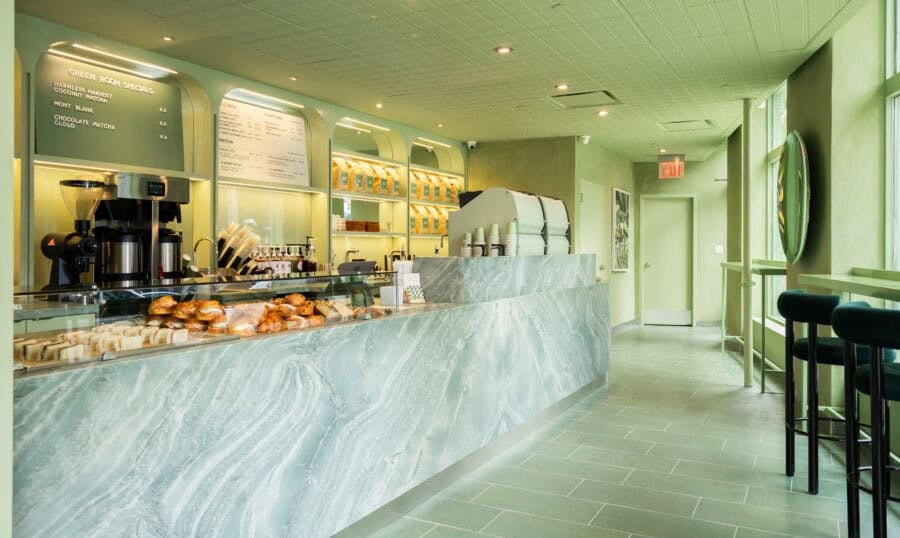
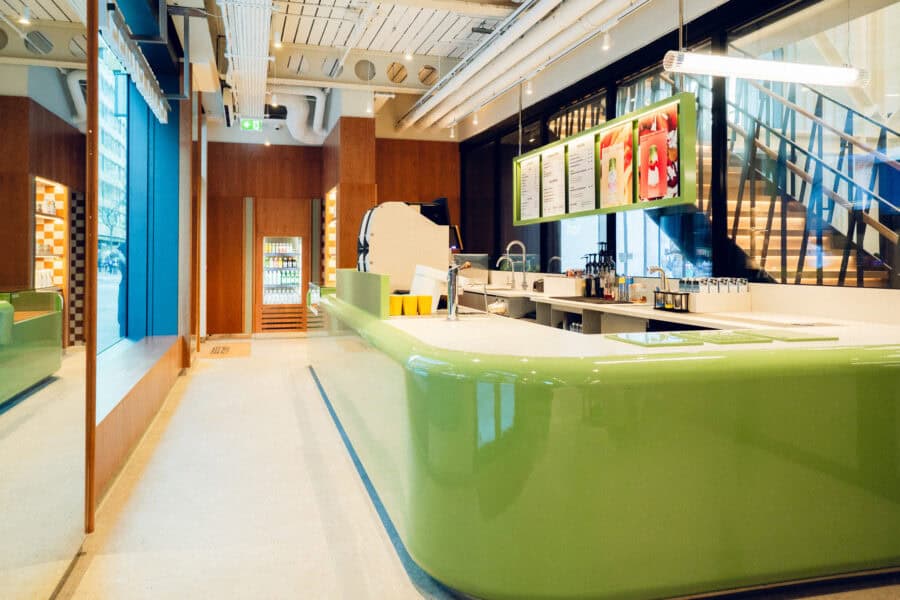
That means signature bars that feel more like focal points than service counters, warm lighting that draws people in, and subtle design details that make customers pause, like curved corners, pop color palettes, or tiny hidden messages in the decor.
“We’re aiming for something brighter, more playful. There’s always a bit of surprise in it.” says Schmidt.
One Brand, Many Expressions
Unlike many chains, Blank Street doesn’t want all its stores to look identical. “We design to the context,” Schmidt says. “Sometimes we blend in, sometimes we stand out, but we always aim for cohesion.”
Some stores nod to the brand’s roots with checkered diner-inspired floors or cart-style bar layouts. Others are more modern and abstract, with curved forms, layered materials, or even retail packaging that feels more like art books than grab-and-go products.
What ties it all together is a loose visual language, fern green tones, curved accents, a feeling of warmth, and a strong commitment to hospitality. “Even as our store designs evolve, you should always feel, unmistakably, that you’re in a Blank Street,” says Paola Han, Blank Street’s Global Design Director. “But that doesn’t mean every store looks the same. I always say our cafés should reflect both the context of the neighborhood and the personality of the designer behind it.”
“We reduce where we can, but never at the cost of personality,” Schmidt adds.
Looking Ahead
As Blank Street continues to grow, design will remain a core focus. Upcoming stores will feature upgraded materials, more seating, and increasingly immersive layouts. Even small touches, like how a handoff counter is built or where the syrup bottles sit, are being rethought.
“Design isn’t just about looks,” Schmidt says. “It’s about the feeling people leave with. If they walk out feeling even a little more uplifted, we’ve done our job.”
Consistency Without Uniformity
Unlike many chains, Blank Street doesn’t want all its stores to look identical. “We design to the context,” Schmidt says. “Sometimes we blend in, sometimes we stand out, but we always aim for cohesion.”
Some stores nod to the brand’s roots with checkered diner-inspired floors or cart-style bar layouts. Others are more modern and abstract, with curved forms, layered materials, or even retail packaging that feels more like art books than grab-and-go products.
What ties it all together is a loose visual language, fern green tones, curved accents, a feeling of warmth, and a strong commitment to hospitality.