

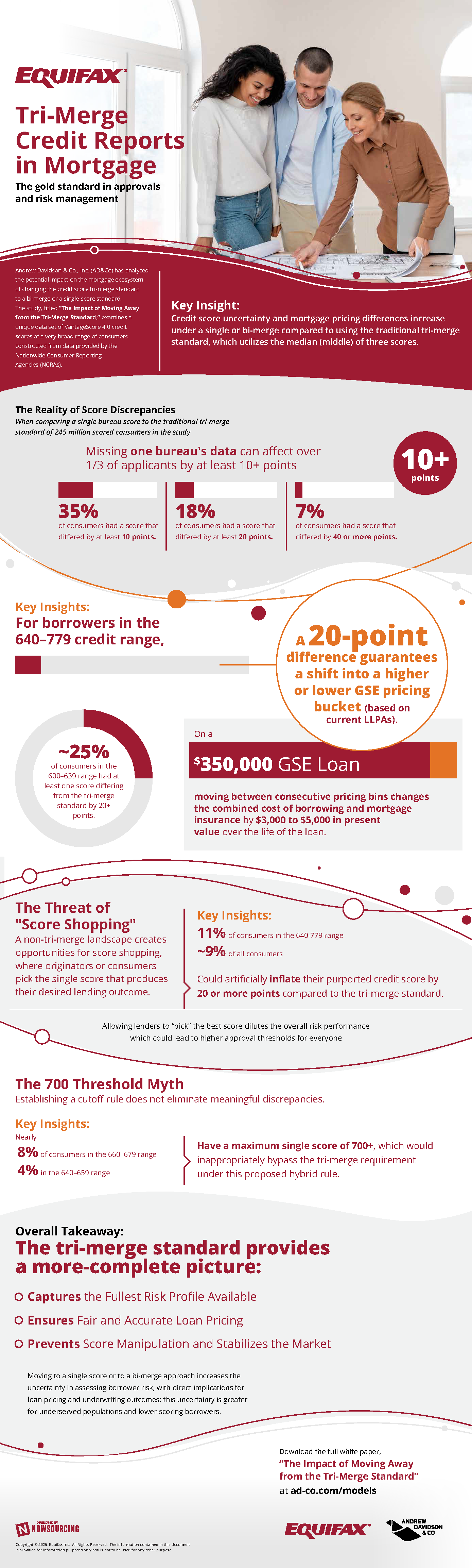
Mortgage lenders are always working to find their clients the best mortgage rates possible, and likewise, consumers are hoping for the best outcomes as well. One way that has affected rates has been a recent shift away from the traditional tri-merge credit report to a single or bi-merge report instead. A tri-merge approach looks at the median of three scores to find the most accurate score. The shift away from this has led some consumers to ‘score shops’, which in turn creates a less reliable look at rates. This also causes lenders to “pick” the best scores, which dilutes the overall risk performance and can cause higher approval thresholds for everyone. Both of these scenarios can cause rates to unfortunately rise across the board. Adhering to a tri-merge standard not only prevents score shopping or lenders picking the best score, but it also provides a better picture of a person’s creditworthiness. Additionally, it prevents score manipulation, which in turn stabilizes the market. By being able to capture the full risk profile available to someone, it ensures that fair and accurate loan pricing is done for everyone. While some may be tempted to choose the best score instead of the median of three, the impact of this negatively affects many consumers.
Source: Equifax