
Eduardo Padron Prado has spent more than twenty years working with machines, processes, and systems, always driven by the same question: why isn’t something working as well as it should? A cable rolling mill in Venezuela that required a better lubrication system, a cheese production line that needed its transport process optimized, or a maintenance operation that demanded better planning. The equipment changed every time. The underlying discipline stayed close to the same: understand the system, identify what is limiting it, and find a practical way forward.
He built that experience over two decades in Venezuela, developing a career across engineering, production, maintenance, logistics, supervision, and project management. Then he moved to the United States and entered a new industrial environment where that experience had to be applied in a different context.
That’s the part of the story worth slowing down for. Not the move itself, but what happened once two decades of hard-earned expertise entered a new country and an unfamiliar market, where his existing experience had to be demonstrated and adapted to new expectations.
Twenty Years Before the Move
His early career reads like a progression through increasingly varied technical and operational challenges. In 2006, working on the Conal Venezuela project, he led the development and implementation of a lubrication system for the Arvidal cable rolling mill. Three years later, at Kraft Venezuela, he optimized the transport system for a cheese mixture process, applying his engineering knowledge to improve how the production system operated. By 2011, he had moved into maintenance planning and implementation at Dana Tuboauto Venezuela, expanding his experience in the systems and processes that support reliable industrial operations.
Then, in 2015, came something a little different. Padron Prado helped develop and bring to production a beginner’s bicycle through the BigKids and BigBoscan project. It wasn’t industrial machinery. It was a product designed for children learning to ride. Yet the engineering discipline remained familiar: understand the system, identify its practical requirements, and turn that understanding into a workable solution.
By the time he considered a move to the United States, he wasn’t a young engineer looking for a first break. He was an experienced professional whose career had already taught him how to approach complex systems from multiple angles, from engineering and maintenance to production and project management.
Starting Over, On Purpose
None of that experience transferred automatically. This is the part of his story Padron Prado is most direct about. For him, the U.S. industrial environment brought different expectations around quality, turnaround times, customer service, work methods, technologies, and standards. His experience from Venezuela remained valuable, but he also had to understand how it could translate into a different professional environment and demonstrate his technical competence within it.
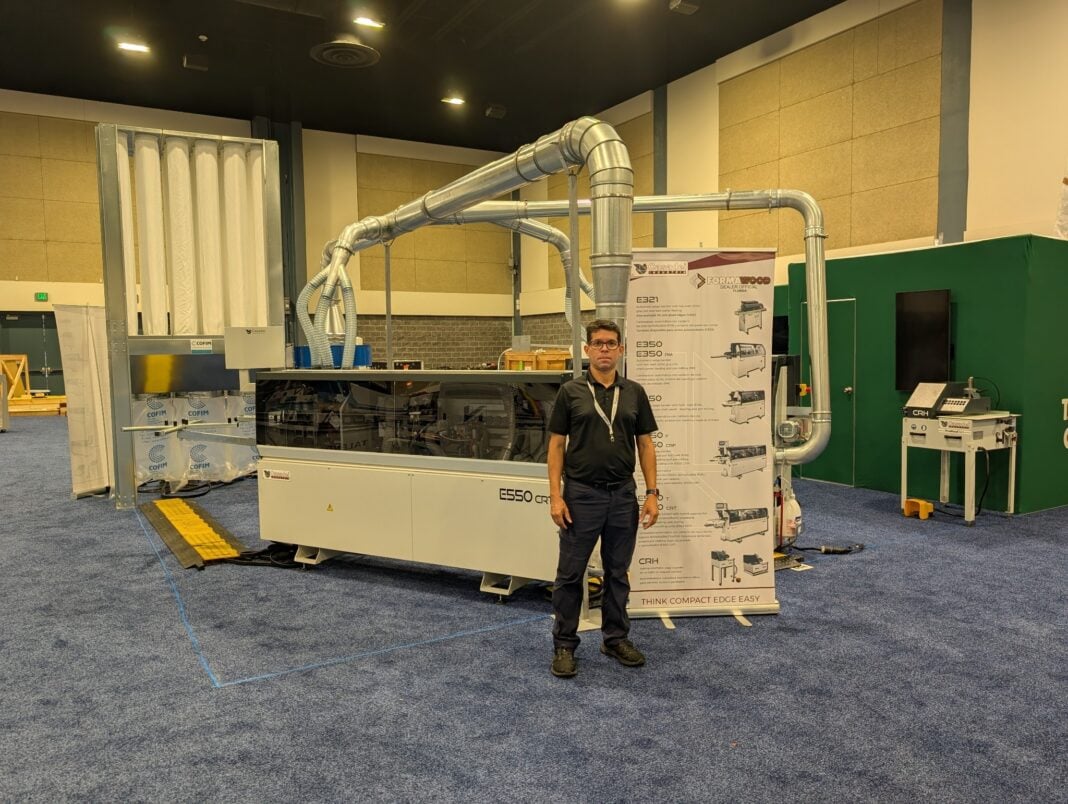
So he did. Padron Prado currently works as an edgebander technician and equipment selection consultant in the woodworking industry, continuing to expand his experience in machinery and manufacturing in the United States. In 2025, he also exhibited at the Wood Pro Expo Florida, marking another step in his growing involvement in the U.S. woodworking and machinery sector.
The transition was not about discarding what he had learned. It was about learning where that experience fit in a new environment. Padron Prado had to become comfortable being the newcomer again, understand the specifics of a different market and industry, and then build on the technical foundation he had spent two decades developing.
The Lesson Underneath the Story
If there’s a single idea that connects the Arvidal cable rolling mill to a woodworking trade show floor in Florida, it’s this: technical knowledge becomes most valuable when it is applied with an understanding of the environment in which it has to work. Padron Prado has said as much himself. In his experience, costly decisions can often be avoided through better planning, adequate information, a clear understanding of the client’s needs, and an assessment of the resources available.
That’s a lesson that applies well beyond machinery. Professionals entering a new industry, adapting to a new market, or rebuilding their careers often face the same temptation: to lead with everything they already know. Padron Prado’s experience points toward a different approach: understand the environment first, then determine how your existing expertise can create value within it.
His career has also reinforced another lesson. Technical experience alone does not guarantee good results. Listening to clients, understanding market conditions, evaluating resources, and remaining willing to adapt are equally important. The ability to combine those perspectives has become an important part of how he approaches engineering, machinery, and industrial consulting.
Where It’s Heading
Padron Prado is now working toward something bigger than any single project, an industrial and commercial consulting practice based in Florida, with the goal of progressively expanding into other markets across the United States and Latin America. The focus isn’t just on equipment or individual technical fixes. It’s built around a broader approach to supporting clients throughout the equipment lifecycle, from selection and installation to maintenance, optimization, and ongoing technical support.
It’s a fitting extension of a career built on continuous learning and adaptation. Padron Prado’s path from Venezuelan industrial projects to the U.S. woodworking sector wasn’t a straight line, and he doesn’t pretend otherwise. It was two decades of technical work followed by a deliberate decision to learn, adapt, and apply that experience in a new professional environment.
His story ultimately offers a different definition of professional experience. Experience is not simply the number of years spent doing something. It is the ability to carry what those years have taught you into unfamiliar situations, learn what the new environment demands, and continue creating value. For Padron Prado, the next chapter is not a departure from the career he built in Venezuela. It is what that career has prepared him to build next.