
By 2027, most of the traffic arriving at enterprise applications will not come from people. Non-human traffic is expected to account for 70 percent of all web traffic by then, which means that within roughly two years, the assumption underpinning a great deal of edge security tooling will describe the minority case.
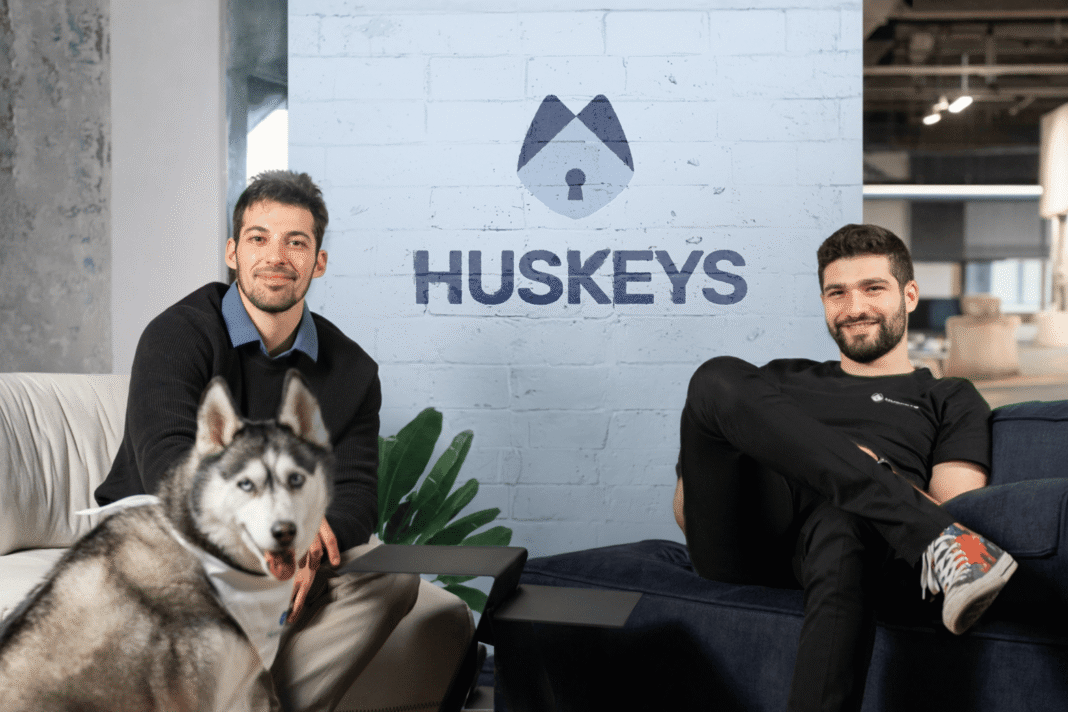
The Wall Street Journal first reported that Huskeys has raised a $27 million Series A led by Blackstone Innovations Investments to build for the world on the other side of that inversion. The round brings total funding to $35 million after an $8 million seed.
The Traffic Shift Runs in Two Directions
Huskeys frames the change as bidirectional, and the distinction is worth holding onto.
On one side, autonomous agents are becoming legitimate users of applications. These are not bots to be filtered. They are software acting on behalf of real customers, executing real transactions, and generating real revenue. Their traffic patterns do not resemble a human session, which is precisely why they require deliberate handling rather than default treatment.
On the other side, attackers are using AI to discover and exploit vulnerabilities faster than ever before. Developments such as Mythos demonstrate how AI-driven capabilities are accelerating the speed and scale of cyber threats.
Both categories are automated. Both are increasing. Telling them apart in real time, at production volume, is the operational challenge the platform is designed around.
What the Platform Does About It
Huskeys helps organizations identify, understand, and manage agentic traffic, enabling legitimate AI agents to interact with applications while reducing security risk, false positives, and disruption to the business.
False positives are the metric that matters most here. In a world where automated traffic is exceptional, treating it conservatively is a defensible default. In a world where automated traffic is the majority and much of it is revenue-generating, the same default becomes expensive. Organizations need to strengthen security while minimizing false positives, maintaining business continuity, and protecting revenue-critical applications.
The company’s own numbers describe the scale at which this judgment has to be exercised: more than a trillion web requests and thousands of network configurations analyzed every day across organizations worldwide.
The Estate That Has to Make the Decision
Complicating the classification problem is the environment doing the classifying. Modern organizations secure their applications across an expanding mix of cloud providers, Content Delivery Networks, Web Application Firewalls, and other edge services, producing fragmented environments that are increasingly complex to manage.
Security teams working in those environments have to determine whether their controls are effective, adapt policies to evolving threats, and deploy security changes without disrupting legitimate business traffic. Each of those tasks is harder when the answer lives across several consoles maintained by several teams.
Huskeys is building a Network Edge Security Management platform that operates on top of an organization’s existing network infrastructure. Rather than replacing existing investments, the platform connects and orchestrates the modern network edge ecosystem, including CDNs and WAFs, cloud-native security solutions, and network components such as load balancers, VPCs, and security groups.
The connective tissue is a patented Unified Data Model. The UDM creates a common layer of understanding across different environments, technologies, and providers, allowing security insights, policies, and actions to move seamlessly across platforms while supporting multi-cloud and multi-vendor deployments from the Internet Edge all the way to the application.
Speed as a Security Control
If adversaries are compressing the time between vulnerability discovery and exploitation, defenders need a control that operates on a comparable clock.
Virtual Patching is the platform’s answer. It allows security teams to mitigate vulnerabilities directly at the network edge within minutes, providing protection while a permanent fix is being developed, tested, and deployed in the application code.
The reasoning is straightforward. Application code fixes require development, testing, review, and release, and that sequence has a floor determined by engineering process rather than urgency. Edge mitigation does not touch the codebase and can therefore move on a different timescale. It buys time rather than substituting for the fix.
Alongside it sit continuous posture assessment, dynamic policy generation, and orchestration, which together help organizations respond to emerging threats faster.
Who Backed the Thesis
Blackstone Innovations Investments led. Merlin Ventures, Skinos Ventures, Zscaler Ventures, Okta Ventures, Bright Pixel Capital, and SV Angel all participated. Skinos Ventures brings founding general partner Yishay Yovel and foundational investor Shlomo Kramer, pioneers of the WAF and SASE categories.
Individual investors include Eran Reshef, the inventor of the WAF and the CAPTCHA, and executives from Palo Alto Networks, Cloudflare, Check Point, AWS, Google, Microsoft, and Intel.
Reshef’s participation has a particular resonance given the subject matter. The CAPTCHA was designed to separate humans from machines. In a market heading toward 70 percent non-human traffic, the useful question is no longer whether a visitor is a machine but whether that machine should be allowed to proceed. The distinction has moved from identity to intent.
Adam Fletcher, Chief Information Security Officer at Blackstone, described the change this way: “The way organizations secure internet-facing applications is fundamentally changing. AI-driven traffic and increasingly fragmented edge environments require a new approach to security management. Huskeys has built a platform designed to operate at enterprise scale while advancing a new category for the modern network edge. We believe the company is well positioned to redefine how organizations manage edge security, and we’re excited to support Huskeys as they continue to develop their product in this important category.”
Customers Already Living the Shift
Huskeys’ customer base includes TikTok, LEGOLAND, Ro, Blackstone, and Hugging Face.
Hugging Face is an especially apt reference for the agentic thesis, given that a substantial portion of its traffic consists of automated systems retrieving models and datasets. TikTok brings volume that stresses any classification system. Ro operates under health data requirements. LEGOLAND runs commerce tied to physical venues. Blackstone brings financial services scrutiny and now leads the company’s Series A.
The Founding Argument
Itai Gafni, CEO and Co-Founder of Huskeys, connected the traffic shift to the tooling gap.
“We founded Huskeys because security teams are being asked to protect increasingly complex edge environments with legacy tools that were never designed to work together or to address the challenges of the new AI era,” Gafni said. “Every business today runs through its network edge – that’s where your customers, your revenue, and your threats all meet, yet for most organizations, that edge works against them instead of for them. As AI transforms both legitimate traffic and cyberattacks, organizations need an intelligence layer that continuously understands what’s happening across the edge and adapts security in real time. Our goal is to make the network finally work for the business, not against it. That’s the category we’re building.”
Building for the Majority Case
The interesting thing about the 2027 projection is how little time it leaves. Architectures that assume human users are the norm will be operating in an environment where they are not, and the adjustment involves policy design, telemetry, and business logic rather than a configuration toggle.
Huskeys has raised $35 million in total to argue that the adjustment needs a dedicated layer rather than incremental tuning of tools designed for a different traffic mix. The company already processes a trillion requests a day, which is a reasonable vantage point from which to watch the curve bend.