
To step into the world of urban designer Sakshi Nanda is to understand that a city is never just a collection of contemporary facades, transit corridors, or concrete high-rises. Instead, it is a living, breathing archive of human history, natural topography, and collective memory. Raised in the dense, vibrant, and train-connected streets of Mumbai, and having honed her practice through the sweeping geometry of Atlanta and the pedestrian-forward urbanism of Portland, Oregon, Nanda brings an international sensibility to American city planning. Currently an urban designer at the acclaimed firm ZGF Architects and an active leader in the National Organization of Minorities Architects (NOMA) in Portland, Nanda bridges the gap between historical preservation and forward-looking master planning.
For Nanda, an empty lot is rarely truly empty. Her design philosophy treats the past not as an obstacle to progress, but as its foundational bedrock.
“History is a pivotal factor when I start the process of reimagining a space or a place,” Nanda explains, her voice carrying the enthusiasm of someone who uncovers stories hidden beneath layers of asphalt. “To understand and acknowledge the past and serve the future is critical in design thinking. I start by researching its historical context and key architectural features, preserving or restoring significant elements.”
In a world where rapid modernization often defaults to a blank slate, Nanda advocates for a more nuanced, surgical approach to intervention. “Techniques like adaptive reuse, contrast between old and new, and integrating storytelling through design help honor the space’s past while adapting it for contemporary use,” she observes. Yet, her lens goes beyond mere bricks and mortar, extending into the social fabric of the neighborhoods she touches. “It is also important to study the present development and acknowledge its impact on the displaced communities.”
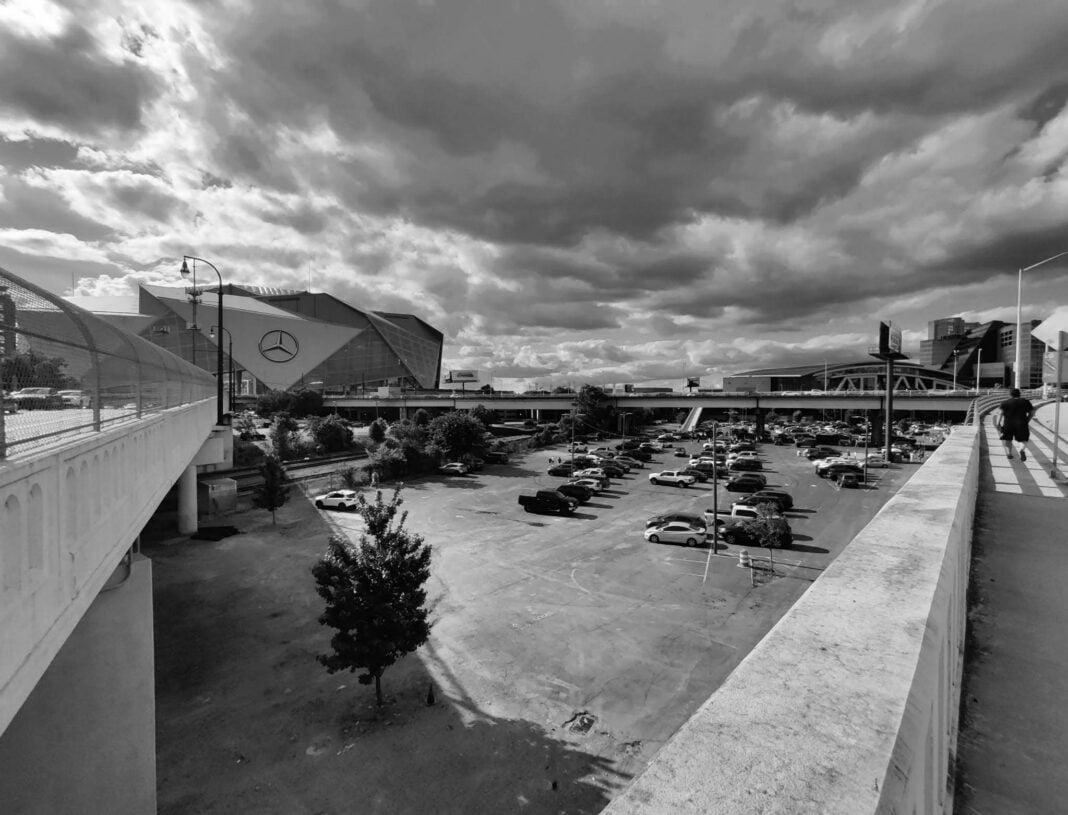
This deep-seated commitment to the human and structural layers of a site is perhaps best illustrated by her landmark research into Atlanta’s “Gulch”—a sprawling, forty-acre expanse of parking lots and rail lines slung below the street level of downtown, adjacent to the Mercedes-Benz Stadium. Having earned a Master of Science in Urban Design from the Georgia Institute of Technology, Nanda turned her academic rigor toward this historic void. Her resulting work was even selected to be showcased at the 3rd Annual ACCelerate Festival at the Smithsonian National Museum of American History, highlighting her ability to turn urban data into compelling public narratives.
The project began as an intuitive reaction to an unfamiliar landscape when she first arrived in Georgia. “My research started in 2021; it was the first time I walked to an American downtown,” she recalls. “My perception of downtown was bustling and full of people, but when I reached the Gulch area, I saw a huge parking lot. That developed curiosity in me to learn more about this unique site—it can’t just be vacant or forgotten. I used all my resources and connected with locals and history buffs to get started with learning more of its past.”
What she discovered was the very epicenter of Atlanta’s birth. Long before it was a car-centric sea of asphalt, the Gulch was known as the Terminus—the 1830s intersection of the Western and Atlantic railroad lines that dictated the entire layout of the city. “Railroads were a big answer to my research, and it is interesting to see the Gulch being the intersection of the railroads coming down south and its impact on the city grid,” Nanda says. “It is a nexus of how the city planning started from that site. My research is dedicated to uncovering the layers of what was beyond the parking lot, understanding the impact of the railroads on the city form and planning, and how we can preserve this void in a better way.”
Today, the site is undergoing a massive transformation into Centennial Yards, a multi-billion-dollar mixed-use district designed to stitch downtown back together. While Nanda watches the redevelopment unfold, she looks at the transformation with both hope and a critical eye. “The redevelopment that is happening at the moment is a master planning effort that will convert the site into a mixed-use district and bring people to the downtown,” she notes. “I hope the developers and designers behind this massive project can also pay homage to the site and what will be lost.”
Since relocating to the Pacific Northwest over two years ago, Nanda’s focus has naturally shifted toward the green spaces that define the American civic experience. “Presently, I am interested in learning about this history and the changing role of Urban Parks in the United States,” she shares. “Since I moved to Portland, Oregon, my appreciation for parks and walkable environments has increased considerably. I have been reading about the works of legendary landscape enthusiasts including Charles Sprague Sargent, Frederick Law Olmsted, and Martha Schwartz. I am curious about the role of landscape in city planning and how we can incorporate history in the design thinking process.”
For Nanda, inspiration is something gathered on foot, collected from the distinct rhythms of the American cities she explores. “I enjoy traveling and witnessing architecture and varied landscapes,” she says, listing a few of the green sanctuaries that fuel her vision: “Some of my favorite parks that have inspired me are Piedmont Park in Atlanta, Central Park in New York, Laurelhurst Park in Portland, and Forsyth Park in Savannah.”
As cities grapple with the pressures of rapid expansion, the question of how to protect these historical identities looms large. Nanda believes the solution requires structural reform, community vigilance, and architectural ingenuity working in tandem.
“To combat the oversaturation of commercial real estate in valuable historical areas, we need a balanced approach,” said Nanda. “This includes enforcing protective zoning laws and historic preservation ordinances to safeguard cultural heritage. Encouraging adaptive reuse of historic buildings, offering incentives for preservation, and promoting mixed-use developments that blend commercial and residential spaces can help maintain character.”
Ultimately, her vision for the future of urban design is one where progress does not require erasure. “Community engagement and public awareness are essential, as is prioritizing local businesses over large chains,” she says. “Lastly, implementing smart growth strategies and exploring alternative funding models will ensure that growth respects history, communities, and sustainability.” By treating history as an active participant in design, Sakshi Nanda isn’t just preserving the past—she is building a more grounded, soulful future for the modern city.