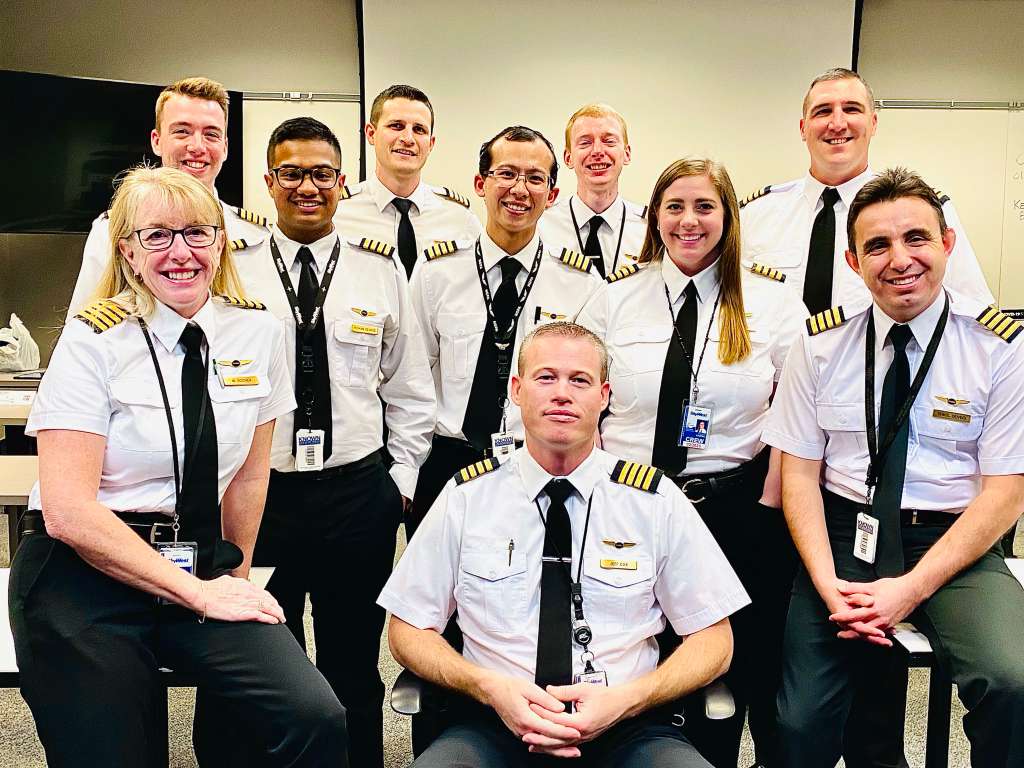

The image of a pilot, crisp uniform, gold stripes, and a steady hand at the controls, is often associated with privilege or a long-standing family legacy in aviation. But for Rohan George, the path to the captain’s chair didn’t start with a trust fund or a pilot father. It began in India, the son of missionary parents, with little more than a six-year-old’s dream sparked by watching planes take off and land at a local airport. Today, at an age when many are still finding their footing in their careers, George is a Director of Flight Standards and a Line Check Pilot, helping to steer the operations of a U.S. airline.
His story is not just one of technical skill, but of an almost stubborn determination to bypass every “no” he encountered along the way.
A Mission and a Dream
Growing up as a missionary kid in India, the financial realities of flight school, notoriously one of the most expensive career paths in the world, seemed like an insurmountable wall. His parents lacked the funds to support his training, and many in his circle suggested that a boy from his background simply couldn’t get started, let alone succeed, in such a competitive, high-cost field.
George, however, was focused on the horizon. He managed to secure a small scholarship that allowed him to travel to the United States to begin his training. Once there, he knew he had only one shot. He poured himself into his private pilot studies, performing with such consistency that his school took notice. Impressed by his discipline, the institution awarded him a full scholarship to complete the remainder of his licenses.
He didn’t just finish; he moved at a pace that was nearly unheard of. George completed his licenses in record time and became a flight instructor, logging the required 1,500 hours of flight time in just six months. By the age of 19, he had the experience necessary for the airlines, but he hit a unique roadblock: he was legally too young to join them.
Navigating Early Challenges
While waiting to reach the age requirements for major carriers, George didn’t sit idle. He took a job flying Part 135 charter operations. This role put him in the cockpit with celebrities and required him to fly into some of the most challenging environments in the world, including St. Barths, an airport famous among pilots for its short runway and dangerous approach.
Even as his skills grew, external hurdles remained. Beyond the initial financial strain, George faced significant visa and work permit challenges. Being from India meant that even as airlines actively sought to hire and retain him, the paperwork was a constant battle. It was a reminder that for an international student turned professional, the “flight” isn’t always in the air; sometimes, it’s on the ground, navigating the complexities of immigration law to stay in the sky.
The “Youngest” Tag
When George finally reached the commercial airline level, his ascent was rapid. At SkyWest Airlines, he became the youngest Captain selected for the “Designated Mountainous Airport” program. It was a high-stakes assignment; out of more than 5,000 pilots at the company, only 50 were chosen at any given time to handle these specific, high-altitude operations. One flight into Aspen put that training to the test in a way few pilots ever experience. Flying into Aspen comes with a hard reality: there is a point of no return on the approach. Once crossed, if the landing needs to be rejected, the only option is an emergency extraction procedure, a high-risk maneuver that brings the aircraft dangerously close to the surrounding mountains. There is no room for error. One day, past that point of no return, Rohan hit severe turbulence that dropped the aircraft 200 feet in two seconds. He took immediate control and executed the extraction procedure. The plane made it out clean and diverted to the alternate at Grand Junction. The way he handled it caught enough attention that a screenshot of his flight data was pulled, enhanced, and used in the next recurrent training class as a reference for other pilots. It also earned him a spot as a Line Check Pilot for Aspen, a position only four pilots in the entire company hold at any given time.
His transition to GlobalX Airlines saw him transition from the cockpit to the boardroom. Despite having no prior formal management experience, he was tapped to become the Assistant Chief Pilot at age 27. Within a year, at age 28, he was promoted to Director of Flight Standards.
Today, he remains the youngest Check Pilot at the company. He is currently third in line from the top of the organizational chart for the airline’s operations. His responsibilities are heavy: he single-handedly ran the Operation Specification A099 program, a task the FAA usually expects an entire team to handle, and wrote the Standard Operating Procedures (SOP) for the entire flight operations department.
Beyond the Cockpit
For George, the goal isn’t just to be the person in charge. He spends his off-time volunteering as a pilot mentor. He has helped several others navigate the same confusing, expensive, and often discouraging path he took, helping them secure jobs at various airlines.
“Reaching this milestone at my age with no prior experience and with not a lot of financial means makes me want to help guide others,” George says. His message to those looking at the same horizon he once did is simple: work hard, stay determined, and don’t let anyone tell you it can’t be done.
There are still stories to tell, like the time he had to assist in “arresting” an unruly passenger mid-flight on a Delta flight, but for now, George is focused on the future. The company is already training him to eventually take over as Chief Pilot when the current one retires.
Rohan George’s journey from a missionary kid in India to a director at a U.S. airline is a testament to the fact that while the sky might be the limit for some, for those with enough grit, it’s just the office.