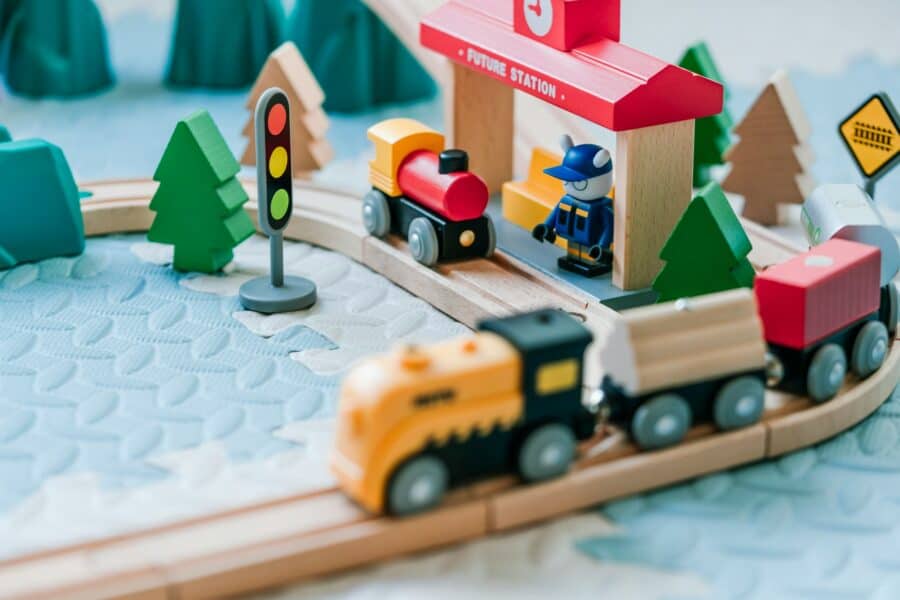

In today’s digital age, parents are increasingly turning to online shopping for their children’s toys. While the convenience and vast selection of online marketplaces offer tremendous advantages, choosing the right educational toys for your child requires careful consideration. Research shows that children who engage in complex forms of sociodramatic games have better social skills, more empathy, more imagination, and a finer capacity to understand things, making the selection of appropriate educational toys crucial for your child’s development.
Understanding the Power of Educational Toys
Educational toys are more than just entertainment—they’re powerful tools that shape your child’s cognitive, physical, social, and emotional development. Research shows that 90% of preschool-aged play in the US involves toys! When your child is playing with toys, they’re developing new ideas, modeling what they’ve seen by adults, and being challenged and stimulating their cognitive and language development.
The benefits of well-chosen educational toys extend far beyond simple play. Educational toys support kids’ development by increasing their IQ, satisfying their curiosity, helping them learn about the world around them and they are also a great source of fun. However, different toys impact children’s behavior in different ways. Some toys have a powerful influence on children’s thinking, interaction with peers, and creative expression. Other toys do not.

Age-Appropriate Selection: The Foundation of Safe Play
When shopping online, one of the most critical factors to consider is age appropriateness. The American Academy of Pediatrics emphasizes that the best toys match your child’s developmental skills and abilities while encouraging the development of new skills. The American Academy of Pediatrics released a report that examined toys for kids and found that “old-fashioned” toys are best. The AAP found that the following toy categories were the best choices for children: Symbolic/Pretend—This category includes the standard dolls, stuffed animals, action figures, trucks, planes, etc.
Age recommendations aren’t just suggestions—they’re based on safety factors. The age levels for toys are determined by safety factors, not intelligence or maturity. When shopping online, always read product descriptions carefully and look for clear age recommendations from manufacturers.
Developmental Stages and Toy Selection
For Infants (0-12 months): Look for toys that stimulate the senses—bright colors, different textures, and safe objects they can grasp and explore. Babies like to look at people—following them with their eyes. Typically, they prefer faces and bright colors. Babies can reach, be fascinated with what their hands and feet can do, lift their heads, turn their heads toward sounds, put things in their mouths, and much more
For Toddlers (1-3 years): Focus on toys that encourage fine and gross motor development, such as building blocks, simple puzzles, and toys that can be manipulated into different shapes.
For Preschoolers (3-5 years): Choose toys that promote imagination and creative play, including art supplies, dress-up clothes, and more complex building sets.
For School-age children (6+ years): Select toys that challenge problem-solving skills and encourage learning in specific subjects like science, technology, engineering, and mathematics (STEM).
Safety First: Navigating Online Toy Shopping
Shopping for toys online removes the opportunity to physically inspect the product before purchase, making safety research even more important. The U.S. Consumer Product Safety Commission (CPSC) closely monitors and regulates toys, and any toys made in or imported into the United States must comply with strict safety standards.
Key Safety Considerations When Shopping Online
Look for Safety Certifications: When browsing online, check product descriptions for important safety labels:
- ASTM certified toys meet safety standards set by the American Society for Testing and Materials
- UL label on electronic toys indicates they’ve been tested for electrical safety
- Age recommendations and choking hazard warnings
Avoid These Red Flags:
- Toys with small parts for children under 3 years old
- Products with strings, cords, or ribbons longer than 7 inches
- Toys that are excessively loud
- Items with sharp edges or points
- Products lacking clear manufacturer information
Toys should be large enough — at least 1¼ inches (3 centimeters) in diameter and 2¼ inches (6 centimeters) in length — so that they can’t be swallowed or lodged in the windpipe. Online retailers should provide clear measurements, but when in doubt, use the toilet paper roll test once the toy arrives.
The Educational Value Assessment
Not all toys labeled as “educational” truly provide developmental benefits. The research shows that these toys are at best aids in memorization, but that most of them are not truly educational, despite the manufacturers’ labels. They do not teach many of the vital skills that young children need to succeed such as managing their emotions, creativity, and flexibility.
What Makes a Toy Truly Educational?
The National Association for the Education of Young Children (NAEYC) provides valuable guidance on toy selection. Look for toys that:
- Encourage Open-ended Play: Simple toys that can be used in multiple ways foster creativity and imagination more effectively than single-purpose electronic gadgets.
- Promote Problem-solving: Toys such as the wooden puzzles encourage children to think as they follow a step-by-step sequence of solving a particular problem.
- Support Social Interaction: Most of the available educational toys for kids require kids to play and interact with other kids or adults. When playing with other children, kids will encounter social and emotional cues such as anger, laughter, and crying.
- Engage Multiple Senses: The development of particular senses is connected to several kinds of educational toys. The senses of touch, sight, and hearing are the most frequently targeted senses in instructional toys.
Smart Online Shopping Strategies
Research Before You Buy
Read Reviews Carefully: Look beyond star ratings and read detailed reviews from other parents. Pay attention to comments about durability, safety concerns, and whether the toy held the child’s interest over time.
Check Multiple Sources: Don’t rely solely on one retailer’s product information. Cross-reference details across multiple sites and check the manufacturer’s official website for complete specifications.
Verify Authenticity: Stick to reputable online retailers and be cautious of significantly discounted items that might be counterfeit. Counterfeit toys may not meet safety standards.
Understanding Product Information
Read the Fine Print: Online product descriptions should include complete safety information, including any choking hazards, age recommendations, and required adult supervision.
Look for Detailed Photos: Quality online retailers provide multiple photos showing different angles of the toy and its packaging, including safety labels and warnings.
Check Return Policies: Choose retailers with generous return policies in case the toy doesn’t meet your expectations or safety standards upon arrival.
The Importance of Balance and Moderation
Having access to fewer toys enhances children’s cognitive and neurological development according to the findings of a study conducted by the University of Toledo. Results showed that in the four-toy environment, the duration, manner and complexity of play with each item was twice as long than the 16-toy environment.
This research suggests that when shopping online, it’s better to choose fewer, high-quality educational toys rather than overwhelming your child with too many options. Focus on versatile toys that grow with your child and can be used in multiple ways.
Building a Well-Rounded Toy Collection
Essential Categories for Educational Play
Building and Construction Toys: Blocks, magnetic tiles, and construction sets develop spatial reasoning, problem-solving skills, and fine motor coordination.
Art and Creativity Supplies: Crayons, paints, clay, and craft materials foster creativity and self-expression while developing fine motor skills.
Books and Storytelling Tools: Age-appropriate books, storytelling props, and even simple cardboard boxes for imaginative play support language development and creativity.
STEM-focused Toys: Science kits, simple coding games, and math manipulatives introduce important concepts in engaging ways.
Physical Activity Toys: Balls, ride-on toys, and outdoor play equipment support gross motor development and physical health.
Red Flags When Shopping Online
Warning Signs to Avoid
Unrealistic Claims: Be skeptical of toys that promise extraordinary educational outcomes or claim to dramatically boost IQ.
Missing Safety Information: Avoid products that lack clear age recommendations, safety warnings, or manufacturer information.
Price Too Good to Be True: Extremely low prices compared to other retailers might indicate counterfeit or substandard products.
Poor Product Images: Blurry photos or images that don’t clearly show the toy’s details may indicate questionable quality.
Limited Seller Information: Be cautious of third-party sellers with limited feedback or unclear business information.
Making the Final Decision
When you’ve found a potential educational toy online, ask yourself these key questions:
- Does this toy match my child’s current developmental stage and interests?
- Will this toy encourage creativity, problem-solving, or social interaction?
- Is it safe according to current safety standards and age-appropriate?
- Can this toy be used in multiple ways as my child grows?
- Does the online retailer provide complete product information and good customer service?
Conclusion
Choosing educational toys online requires more research and attention to detail than shopping in physical stores, but the effort pays off in your child’s development and safety. By focusing on age-appropriate, open-ended toys that encourage creativity and learning, while prioritizing safety and choosing reputable retailers, you can build a collection of educational toys that will support your child’s growth for years to come.
Remember, the most educational aspect of any toy is often the interaction it facilitates between you and your child. The best online purchase is one that leads to hours of engaged, creative play that brings your family together while supporting your child’s natural curiosity and development.
For ongoing toy safety information and recalls, bookmark the Consumer Product Safety Commission’s toy safety page and stay informed about the latest safety guidelines and product recalls.