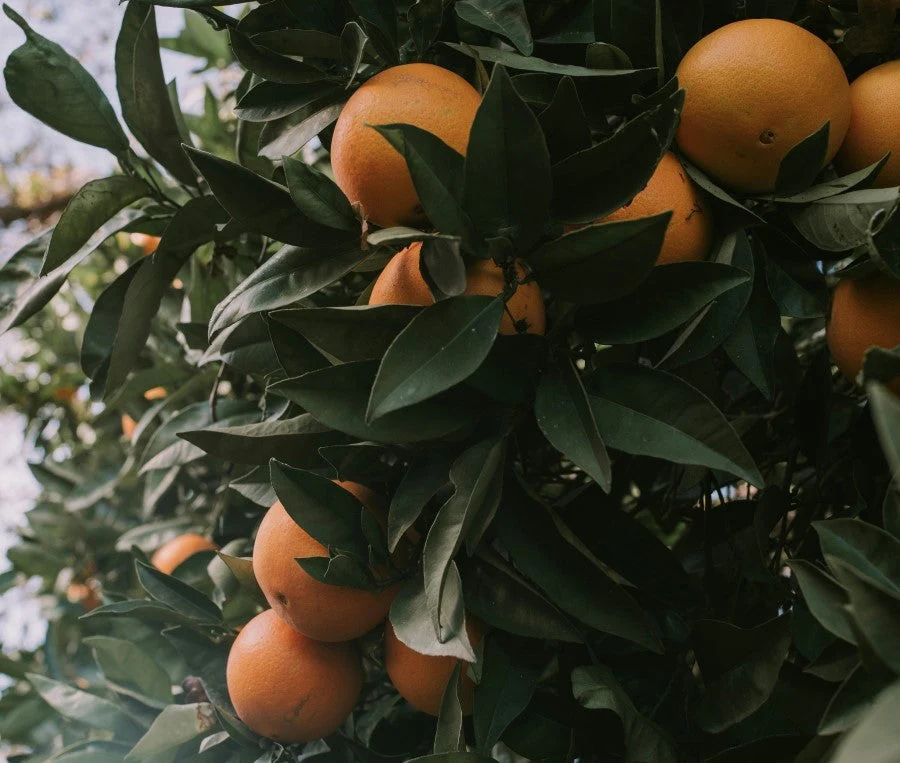

There’s a reason a small bottle of truly natural perfume costs what it does. Behind every spritz is a supply chain that spans continents, involves painstaking harvesting methods, and often depends on environmental conditions that can’t be rushed or engineered. When you wear a 100% natural fragrance, you’re wearing geography, labor, and in some cases, centuries of tradition.
Here’s a look at some of the world’s most extraordinary natural perfume ingredients — what they are, where they come from, and why perfumers who care about their craft can’t do without them.
Jasmine Absolute
Of all the florals in a perfumer’s palette, jasmine is queen. Specifically, jasmine sambac and jasmine grandiflorum are the two varieties most prized in fine fragrance. The flowers must be harvested by hand at night — that’s not a romantic exaggeration, it’s a chemical reality. Jasmine blooms open after dark and begin losing their aromatic compounds at dawn. Workers in fields in Grasse, France, or Tamil Nadu, India, pick millions of blossoms before sunrise, and it takes roughly 8,000 hand-picked flowers to produce just one gram of absolute.
The result is a dark, intensely rich material with layers of indolic sweetness, honey, and green that no synthetic substitute has fully replicated. At Wit & West, jasmine sambac is one of the raw materials that gives certain fragrances their characteristic reddish-brown color — a natural signature of the ingredient itself, not a dye.
Bulgarian Rose Otto
Rose otto — the steam-distilled essential oil of Rosa damascena — is one of the most expensive materials on earth, sometimes fetching more per kilogram than gold in peak seasons. The Bulgarian rose harvest happens over just a few weeks in May in the Rose Valley of Kazanlak. Again, hand-picked at dawn before the sun burns off the volatile compounds. It takes somewhere between 3,000 and 5,000 kilograms of petals to produce a single kilogram of oil.
The scent is incomparable — honeyed, slightly spicy, green, and deeply floral in a way that’s almost architectural. It’s one of those ingredients where the difference between synthetic rose and real rose otto is immediately obvious to anyone paying attention.
Oud (Agarwood)
Oud is the resinous heartwood of Aquilaria trees, produced only when the tree becomes infected with a specific mold. The tree responds by generating a dark, aromatic resin — and trees that produce it are increasingly rare. Wild oud is critically endangered, which has pushed the industry toward cultivated sources, though purists argue the cultivated version lacks the depth of the wild.
The scent profile of oud is famously complex: simultaneously smoky, sweet, woody, and animalic, with a depth that seems to shift by the hour. A high-quality natural oud can command prices exceeding $30,000 per kilogram. It’s the kind of ingredient that earns the word “precious” without any hyperbole.
Ambrette Seed
Ambrette is less famous than oud or rose but no less interesting. It’s derived from the seeds of Hibiscus abelmoschus, a plant native to tropical Asia, and it produces a musky, slightly nutty, slightly floral scent that’s often described as the closest natural analog to animal musk — without involving any animals whatsoever.
It’s an ingredient that performs beautifully in drydowns, lending warmth and skin-like softness to a fragrance’s final hours. Wit & West uses ambrette in Caldera Flower’s base, where it forms part of that “your-skin-but-better” drydown that earned such high praise from Fragrantica’s Beth Butterfield. It’s a quietly remarkable ingredient — one that most wearers can’t name but always notice.
Sandalwood
True Mysore sandalwood from India is among the most regulated natural materials in perfumery. The Indian government controls its harvest closely due to decades of over-exploitation, and genuine Mysore sandalwood oil is extraordinarily expensive. Australian sandalwood has become an important sustainable alternative, with a slightly drier, creamier character.
Sandalwood functions as both a base note and a fixative — it extends the life of other ingredients around it while contributing its own soft, creamy, woody warmth. It’s one of the oldest perfumery materials in human history, used in incense, ritual, and medicine across South and East Asia for thousands of years.
Osmanthus Absolute
Osmanthus is a small flowering shrub native to Asia whose tiny blooms produce an extraordinary scent — simultaneously peachy, apricot-like, leathery, and floral, with a quality that’s almost edible. It’s among the more challenging materials to work with because the flowers are too delicate for steam distillation; extraction requires solvent processes that yield a limited absolute.
At Wit & West, osmanthus is one of the ingredients that lends color to certain fragrances — a slightly greenish-brown hue that tells you exactly what’s inside the bottle.
Vanilla Absolute and Tincture
Vanilla is familiar, but truly natural vanilla absolute — as distinct from the vanillin that dominates mainstream fragrance — is a world apart. It’s warm, complex, slightly smoky, with depths that synthetic vanillin simply doesn’t reach. Wit & West takes this further with their own house vanilla tincture, mentioned specifically by the Fragrantica reviewer as a standout element in Caldera Flower’s heart. A house tincture means the vanilla has been macerated and extracted in-house — a time-intensive process that gives the resulting material a character unique to that perfumer’s hand.
Why This All Matters
Every ingredient listed here tells the same story from a different angle: natural perfumery is slow, expensive, labor-intensive, and deeply connected to the physical world. When Wit & West says their fragrances are 100% botanical and naturally derived, that’s not a marketing phrase — it’s a commitment to working with these extraordinary materials rather than replacing them with cheaper approximations.
That commitment has a cost. It also has a scent — one you can’t get any other way.