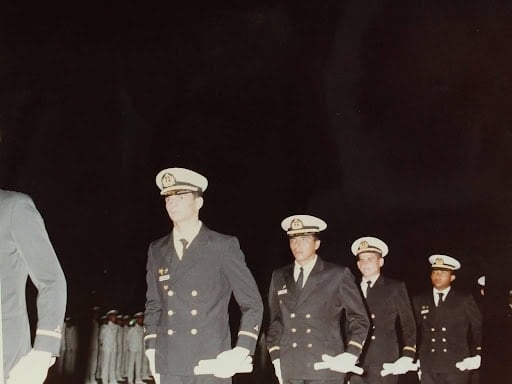

In an era when many students drift through the education system without a compass, Miguel Ángel Gaviria Mora has spent nearly three decades providing direction, discipline, and a clear horizon. As the founder of the IENAVAG Institute (Almirante Vasco Da Gama Nautical Education Institute) in Venezuela and the current architect of IENAVAG CORP / USA MARITIME CONNECT, Gaviria Mora is a man on a mission: to bridge the gap between academic learning and the vast, tangible opportunities of the maritime world.
Born from the experience of a Merchant Marine officer and forged in the crucible of Venezuela’s educational landscape, Gaviria Mora’s journey is one of innovation, resilience, and a steadfast commitment to vocational excellence.
The Genesis of a Vision
The story of IENAVAG began in the late 1990s, a time when Gaviria Mora, already an experienced navigator, turned his gaze toward the shore and the classroom. He saw a glaring void in the Venezuelan system.
“The creation of the IENAVAG Institute was the result of a deep conviction born from my direct experience as a merchant marine officer and educator,” Gaviria Mora explains. “In the late 1990s, I identified a structural gap in the Venezuelan educational system: there was no institution that formally integrated academic education with nautical training and early vocational guidance.”
He recognized that many young people were drifting toward university without a clear direction, often leading to high dropout rates and a workforce ill-equipped for the demands of the real world. Gaviria Mora decided to found IENAVAG with a singular purpose: to offer children and young people a comprehensive education based on discipline, values, vocation, and academic excellence. The institute operated under the guiding motto: “Comprehensive Education with Discipline and Honor.”
Pioneering a New Educational Model
IENAVAG was not merely an add-on to the existing system; it was a fundamental restructuring of how nautical education could be delivered. It became the first structured nautical school in Venezuela, offering a complete educational trajectory from elementary through high school.
Why was it the first of its kind? “IENAVAG was the first institution of its kind to be formally authorized in each Venezuelan state where campuses were established,” Gaviria Mora says, “because it broke away from the traditional model that limited nautical education exclusively to technical or university levels.”
The innovation lay in its progressive integration. The institute designed a pioneering educational system that wove maritime content, discipline, and naval values into the formal curriculum from the earliest grades. This required what Gaviria Mora describes as “an integrated vision, specialized pedagogical planning, and unprecedented institutional coordination between the educational system and the maritime sector.”
Addressing a National Need
The expansion of IENAVAG was not driven by a desire for mere growth, but by a genuine response to a societal need. Gaviria Mora identified a disconnect between traditional education and the opportunities available in the maritime and technical sectors.
“The need arose from the lack of early vocational guidance and the disconnect between traditional education and the real opportunities available within the maritime and technical sectors,” he notes. “Many young people reached university-level education without clear direction or the necessary tools to enter the productive workforce.”
IENAVAG was created to be the antidote to this aimlessness. It provided students with guidance, solid academic preparation, discipline, and ethical values. Crucially, it offered early exposure to potential professional pathways, not only in nautical careers but across multiple areas of national development.
Growth and National Recognition
The model proved successful. Through a “solid, coherent, and replicable educational model, supported by measurable academic and formative results,” IENAVAG expanded to four campuses nationwide. Over the years, the institute educated more than 12,000 students, with over 3,500 graduates.
This success did not go unnoticed. In 2003, a pivotal year for the institute, IENAVAG received official recognition from the National Institute of Aquatic and Insular Spaces (INEA), designating it as an official ‘Nautical Education Institute.’
Gaviria Mora explains the significance: “The recognition granted in 2003 was the result of sustained compliance with the academic, formative, and disciplinary standards required by the national maritime sector… This acknowledgment represented official validation of the educational model developed by the institution.”
Perhaps the most visible symbol of this validation was the granting of a rare honor: the national authorization to wear distinctive nautical uniforms. This was not a superficial privilege but a profound recognition of the institute’s identity and disciplinary character.
“The authorization to wear distinctive nautical uniforms was granted as a special institutional recognition of IENAVAG’s discipline, identity, and formative character,” Gaviria Mora says. He emphasizes that the uniform served as a “pedagogical tool designed to reinforce values such as order, respect, responsibility, and a strong sense of belonging.”
Mr. Gaviria Mora devoted more than two decades to the growth, development, and long-term success of this institute. Through his exceptional expertise in the maritime industry, extensive firsthand experience, and unwavering commitment to advancing professional training, he played a decisive role in shaping IENAVAG into a leading institution in maritime education. His visionary leadership and innovative approach transformed the institute into a model of excellence, setting new standards for professional preparation within the sector. Without his contributions, IENAVAG would not have achieved its current level of prestige, reach, and impact. His pioneering efforts resulted in the creation of a truly one-of-a-kind institution that has benefited thousands of students and significantly elevated the quality, competence, and professionalism of maritime personnel throughout the industry.
A Transatlantic Bridge: The U.S. Chapter
While his work in Venezuela laid solid foundations in the educational and maritime fields, Miguel Ángel Gaviria Mora has built a career defined by institutional leadership and long-term strategic vision. His experience in the Merchant Marine has been complemented by roles in organizational leadership and strategic advisory, focused on strengthening sustainable educational models. Throughout his career in educational management, he has led the development and consolidation of academic and vocational programs aligned with regulatory frameworks and industry needs. He has also held strategic and operational leadership roles within specialized educational institutions, ensuring academic quality and institutional continuity. Today, he is directing this multidisciplinary experience toward a new phase of institutional development in the United States.
He is currently promoting IENAVAG CORP / USA MARITIME CONNECT, a project he describes as “the natural evolution of the educational project into an international context.”
The plans for this U.S.-based initiative are ambitious and clearly defined. “In the United States, the objective is to develop vocational guidance programs, mentorship initiatives, and educational connectivity with the maritime, technical, and logistics sectors, adapted to U.S. standards and needs,” Gaviria Mora outlines.
The focus is broad and inclusive, targeting individuals between the ages of 13 and 36—a critical window for vocational formation. The program aims to provide “nationally relevant informational guidance, professional accompaniment, and the creation of bridges between education, industry, and real maritime career opportunities.”
Looking Forward To U.S. Maritime Students
From the deck of a merchant ship to the helm of a pioneering educational institute in Venezuela, and now to the launch of a maritime connectivity platform in the United States, Miguel Ángel Gaviria Mora’s career is a testament to the power of vision and discipline.
His story underscores a timeless truth: education is most powerful when it is connected to real-world purpose. Through IENAVAG, first in Venezuela and now poised to make waves in the U.S., he continues to chart a course for future generations, ensuring they are not just educated, but equipped, directed, and ready to navigate the professional seas that lie ahead.
For more information, please visit ienavag.us.