Investing in Water and Sanitation Crucial to Stem Spread of Cholera

Health Experts today outlined concrete steps to stem the spread of cholera in Haiti.

The event, organized by the UN World Health Organization’s (WHO) regional arm, the Pan-American Health Organization (PAHO), said the dramatic improvements in water and sanitation services are needed to eliminate cholera in Haiti and the Dominican Republic

The health experts also urged governments and international organizations to boost investment in the infrastructure and institutional capacity required to provide water and sanitation in areas affected by the disease.

chol
A woman receives intravenous treatment for cholera, administered by Cuban doctors, at the hospital in L’Estere, Haiti. L’Estere is located in Haiti’s Artibonite region, the centre of the recent cholera outbreak. UN Photo/Sophia Paris

A cholera outbreak that erupted in Haiti in October last year has claimed more than 4,500 lives and nearly 300,000 people fell ill with the disease.

The cholera epidemic has been reported around Saint-Marc in the Artibonite department, far from the camps hosting hundreds of thousands of people who lost their homes following the devastating earthquake of 12 January 2010.

Cholera is an acute intestinal infection caused by eating food or drinking water contaminated with the bacterium known as vibrio cholerae. The disease has a short incubation period and produces a toxin that causes continuous watery diarrhoea, a condition that can quickly lead to severe dehydration and death if treatment is not administered promptly. Vomiting also occurs in most patients.

Cholera remains a challenge in countries with limited access to safe drinking water and adequate sanitation.

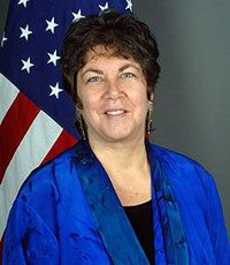
PAHO Director Mirta Roses discussed the misconceptions surrounding the provision of water and sanitation. She said water and sanitation is seen as expensive. She emphasized that the costs of not investing in these services is much higher as evidenced by the thousands of people who have died in Haiti.

Ms. Roses stressed that the right to water and sanitation is an essential human right. She noted it is crucial for governments to strive to provide these services in every sector of society.

Ms. Roses also underscored the importance of water and sanitation as a pre-requisite for sustainable development and economic growth in any country. She warned that ignoring this right would leave countries “extremely vulnerable.”

“As we fight with climate change and the scarcity of water, it is even more important to be responsible but also to be equitable in the distribution of this precious resource.” -Ms. Roses

She stressed partnerships are also essential to fight the disease as countries shift from cholera control to cholera elimination.

The health experts also urged governments and international organizations to boost investment in the infrastructure and institutional capacity required to provide water and sanitation in areas affected by the disease.

Hot this week

Did David Wineland and Serge Haroche Steal Idea For The Nobel Physics Prize?

Dr. Omerbashich says the Royal Swedish Academy is a Crime Scene and he has the proof that Nobel laureates stole his discovery.

New Approaches to Disaster Relief Challenges

Disaster relief has always been a challenge. NASA, Google,...

3 Legitimate Money Making Methods to Supplement Your Income

In a perfect world, when your landlord raises your...

2016 Predictions by World Renowned Medium and Psychic Lindy Baker

World renowned medium and psychic Lindy Baker is interviewed by The Hollywood Sentinel, discussing psychic power, the spirit world, life after death, areas of concern in 2016, and much more.

Digital Coupon Customers Spending More Than Double At Stores

A new study shows that customers who use digital coupons go shopping more for groceries and other household goods more often and spend more on their shopping trips.

From Luxury Cars to Rush Hour: Staying Safe on Miami Roads

There will always be inherent dangers in getting behind...

Why Is The DNA Company Bringing Behavior Change Into Genetic Education?

Why is The DNA Company adding behavior-change training to DNA University? The answer lies in turning genetic insights into practical action.

How JP Morgan’s Justin Nelson Ties Giving to Estate Plans

Ask a wealthy family how they plan to divide an estate, and the conversation used to stop at percentages: how much to each child, how much to the grandchildren, how much to charity if anything is left over. That conversation has changed. Fo

Bestselling Author Chris Sund Finds 92% of Adults Believe They Are Capable of More

His survey of more than 200 working adults points to a gap that has little to do with talent, and a personal mission to help people close it.

How White-Collar Cases Now Begin With a Document Request, Not a Knock at the Door

A federal grand jury subpoena shows up in the CFO's inbox, addressed to the company, asking for three years of emails, wire records, and board decks. The case is already underway. Nobody kicked in a door. No agent flashed a badge in the lob

The Stokes Interview Is Back: Here’s What Couples Must Decide

Two years ago, plenty of marriage-based green card couples never sat across a desk from a USCIS officer. Interview waivers were common, files moved on paperwork, and the second, split-room interview known as a Stokes was a rare escalation r

Bloom Security Finds a Software Supply Chain Risk Hiding in AI Coding Workflows

AI coding agents are increasingly capable of selecting dependencies,...

Related Articles

Popular Categories