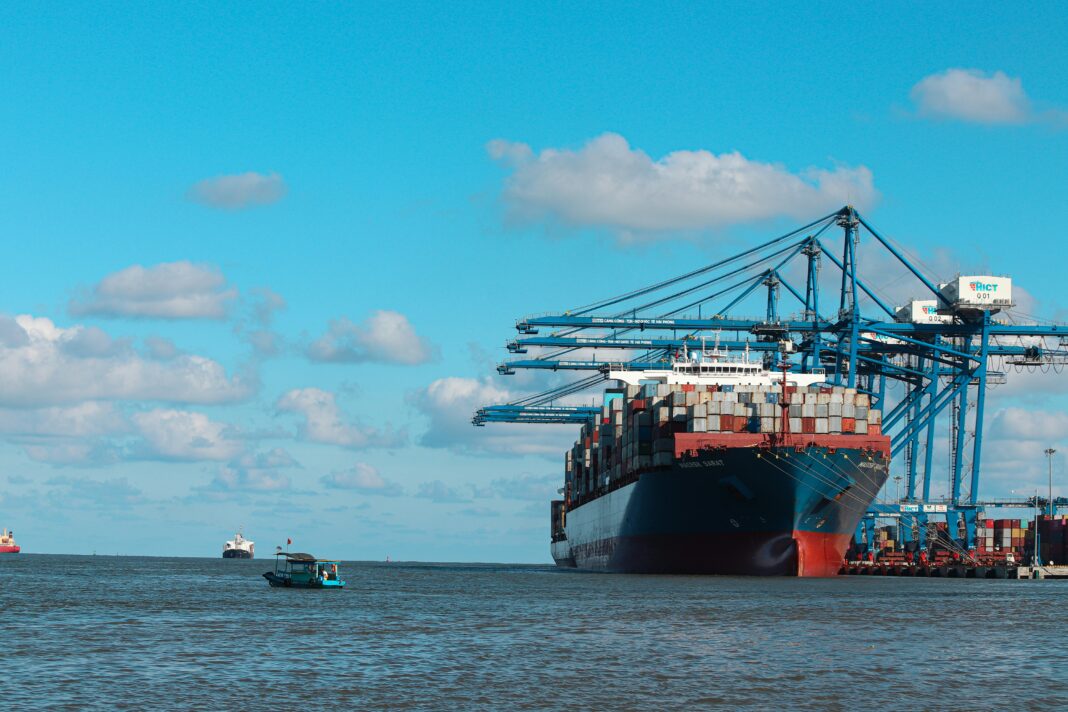

As the global economy prepares for a pivotal transition in 2026, the landscape of international trade is undergoing a profound structural transformation. Following a robust 2025 that saw trade grow by an estimated 7% to reach a staggering $35 trillion, experts are now warning of a slowdown.
Daniel Barbosa Holztreger, the distinguished founder of DH Consult in Brazil and a veteran with over 25 years of experience in global markets, describes the coming era as one of “stormy weathers.” In a recent analysis of the sector, Holztreger outlined a future defined by slower growth—projected at 2% to 2.5% for 2026—driven by a complex cocktail of geopolitical tensions, rising protectionism, and a fundamental shift in how the United States interacts with the rest of the world.
A Structural Transformation
According to Holztreger, the era of unfettered globalization is being replaced by a more fragmented, strategic model. “International trade is undergoing structural transformation driven by geopolitical tensions, rising protectionism, and the shifting of supply chains,” Holztreger noted.
While the growth of physical goods is slowing, particularly as major economies like China and Europe lose momentum, Holztreger points to a silver lining in the services sector. Services now account for 27% of global trade and grew by 9% in 2025, far outpacing traditional commodities. However, for the U.S., the focus is increasingly turning inward and toward “friend-shoring.”
The US Pivot: Reducing Reliance on China
A central pillar of the new American trade strategy is the protection of “crown jewel” industries—specifically technology and advanced manufacturing. Holztreger highlights that the U.S. is aggressively moving to reduce its historical reliance on Chinese imports.
“This change aims to reduce reliance on imports from China, which has historically supplied many American products,” Holztreger explained. “It creates further opportunities for neighbouring countries in Asia that can replace the manufacturing power China provided to the United States. On the other hand, some countries that already have robust export figures for the U.S., like Japan, South Korea, and Taiwan, would be on a trend to import more goods at the same time they invest in manufacturing and diversify investment projects in America.
This shift isn’t just about diplomacy; it’s about economics. Holztreger notes that tariffs are increasingly being used as strategic tools rather than just revenue generators, influencing where domestic and foreign companies choose to produce and source their components.
Agribusiness and the African Frontier
Despite the shift toward high-tech manufacturing, Holztreger emphasizes that the U.S. remains an agricultural powerhouse. However, the “status quo” of American farming is no longer sufficient.
“The US will continue to be a major exporter of agricultural products like soybeans, corn, and wheat, but the landscape is changing,” Holztreger said. He pointed to recent crises, such as the bird flu outbreak, as catalysts that have made food security a matter of national security. “This new environment requires American agribusiness to adapt by diversifying markets and forming long-term partnerships.”
Holztreger is putting this philosophy into practice through DH Consult. Drawing on his extensive background—which includes a Master of Science in International Trade and Transport from the UK and a high-level career at Saint-Gobain PAM and Kuando Trading—he has built a bridge between Brazilian, North, and South American producers and the burgeoning markets of West Africa.
From Brazil to West Africa: A Proven Model
Holztreger’s journey began in Brazil, where he developed a specialty in exporting cast iron pipelines to South America and Africa. His time living and working in Angola sparked a lifelong passion for the continent. Later, as a manager at Kuando Trading, he oversaw a trading desk that generated $100 million in revenue, focusing heavily on fast-moving consumer goods for markets where local manufacturing had struggled.
Holztreger believes he can replicate that success for the United States. While the U.S. is already a major exporter of poultry to Africa—specifically chicken leg quarters—Holztreger sees a massive untapped opportunity for “added value” products.
“I believe in the potential of the U.S. to diversify its exports by supplying more products like beans, pulses, beverages, and unique confectionery items,” he said. By establishing stable and efficient channels to countries like Angola, Ghana, Gambia and the Democratic Republic of the Congo, Holztreger is not only increasing export revenue for American farmers but also creating jobs domestically and ensuring food stability abroad.
Looking Ahead
For 2026 and beyond, the message from Holztreger is clear: the “easy” days of global trade are over, but the strategic days are just beginning. For the U.S. to thrive, it must lean into bilateral regional agreements, invest in sustainable supply chains, and leverage the growing demand in emerging markets like West Africa.
“We are expecting to see more and more bilateral and regional agreements,” Holztreger concluded. “Factors such as national security, sustainability, and geopolitical alliances are becoming the new currency of trade.”