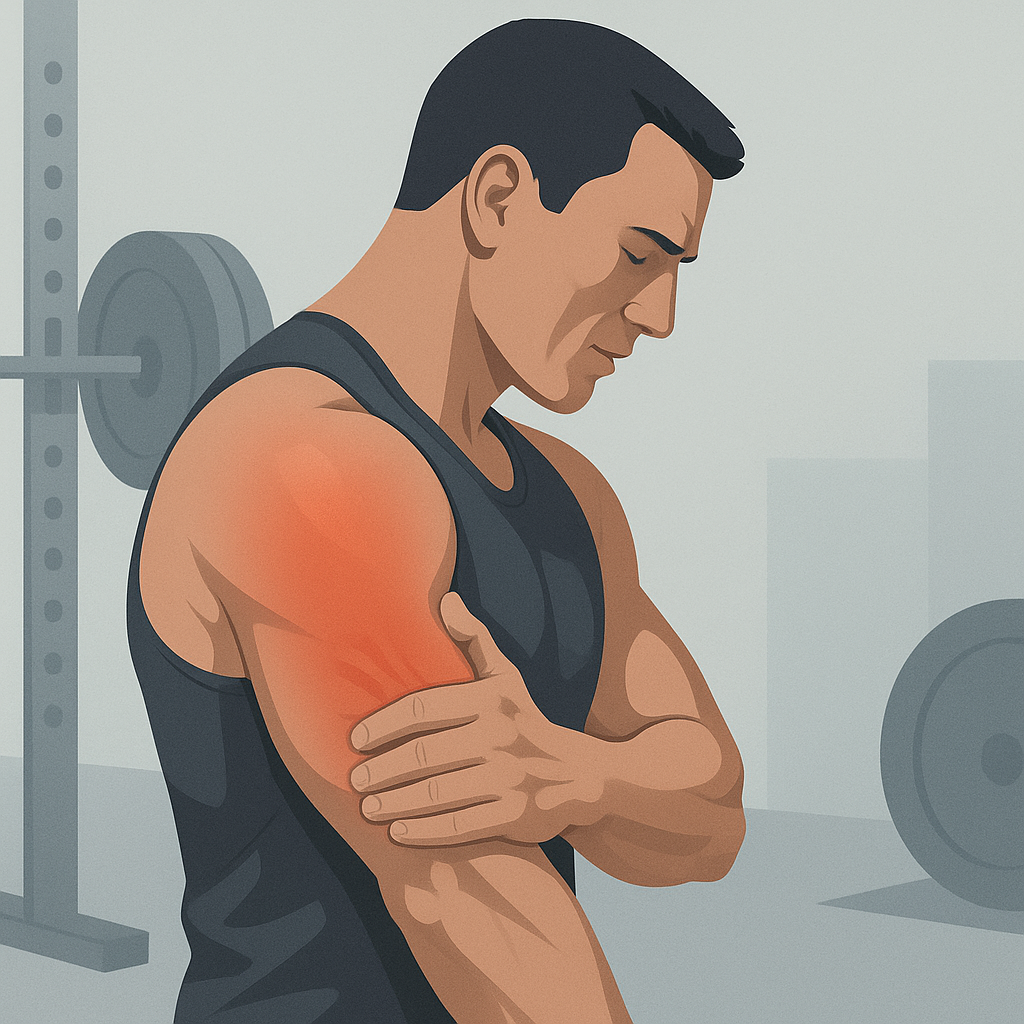

There is a particular feeling that arrives the morning after a challenging workout. You get out of bed, take a few steps, and suddenly become very aware of muscles you barely noticed the day before. Stairs look steeper, sitting down becomes a carefully controlled movement, and reaching for something on a high shelf can feel surprisingly ambitious.
Yet that stiffness is only the part of recovery you can feel. Beneath the surface, your body is responding to the demands you placed on it, repairing tissue, adapting to unfamiliar stresses and preparing itself to cope more effectively next time.
Understanding what happens during those hours and days after exercise can completely change the way you think about training. Progress is not simply created while you are lifting, running, or pushing through the final repetition. Much of the important work happens afterwards.
Your Workout Is the Signal, Not the Finished Product
During a demanding training session, your muscles are placed under mechanical and metabolic stress. Resistance training, sprinting, hill running and unfamiliar movements can all challenge muscle tissue in ways that temporarily disrupt its normal state.
This is particularly noticeable when exercise involves eccentric muscle contractions, where a muscle lengthens while producing force. Think about lowering a dumbbell during a biceps curl, descending into a squat, or running downhill.
Afterwards, your body begins responding to that challenge. The workout itself provides the stimulus. The period that follows is when the body has the opportunity to recover and adapt.
For people who train regularly, recovery can therefore deserve almost as much consideration as the workout itself. Sleep, nutrition, hydration and rest days can all become part of a wider routine. Some people may also choose treatments such as Vive Fitness best sports massage when building recovery into their training schedule.
Your Body Starts Repairing and Adapting
It is tempting to imagine that strength training simply "builds" muscle during the workout. The reality is more interesting.
Training provides a stimulus that encourages the body to adapt. During recovery, muscle protein turnover and other repair processes help remodel the tissue in response to the demands it has experienced.
Repeated consistently, this cycle can contribute to stronger and potentially larger muscles. Think of it less like constructing a wall during every gym session and more like sending your body a message: we need to become better prepared to do this again.
The body gradually responds.
That is why consistency is generally more valuable than occasionally pushing yourself through an extremely difficult workout. Adaptation comes from repeatedly providing an appropriate training stimulus and then giving your body an opportunity to respond to it.
The Soreness Often Arrives Later
One of the strangest parts of a difficult workout is that you can initially feel perfectly fine.
Then the next day arrives.
Delayed-onset muscle soreness, usually called DOMS, commonly develops following strenuous or unfamiliar exercise and can involve tenderness, stiffness and a temporary reduction in strength or range of movement.
Interestingly, becoming sore does not automatically mean you have completed a better workout.
You can make progress without struggling to walk the following morning. Equally, a highly trained person can suddenly become sore after introducing a new movement or changing the type of load their muscles experience.
Soreness is therefore better understood as one possible response to training rather than a scoreboard for how successful the session was.
The Real Progress Happens Between Workouts
Perhaps the most inspiring thing about muscle recovery is that your body is remarkably responsive.
Every sensible training session presents it with a problem to solve. Lift something heavier, run a little further, perform an unfamiliar movement or increase the demands of an exercise and your body begins working out how to cope.
Then you recover.
Then you try again.
Over time, something that once felt impossible can become ordinary. A weight that once seemed intimidating becomes manageable. The hill that used to leave you breathless becomes part of your regular route. The workout you struggled to finish becomes the session you look forward to.
That is the cycle at the heart of physical improvement: challenge, recover, adapt, repeat.
So when you wake up after a demanding workout, and your legs complain about the stairs, remember that the workout did not simply end when you left the gym. Your body is still responding to it.
And with enough patience, recovery, and consistency, it may be preparing you to come back stronger.