
Advertising formats rarely get a clean experiment. Campaigns run against different audiences with different budgets in different market conditions, and isolating whether the creative or the circumstances produced a result is usually impossible. The exceptions tend to arrive during moments when everyone is paying attention to the same thing simultaneously.
The 2024 American presidential election was one of those moments, and it produced a data point unusual enough to be worth examining regardless of one’s interest in politics.
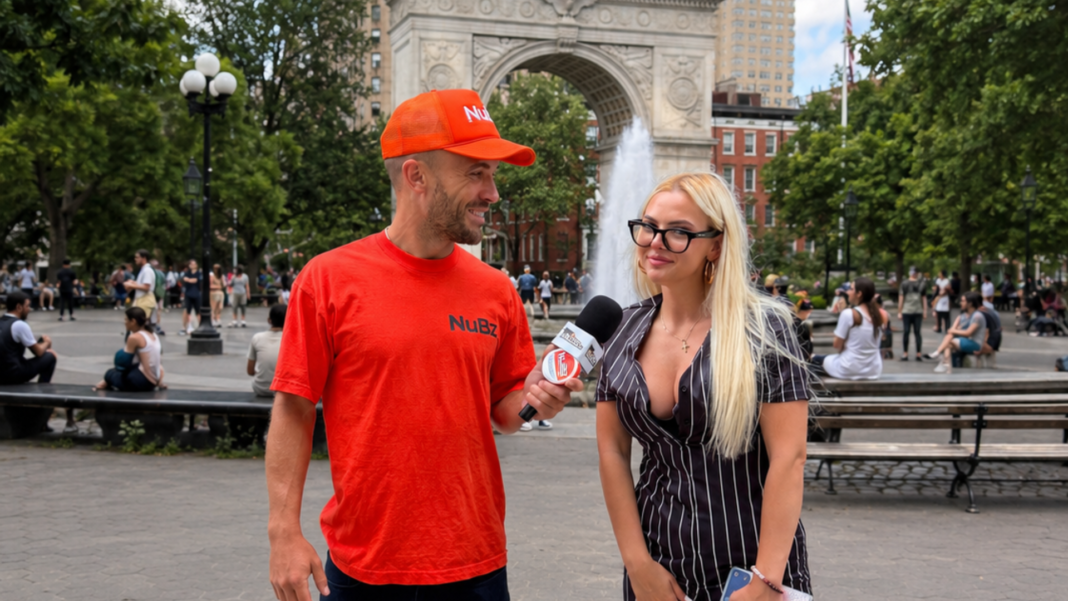
The advertiser was Art of the Tweet, a coffee table book compiling Donald Trump’s tweets. The creative was street interview footage, meaning unscripted reactions from ordinary people filmed in public with no script and no actors. On a single advertisement, the brand deployed two hundred and fifty thousand dollars and generated a 4.7x return, producing more than half a million dollars in profit from that one asset. Across the day the election was called, the brand recorded over five hundred thousand dollars in total sales.
Election periods are, counterintuitively, difficult environments for advertising. Attention is abundant but competition for it is maximal, emotional intensity makes audiences less receptive to obvious persuasion, and the visual conventions of political advertising are so well established that viewers identify and discount them within a second. Spending more does not straightforwardly solve any of that.
What street interview footage offered in that environment was structurally different from what a produced spot offers. A campaign advertisement tells an audience how to interpret a moment. Unscripted street footage shows them how other people were interpreting it, in real time, without an apparent intermediary. During a period when the dominant question in the country was what everyone else was thinking, content that answered that question directly had an advantage no amount of production budget could manufacture.
The relationship behind the campaign predated it by two years. The same brand had paid Street Poller Media founder Shane Ginsberg roughly a thousand dollars in 2022 to film strangers reacting to the book, a video that returned approximately twenty times its cost and effectively convinced Ginsberg the format could sustain a business.
Ginsberg has been careful about how the 2024 number gets framed, which is worth noting given the obvious temptation to present it otherwise. Single-day returns at that magnitude are not typical, and treating the figure as a representative outcome would misrepresent how the format ordinarily performs. What the campaign established was a ceiling rather than an average.
That distinction matters for anyone evaluating the format on the basis of the number. The result was not a fluke, but neither is it a formula reproducible on demand. It was a high-attention cultural moment matched with creative built specifically to capture how people were responding to it, executed by an operation that had been refining that process since 2022.
The more durable lesson is about measurement rather than magnitude. A television buy of comparable size during the same period would have produced an unattributable lift in awareness and no reliable way to connect spending to revenue. The street interview campaign ran as paid social, which meant cost per acquisition, return on ad spend, and conversion data were all attached to individual creative assets in real time.
The campaign also complicated a common assumption about political advertising specifically, which is that its effectiveness is confined to persuasion. The advertiser here was not a campaign or a committee. It was a consumer product using political attention as a distribution environment, which suggests the format’s relevance during election cycles extends well beyond candidates and into any brand whose audience is already paying attention to the same thing.
For a category still arguing that unscripted street footage belongs in performance marketing rather than entertainment, the value of the election campaign was not primarily the revenue. It was that the format was tested at national scale, under maximum pressure, with full attribution attached, and the numbers survived scrutiny afterward.