
In a time where millions of podcasts vie for a moment of a listener’s attention, the difference between a show that fades into the background and one that sits in the top 1% of global rankings often comes down to a single factor: the guest. In fact, choosing the right podcast guest can make or break a show.
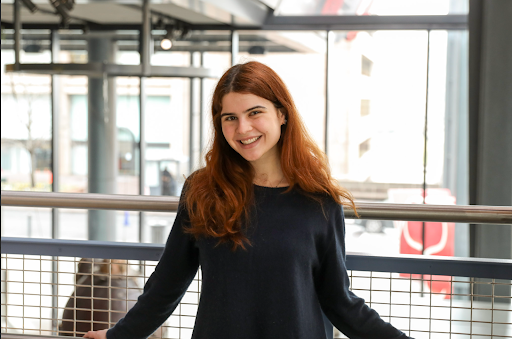
Flora Warshaw, a New York City-based podcast producer, would know. Warshaw has a Master of Science in Journalism from Columbia University and currently is the lead producer for “SpyCast,” the official weekly podcast of the International Spy Museum in Washington, DC. Launched in 2006, “SpyCast” is a premier source for interviews with intelligence professionals and scholars, consistently ranking in the top 1% of global podcasts with thousands of weekly downloads.
When asked about the success of her most impactful episodes, Warshaw emphasizes a dual approach to guest selection and narrative crafting. “Our episodes that do the best, not only offer new information to listeners that can’t be found elsewhere, but really take the listener into the story,” she explains. This often involves encouraging guests – many of whom are former intelligence agents – to share experiences they haven’t publicly disclosed before.
The key, according to Warshaw, is balance. “The best episodes strike the perfect balance between honing into a story or angle, but also not getting so into the weeds of the story that it then becomes hard to follow,” she notes, highlighting the importance of a clear, digestible narrative even when dealing with complex subjects like espionage history.
As lead producer for “SpyCast,” Warshaw has honed specific skills crucial for delivering high-quality content and attracting high-profile guests. Foremost among these is meticulous organization. “Half of my job is simply admin-based,” she said, detailing the intricate dance of scheduling guests, hosts, and studio time. “There are so many little things that go into just getting the guest to sit in the interview chair. There are many steps that get to that integral point of getting an expert into the podcast studio and hitting ‘record’.”
She stresses the intimate understanding of a podcast’s identity. “I think it’s really important to truly know the brand,” Warshaw said. “I know what our audience likes and expects to hear and what episodes will do well, meaning I know if a podcast guest will work or won’t from the outset.” The podcast has produced over 700 episodes over its 20 year span as an early podcast pioneer, and though Warshaw only joined last year, she has listened to hours of SpyCast episodes. This deep insight into the “SpyCast” brand, steeped in the historical and modern relevance of intelligence, guides her guest choices and content development.
The podcasting industry has undergone significant transformations, with Warshaw observing the incorporation of video into podcasting as the most dramatic shift. While she admits to a natural inclination for audio-only experiences—”podcasting is about writing for the ear”—the market’s move towards visual content has necessitated adaptation.
“We adapted like many other podcasts and now release a video alongside audio every week,” she explains, referencing the success of video podcasts on platforms like YouTube and even Netflix, as Netflix recently added podcasts to the streaming platform, licensing top-tier podcasts from iHeartMedia and Spotify to be streamed. In addition, the Golden Globe Award for Best Podcast was first awarded earlier this year, and will continue to uplift podcasting as its own category for awards.
For Warshaw, though, the creative process begins long before the interview mic is switched on. “I like to establish the arch of an episode first, before we even get into the interview,” she said. Through pre-interviews with guests, the team identifies key stories and angles, allowing them to map out the narrative flow. This structured approach ensures a cohesive and easy-to-follow storyline, streamlining the editing process later on.
Collaboration is another cornerstone of her work. Warshaw fosters close relationships with her editing and social media teams. “Each episode goes through a few rounds of edits between multiple people,” she says, leveraging differing expertise, from content specialists to audio engineers. To promote “SpyCast,” which benefits from its long-standing connection to the International Spy Museum, the social media team utilizes an established, effective system to reach its target audience.
For a niche podcast like “SpyCast,” attracting and growing an audience requires targeted strategies. “We appeal to audiences who would find our work interesting,” Warshaw notes. This includes collaborating with other “espionage fanatics” and interviewing authors releasing books on intelligence subjects, effectively tapping into existing communities.
While direct listener feedback on “SpyCast” per se wasn’t always explicit, Warshaw points to a broader industry demand for shorter, tighter series. “Our episodes used to go on as long as an hour and twenty,” she says. “Since January 2025 we produce far shorter episodes, our longest being 35-40 mins. It just creates a better product in the end and keeps the stories on track.”
Warshaw acknowledges the challenges inherent in podcast production, particularly when an anticipated successful episode underperforms. She also addresses criticism regarding a lack of “gotcha” moments with guests. “That’s also not what we’re about,” she notes. “We want a healthy dialogue between the host and the guest as that’s what creates the best product in the end.”
Looking ahead, Warshaw sees podcasts evolving into “mini brands,” requiring extensive social media engagement that transcends the audio content itself. While “SpyCast” will continue to utilize social media for advertising and adapt to new trends like video, Warshaw maintains a clear vision. “At the end of the day we are an educational show and we don’t want or need to become more than that,” she said.
Photo courtesy of Emily Rens, International Spy Museum.