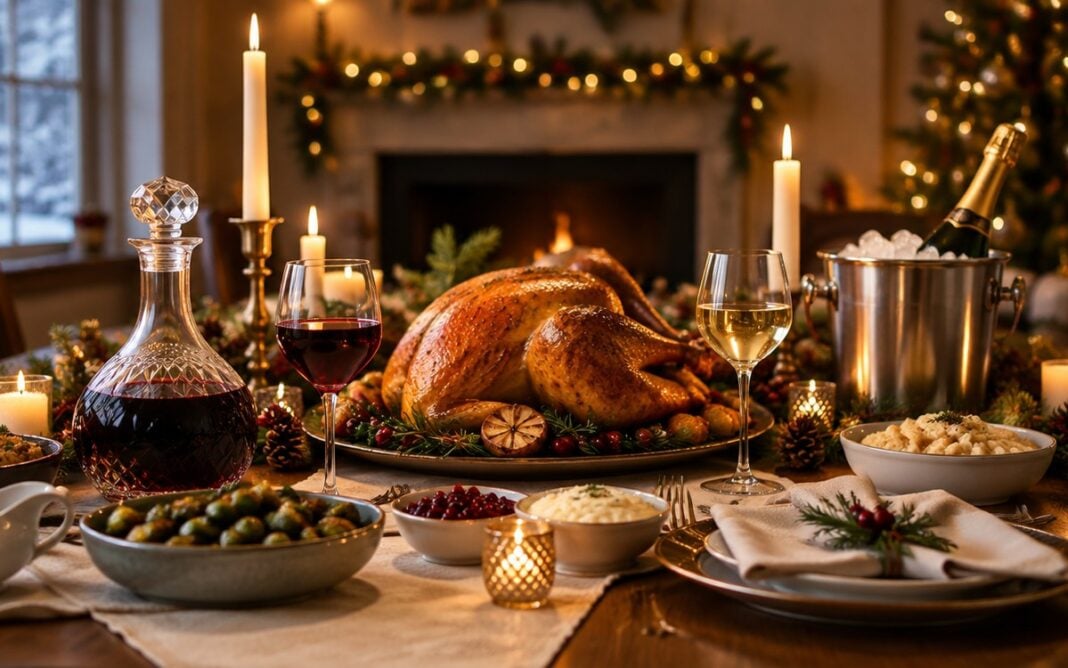

For many hosts, the stretch from late November to the first of January is the busiest of the year. Wine sits at the center of most of those dinners, and it causes more last-minute stress than it should. A host who buys too little runs to the store mid-meal. A host who buys the wrong thing ends up with a cabinet of bottles nobody opens.
A little planning in early November fixes both problems.
How much wine to buy
Start with a baseline: one bottle for every two adult guests who drink wine over a three-hour dinner. A 750 ml bottle pours about five glasses at five ounces each. If your group lingers, or the gathering runs late, plan on one bottle per guest. Unopened bottles keep, so a little extra costs you nothing in the long run.
Ask about preferences ahead of time. Some guests drink only white, some only red, and some skip alcohol. Keep sparkling water or a good nonalcoholic option on the table so nobody feels left out.
Thanksgiving: pick wines that forgive
The Thanksgiving table is chaos. Turkey, sweet potatoes, cranberry sauce, stuffing and green beans all compete. Choose wines with bright acidity and moderate alcohol that won’t fight the food. Pinot Noir, Gamay from Beaujolais, dry Riesling and Chenin Blanc are reliable picks. A dry rosé works too, and it pleases guests who don’t want to choose between red and white.
Christmas dinner: room for a bigger bottle
A roast, a prime rib or a braise can handle more structure. This is the meal to open the Cabernet Sauvignon, Syrah or Nebbiolo you have been saving. Young, firm reds often benefit from air, so open them an hour before dinner or pour them into a decanter.
Older bottles need gentler treatment. If a wine has been lying in a rack for ten or fifteen years, stand it upright for a day before dinner so the sediment settles, then pour it slowly.
New Year’s Eve: sparkling, served cold
Champagne, Cava, Crémant and Prosecco all ring in the new year. Chill them for at least three hours in the fridge, or 30 minutes in a bucket of ice and water. Open sparkling wine by holding the cork, twisting the bottle and letting the pressure ease the cork out with a sigh instead of a pop. That keeps the wine in the bottle and the cork out of the ceiling.
Pick the right tools for the season
Holiday hosting puts every piece of wine gear you own to work, and it exposes the pieces you don’t need. A reliable corkscrew handles most bottles. A decanter earns its place on the night you open an older red. A tabletop dispenser can help at a long party where guests serve themselves.
Unhyd recently published a guide to which wine serving accessories actually help, covering aerators, dispensers and openers built for fragile old corks. Its main point suits the holidays: match the tool to the bottle and the occasion, and skip the gadget when the wine is ready to drink. Read it before you shop for gear this season.
Store leftovers right
Recork open bottles and refrigerate both reds and whites. Most will hold for three to five days. Sparkling wine goes flat faster, so a dedicated sparkling stopper helps if you want to finish the bottle at brunch the next morning.
The night-before checklist
Count your glasses. Chill the whites and the sparkling. Set out a corkscrew and a backup. Pick the red you plan to decant and stand it up. Put a water pitcher on the table.
With those steps done, you can spend the holiday at the table with your guests instead of in the kitchen hunting for an opener.