
Australia is studying how to keep threatened birds away from wind turbine blades, but a larger question remains under the ground. Wind farm decommissioning is left out of the planning.
Who pays when the turbines stop spinning?
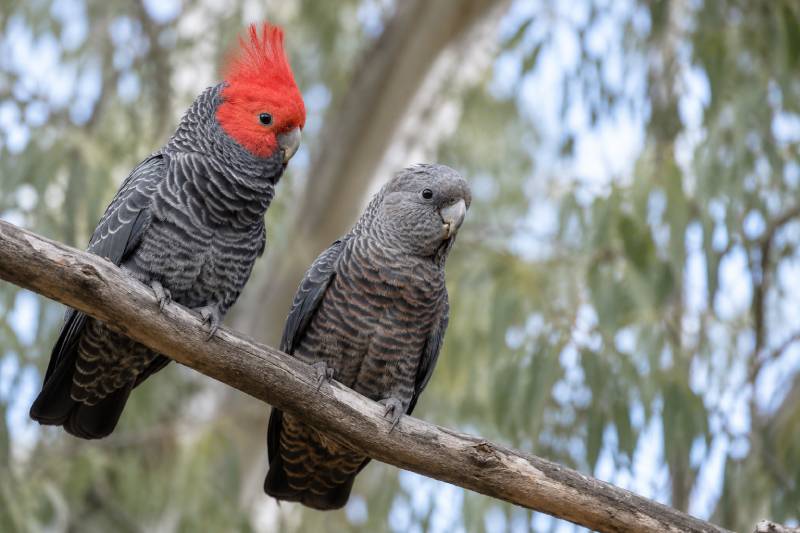
The Australian National University has been working on research linked to the gang-gang cockatoo, the endangered faunal emblem of the Australian Capital Territory. The work forms part of a wider federal push to give renewable energy developers better guidance on threatened species.
That research matters.
Gang-gang cockatoos are canopy birds. If wind turbine blades sweep too close to the height at which the birds fly, project design becomes part of the conservation problem.
Raising the lower sweep height of turbine blades above tree canopy level may reduce collision risk for some species. It may also force developers to think more carefully about where turbines sit, how tall they are, and which patches of habitat they disturb.
The bird research points to a broader problem with Australia’s renewable energy rollout.
Governments and developers often focus on the front end of the transition. They talk about new capacity, emissions targets, project approvals and construction jobs.
Rural communities also need answers about the back end.
Wind Farm Decommissioning Liability
Wind turbines usually carry an operating life of about 20 to 30 years. Australia’s first commercial wind farm, Codrington in south-west Victoria, now approaches decommissioning after almost 25 years of operation.
That makes decommissioning a live issue, not a distant theoretical problem.
Watch: What happens to wind turbine foundations when wind farms reach end of life?
The Australian Energy Infrastructure Commissioner has warned that landholders need clear arrangements for who pays, how much it costs, and how those funds will be secured.
That warning matters because wind farm ownership can change over a project’s life.
A landholder may sign with one company. Years later, the project may sit inside a different corporate structure, with new owners, new financing, and new commercial pressures.
If the owner defaults near the end of a project’s life, landholders could face serious risk.
The most visible parts of a wind farm are the towers, blades and nacelles.
The less visible issue is the reinforced concrete foundation beneath each tower.
Modern onshore wind turbines require large engineered foundations. These can contain hundreds of cubic metres of concrete, with steel reinforcement designed to hold the tower against wind loads, vibration and overturning forces.
Some Australian project documents and planning approaches allow parts of underground infrastructure to remain in place, depending on project conditions, landholder agreements and regulatory requirements.
That is the practical decommissioning gap.
Removing a tower is one job.
Removing a reinforced concrete foundation, access roads, underground cabling and hardstand areas is another.
Complete removal may involve excavation, breaking reinforced concrete, truck movements, disposal, imported fill, topsoil repair and erosion control.
Leaving foundations underground may reduce short-term disturbance and cost.
It also leaves an industrial structure beneath farmland.
The Australian Energy Infrastructure Commissioner says some published decommissioning plans have estimated costs of about $400,000 per turbine. Larger turbines could push that figure to $600,000 or more.
A failed or unstable turbine could cost millions to remove safely.
Those numbers change the economics for host landholders.
Over 25 years, hosting fees for a turbine may total $250,000 to $750,000, depending on turbine capacity and contract terms. In some cases, decommissioning costs could equal or exceed the landholder’s total hosting income.
That does not mean every landholder will face the bill.
Risk Planning
It means the risk needs to be addressed before construction starts, not after a project reaches retirement.
Bank guarantees, sinking funds, trust funds or security bonds could help protect landholders and councils. But those protections need clear rules, early funding and enforceable obligations.
A fund that starts in year 20 may arrive too late if a project owner runs into financial trouble in year 18.
The federal government’s Renewables Environmental Research Initiative aims to improve guidance for renewable projects and threatened species. That includes work on bird and bat collision risk, flight heights, movement patterns and habitat use.
That work may help developers avoid building turbines in the wrong place.
Environmental Accountability
But environmental accountability cannot stop at wildlife collision modelling.
It must include the full life cycle of the project.
That means the clearing, roads, foundations, transmission lines, maintenance, turbine replacement, blade disposal, and decommissioning.
Australia’s 82 per cent renewable electricity target by 2030 means the pressure to approve and build projects remains intense.
The question for rural communities is simple.
If governments insist on rapid construction, will they also insist on secure, enforceable clean-up funds?
For landholders, that may be the difference between hosting a temporary energy project and inheriting a permanent industrial liability.
Wind farm decommissioning liability is no longer a future issue.
It is already arriving under Australia’s oldest turbines.