

Key Takeaways
- Career Flexibility: Opportunities in traditional accounting, leadership, and emerging fields.
- Advanced Skills: Expertise in accounting, technology, leadership, and ethics.
- High Earning Potential: Prepares for senior and executive roles.
- Adaptability: Ready for evolving regulations, tech, and global trends.
- Specialized Roles: Forensic accounting, IT auditing, sustainability, and data analytics.
A Master’s in Accounting provides graduates with more than just an understanding of numbers. It builds on core financial skills while opening the door to wide-ranging career opportunities across industries. From traditional accounting roles to innovative careers in finance and data analytics, graduates find themselves with a competitive edge in today’s evolving workforce. Those who pursue an online master’s in accounting gain advanced knowledge and versatile expertise that make them valuable assets in both private and public organizations.
Modern accounting requires adaptability. New technologies, evolving regulations, and global markets are rapidly changing how companies operate and manage financial information. A master’s degree equips professionals to confidently navigate this landscape, preparing them for both established roles and emerging fields.
In addition to providing mastery of accounting principles, this advanced degree often includes coursework in leadership, ethics, and information systems. This broad academic experience allows graduates to pursue senior-level positions, consulting opportunities, and specialized roles beyond basic tax preparation or bookkeeping.
Graduates seeking career advancement, higher earning potential, and professional fulfillment will find that a master’s in accounting can be a strategic step toward achieving their goals. The demand for skilled accounting professionals is robust, with organizations seeking candidates who can drive business growth, manage risk, and adapt to new financial technologies.
Traditional Accounting Roles
The traditional path for those with a master’s in accounting leads to respected careers in auditing, financial analysis, and related professions. These foundational positions allow graduates to build experience, develop expertise, and make key industry connections.
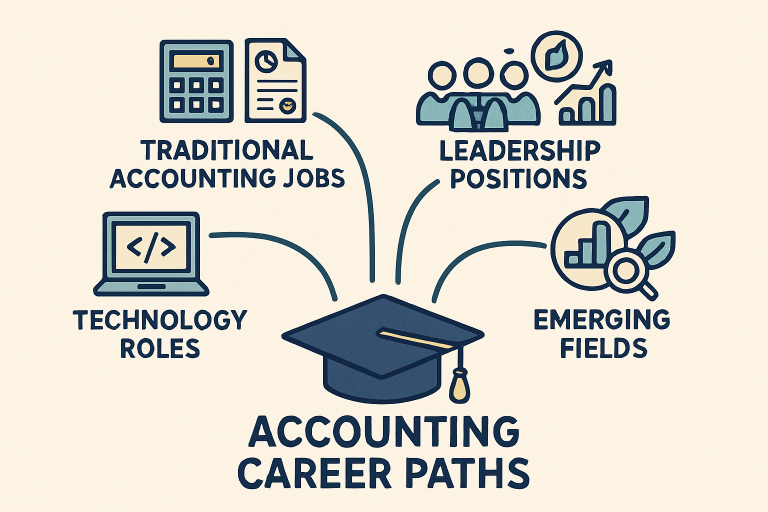
- Auditor: Auditors are tasked with carefully examining financial records to confirm accuracy, compliance with laws, and protection against fraud. They are employed in corporate settings, public accounting firms, government agencies, and nonprofit organizations. Auditors play a critical role in maintaining public trust and improving business integrity. According to the U.S. Bureau of Labor Statistics, auditors and accountants earn a median salary of approximately $78,000 per year.
- Financial Analyst: These specialists review financial statements, assess business trends, and develop forecasts to guide management decisions. Financial analysts work across banking, investment, and corporate sectors, often advancing into positions of greater responsibility. Median salaries are around $95,000, and strong analytical and communication skills are essential.
Non-Traditional Accounting Careers
Accountants with a master’s degree are increasingly sought in specialized fields that blend accounting with technology, criminology, and business intelligence. These roles extend beyond basic number-crunching and include investigative work, cybersecurity, and system auditing.
- Forensic Accountant: Forensic accountants bring together accounting knowledge and investigative skills to detect and prevent fraud, financial crimes, and corporate misconduct. They commonly work with law enforcement, legal teams, and regulatory agencies during litigation or compliance reviews. An analytical mindset and a keen attention to detail are crucial in this growing field.
- Information Technology and Systems Auditor: As companies transform digitally, systems auditors ensure that IT structures align with accounting regulations and cybersecurity standards. They identify weaknesses in digital processes, help prevent data breaches, and safeguard sensitive information. These professionals are vital to businesses that rely on complex infrastructure.
Leadership Positions
With years of experience and continued education, master’s graduates at St. Thomas University can attain high-level executive and financial leadership roles. These positions focus on organizational strategy and influence major business decisions.
- Financial Manager: Financial managers oversee an organization’s overall financial health, including budgeting, forecasting, investments, and reporting. Effective financial managers optimize profitability, minimize risk, and ensure regulatory compliance. According to the Bureau of Labor Statistics, the median annual salary for financial managers is $139,790.
- Chief Financial Officer (CFO): The CFO is the highest-ranking financial executive, responsible for financial planning, managing company assets, and directing company financial strategy. CFOs collaborate with other executives to shape corporate vision and handle investor relations. Experience, leadership, and advanced credentials are typically required for promotion to this level.
Emerging Fields
With shifts in technology and increased focus on ethics and sustainability, new accounting career paths continue to emerge. Accountants can specialize in areas that were almost nonexistent just a decade ago.
- Environmental Accounting and Sustainability Reporting: Accountants in this specialty assess a company’s environmental impact and deliver reports on sustainability initiatives. As organizations adopt more eco-friendly policies, the need for measuring carbon footprints, resource use, and long-term sustainability is growing. Demand for these professionals is rising nationwide.
- Data Analytics Specialist: The need to analyze big data and turn raw data into actionable insights is now critical to organizational success. Data analytics specialists use advanced software and statistical techniques to inform business growth and risk management. Their findings help shape financial strategy in real time.
Final Thoughts
Earning a master’s in accounting launches graduates into a variety of high-demand roles. Whether choosing to work as an auditor, pursue leadership as a CFO, or specialize in data analytics, the degree offers tangible benefits in career growth, job security, and earning power. Continuous change in global markets and business regulations promises ongoing opportunities for skilled accounting professionals.